That’s what I told myself in the week leading up to my annual mammogram and first post-cancer MRI.
It’s what I told Ryan when I declined his offer to drive me to my appointment, then proceeded to back the truck into the 90% open garage door.
It’s what I told the kind receptionist when I showed up with red eyes and tear-streaked cheeks.
It’s what I told the tech who gently maneuvered me for my mammogram.
It’s what I told the woman who set me up for my MRI.
It’s what I told myself as I took a few shaking, deep breaths to steady myself, waiting for another round of banging, with my chest exposed and braced against a plastic bar, butt in the air, toes threatening to cramp unless I moved.
It’s what I told myself amidst the banging of the MRI machine when I realized tears were leaking out of my tightly shut eyes, snot slowly dripping into the sterile, whiteness of the machine below.
It’s what I told the tech as I bolted from the room, snot smeared down my pink hospital top, eyes averted in shame for not controlling my emotions.
It’s ok. I’m ok.
Sixteen days later, I was headed to my routine oncology appointment. About an hour before I was set to leave, I received a notification from my oncologist’s office patient portal saying I had new test results. I logged in and saw that my MRI and mammogram screening results had been posted.
“On the sagittal reconstruction an ill-defined 1.3 x .9 cm irregular finding, bright on STIR.”
I stared at the screen. Stunned.
I couldn’t move. I couldn’t breathe.
It’s happening. It came back. It’s over.
I can’t breathe.
Somehow, I’m on the floor of my office, curled into a ball, my body shaking with uncontrollable sobs.
It’s not ok. I’m not ok.
Luckily, I was headed to my oncologist. My friend Cindy came to hold my hand. The doctor saw the images, not just the report I got. He thinks it’s a shadow. He ordered an ultrasound to be sure. I waited a week for an appointment. I made Ryan drive me; the garage door was appreciative.
The radiologist dug in deep with her wand. She told me it was fine.
It’s ok. I’m ok.
Most of us who have lived through cancer will tell you we’re grateful to be alive. It’s the easy answer. We are grateful.
We don’t tell you about the fear we live with daily. The constant pain. The doubt. The rage. How one sentence uploaded into our patient portal without explanation is the same as a death sentence, logical or not. We don’t explain how accidentally letting our mind wander in the wrong direction can send us into a tailspin of hysteria. How demoralizing it is to not be able to do the things we could do before. How chemo changes you from the inside, even if you look the same to others.
We don’t talk about the sickening in the pit of our stomachs when we learn a total stranger has a new cancer diagnosis. The true terror when it’s someone we love.
It’s ok. We’re ok.
Cancer is a cruel disease that takes so much more than you realize. I don’t remember the last time I was confident in my own skin or felt I could trust my body not to betray me.
Any moment this disease can take everything away. Again.
No one wants to hear about the real reality of living with cancer. I’m all about being positive. I try to do my best every day. I’m resilient. I’m happy. I’m grateful for medicine and science that saved me. I’m alive. I’m breathing.
But even the most resilient still have moments when the bitterness creeps in, forcing us to take stock of all the things we’ve lost along the way. I’m allowed to be angry and scared and ready to fight dirty to survive.
I am NOT grateful for cancer. Don’t ask me to look on the bright side or find a silver lining.
We’re all one test away from losing everything we’ve tried to rebuild. The further I get from my cancer diagnosis, the closer I get to the likelihood of a reoccurrence.
My story of Lake Mead starts nearly three years ago. In February 2021, I visited the Hoover Dam for the first time with a couple of friends. Built in the early 1930s, the Hoover Dam is located about 30 miles outside of Las Vegas, and straddles the Arizona and Nevada border. The dam itself is an impressive sight. It is the 2nd tallest dam in the US at nearly 730 feet tall and its massive amounts of concrete hold back the largest man-made reservoir in the US (when it’s full). When you look down from the top of the dam to the river below, it’s nearly impossible not to get vertigo. The dam forms Lake Mead, stopping the water flowing from the Colorado River and the Virgin River. The Virgin River enters the lake from the north and forms the Overton Arm of Lake Mead, while the Colorado River flows in from the east.
Simply put, I love the Colorado River. It starts in my home state, fed by snowmelt and rain from the Rocky Mountains and winds its way west, stopping in several reservoirs along its route to the Pacific. It forms Lake Powell, which I swam the 80-mile length of in 2016, before it flows through the Grand Canyon and eventually into Lake Mead. It’s the lifeblood of the southwestern US, supplying drinking water and electricity to Colorado, Nevada, Utah, Arizona and California (and Mexico). After years and years of drought, those resources are being tested and without some sort of intervention, the future of water and power in the southwest will be severely limited. Click here to read more on the background of that.
726 feet highstanding on the dam, looking at the lakeHemenway Harbor- the dam is behind us
(There is so much history of Lake Powell and the Colorado River that I find fascinating. If you’re into that sorta thing + the history of dams across the US, I HIGHLY recommend reading The Emerald Mile by Kevin Fedarko. I read it shortly after my Lake Powell swim and found it absolutely fascinating.)
There is something in my soul that feels connect to large lakes and so, when you think about it, it’s no surprise that standing high over the lake on a beautiful February afternoon, I was moved. This lake immediately felt like home.
A year later, I was in Vegas for a work trip and had a one-day break between meetings. I rented a car for the day and took myself out to the lake. I found a promising spot on the map, drove to the cove, and amidst the stares of a handful of folks fishing, walked into the 55-degree water and swam straight out into Las Vegas Bay. When I came back, two hours later, a woman rushed over to me, relieved I’d returned safely. I was more than safe. I was invigorated and totally in love.
I needed to swim this lake. All of it.
Post swim in February 2022. So happy!
The Logistics:
However, in 2022, we were in the midst of a huge drought. Lake Mead’s water levels were dropping rapidly and the predictions were dismal. By the fall of 2022, I wasn’t sure a swim across the lake would be possible. With receding water levels, there were discoveries of dead bodies: People who had drowned years ago and never been recovered. A body was found in a barrel, likely a victim of a mob crime in the 70s. People were getting stuck in the mud along the shoreline. The reports were devastating. Without significant snowfall, over many years, the future of Lake Mead seemed doomed. (Link to article)
Then, over the winter of 2022-2023, Colorado had massive amounts of snowfall. My hopes for a swim started to rise, but it all depended on how the Bureau of Reclamation handled water levels for Lake Powell and Lake Mead. (Lake Powell water levels are also suffering- it’s shocking to see where the water is today compared to when I swam it in 2016.) Early reports were that the water levels might not drop as low as predicted in 2023, but it was still in a state of crisis. But, I didn’t give up hope and kept my eye on conditions.
This spring, my swimming focus was on Japan and swimming the Tsugaru Strait. I had Lake Mead in the back of my mind, should conditions improve enough for a swim and I still felt like going long after Japan. It’s a long time between July and October, and even way back in April, I had the itch to do something long this year. And then, we didn’t get to swim in Japan. I knew I needed to put my training to good use, so within a week of returning home from Japan, I shifted my sights back to Lake Mead. I just couldn’t let go of this particular swim. It was calling me.
So, I started researching. To my surprise, I found that water levels were actually up from spring and last fall, by about 40 feet. Well below “full pool” levels, but high enough. I emailed a marina “can you drive a house boat from Callville Bay to South Cove safely?”, just to make sure it was passable. They assured me it was all navigable via houseboat. Game on!
Next, I needed to figure out the logistics of the swim; where to start and how to get there. A couple of marinas up the Overton Arm are permanently closed due to low water levels. The more I looked up that way, the less I wanted to swim it. So, I settled for starting the swim in South Cove. Lake Mead is advertised at 112 miles long, when it’s full. As I looked further up, past South Cove, the lake looked more like a river. The permanent, concrete boat ramp at South Cove is closed because the water levels are still too low to accommodate the ramp. To me, it seemed risky to count on good, clean, swimmable water much past South Cove. When I mapped out a route from South Cove to the Hoover Dam the first time, I think I squealed out loud: It was just about 50 miles. PERFECT!
My projected route- right at 48 miles from South Cove to the Hoover Dam
The route was set: South Cove to the Hoover Dam. But then, I had to solve the puzzle on how to make it work. Do we drive out with Ryan’s grandpa’s boat and do it really small? Or do we rent a boat near the Hoover Dam, drive all the way up to South Cove and swim back? Should I rent a houseboat? How big of a crew do I need? And as I dug into the marinas along the lake, I noticed: They all did something different. I couldn’t rent a boat for more than 1 day at time out of Las Vegas marina. Callville Bay Marina only had houseboats. And then I hit the jackpot: Temple Bar Marina. I hadn’t seen it on my initial searching; it’s small and on the Arizona side and by all accounts it’s pretty rural. But, after joining a couple of Facebook groups around the lake and asking around, there it appeared, exactly what I needed. They had a “resort” (which I assumed, correctly, was just like Apache Resort for SCAR), and they did multiple day pontoon boat rentals and had kayaks to boot! It was about 13 miles from South Cove and about 37 miles from the Hoover Dam. It seemed like the perfect solution. We could stay the night before the swim and return there when the swim was over. They had rooms with kitchens, so we could cook and if something happened mid swim, we had a midway point to abort and return to safety easily.
Puzzle solved.
Next up: Crew. I’d done 50 miles in Lake Memphremagog with two people: Ryan and Bill Shipp. I’d done 42 miles in Tahoe with Ryan, my mom and Jamie Patrick. I knew for this swim, less was more. I didn’t need or want a big crew. Just something simple, safe and quiet. I enlisted the help of two of my best buddies, Craig and Celeste (plus, Ryan of course). Craig has crewed a few long swims for me and Celeste paddled SCAR for me two years back. They’re both great friends, smart, easy to get along with and were up to the task of sitting on boat for a day or so for me.
Celeste: ObserverCraig: Crew Chief Ryan: Pilot and best husband ever
Then, I had to settle on a date. I picked an October date for a few reasons. First, all my research showed that water level fluctuations even out in October. The lake would be as high as it was going to be in October before slowly starting to empty over the winter months. Second, I was hoping for cooler air and water temperatures. In the dead of summer, the water can hit close to 90 and the air temps can be well over 100. It’s hard to get super accurate temperature readings (are they measuring surface temps or are they measuring 10 feet down?), so I was hesitant to push too late into October for fear I’d be chilly. As it turned out, we had a long, hot summer and the water and air were still pretty warm, but not deathly so. I’d be hot, but hopefully it wouldn’t make me sick. We packed extra water and some Pedialyte and hoped for the best.
Everything was set in place. The route was planned out, the boats were rented, flights were booked for the first weekend of October. It was go time.
The Swim:
Ryan, Craig and I flew in from Denver Wednesday night and drove the rest of the way to Temple Bar on Thursday evening. Celeste drove up from Phoenix (with a car full of supplies). We settled in on Thursday night, organized our gear, and ate a spaghetti dinner before turning in early.
The earliest we could pick up the boat was at 8 am on Friday morning. So, we slept in, I scrambled everyone some eggs in the hotel room, and made our way to the marina at 8 am. By 9:30, we’d checked out the boat, were loaded and organized, and were underway, ahead of schedule. It was still early, but we were already roasting on the water. We had a 13-mile boat ride to South Cove and it was our first chance to really check out the lake and route I’d created. I learned from Lake Powell that creating a route based off of Google Earth and maps wasn’t a guarantee. Water levels fluctuate daily. Some maps made my route look like it was down the center of the lake because they were showing higher water levels. I had created a conservative route- the shortest distance between South Cove and the Hoover Dam that hopefully didn’t run us aground, but we wouldn’t know for certain if we would need to divert around hazards or what corners we could cut. Our initial sense was my route was dead on, but we had 48 miles to travel before we’d really know.
Leaving Temple Bar on the boat!
A fabulous reception!
We arrived at South Cove just before 11 am. There was a small crowd of kayakers waiting for me. I had befriended a few folks in the Facebook groups I’d been stalking to get info and they were enthusiastic about my mission. I arrived to cheers and puppies in kayaks. After I had greased up on the boat, I headed to the temporary, gravel boat launch where a handful of others had gathered. I was greeted with more cheers and requests for pictures and autographs- definitely a first for a swim start! I spent about 10-15 minutes chatting with the onlookers- grateful for their energy and warm welcome, a nice distraction from my growing nerves.
Signing a few autographs before the swim
But, then it was time. So, I turned and faced the water, checked that my boat crew was ready and waded into the water at 11:14 am.
The dog following me is my favorite.
The water was warm, about 76 degrees, but that was cooler than a report from a week prior, so I was relieved. There was a slight chop with a mild headwind and I happily set off down the lake. The first hour went quickly and smoothly. The wind wasn’t terrible, but noticeable and enough to put me on edge, just a little. What if it got worse?
My swim strategy was to swim nice and easy during the day on Friday, then once the sun went down and we had relief from the sun, I’d pick up the pace and swim hard through the night. Then, once the sun came up on Saturday, I’d either keep the pace or back off, depending on the heat and how I was feeling. The tracker shows a perfectly executed plan. The headwind early on forced me to be relaxed. I was feeling nervous about my training, it hadn’t been flawless, so I purposely held back during the day, saving my energy for the night. Several times, I had to consciously force myself to stop fighting the wind and to slow down.
You can see me building speed, then having to back down just before midnight to a more sustainable pace in the chop, which I held the rest of the way.
About five hours in, Ryan asked me if I was having the best time. I was. I wasn’t too hot, the wind wasn’t too bad, and we had the lake to ourselves. I couldn’t have asked for a more ideal situation.
Barely any wavesSeriously, it was like glass
Throughout the afternoon, the wind would pick up and die down, never reaching challenging speeds. Just as the sun was about to set, the wind picked up a touch, but again, nothing I hadn’t expected. Big desert lakes often get strong afternoon winds and what I was swimming in was clearly an afternoon wind, but significantly less impactful than I had anticipated. I knew as soon as the sun set, we’d be back to flat conditions.
Bit of headwind into the sunsetPrepping the boat for night swimming
Just after sunset, we were approaching Temple Bar Marina, where we’d left from that morning. We’d made it back in just over 7 hours. Doing the math, I knew I was exactly on schedule and swimming well. However, I was starting to feel the effects of the heat and my shoulders were feeling tired, but entirely manageable.
The darkness is long in October. 12 hours. The sun set about 6:30 pm and wouldn’t rise again until about 6:30 am. At one point, I asked “What time is it?”, feeling like the sun had been down for hours. “7:45”, was Celeste’s immediate reply. “Jeeze, it feels like midnight already” I replied back, a little disheartened. “Trust us, it feels the same up here.”
Swimming in the dark, with the lights of Vegas in the distance
In many ways, I was looking forward to the dark. The sun was hot and the cooler night temps were welcome. However, 12 hours of blackness is tough, no matter the benefits.
In the dark, we approached the wide-open Virgin Basin, where the Colorado and Virgin Rivers meet. It was good we were going across at night, when the wind would be at a minimum, but any time two bodies of water meet, there is going to be chop. The moment we rounded our final corner, about 11 pm at night, I felt the water change immediately. It was choppy and confused. At a feed stop, I looked around the best I could to get a sense of if it was windy, too, or just choppy. Mostly just choppy. My shoulders were starting to ache and I asked for some Advil to settle the inflammation.
When the water is choppy, there’s nothing you can do to fight it- there’s no point in straining against it. You have no choice but to work with it. My shoulders were burning and the Advil didn’t seem to make a dent in the pain. At my next feed stop, I let my crew know I was going to back down my effort some in order to give my shoulders a break. They assured me that I was swimming really well, so it wouldn’t hurt anything to slow down. “You’re doing exactly what you need to do,” Craig said, “You can do whatever you need to feel better.”
A beautiful night sky
I spent the next 2 hours focusing on relaxing my stroke, trying not to cry, working with the water, and urging my arms to stop screaming at me. I kept trying to find exactly the right elbow position and entry point to alleviate the pain, reassuring myself that it was going to be ok; I wasn’t hurt, I was just getting tired.
At one point, just as I was starting to feel better, Craig said, “I see you found your balance again.” He was right. I had been struggling and feeling low, but, finally, I was at peace in the water and my confidence was coming back. I reminded myself that I wasn’t doing this swim just for me, but as a cancer fundraiser with Swim Across America, so I needed to pull it together and not let anyone down. I wasn’t even close to the pain I felt during my cancer treatments, so I told myself, “suck it up, girl, keep going.”
A few times in the night, Craig blasted a spotlight into the water ahead of us, to ensure we weren’t about to run aground. We went over a few shallow sections that were nicely marked with buoys and had to divert around an island. However, the second we passed by the island, I received some protection from the chop and magically, the lake went back to dead flat water once again. I smiled with relief. In the dark, we could see the opening to the narrows a few miles ahead. My goal was to be through most of the narrows by daybreak, so once again enjoying the benefits of flat water that didn’t hurt my shoulders, I put my head down and swam hard for the opening.
We hit the narrows about 5 am, where towering canyon walls jutted straight out of the water, only a few hundred yards apart. The moon had risen, so there was enough light for me to make out the walls and the water marks high above me. Craig told me to take it all in, so I flipped over onto my back and admired the moon, stars, and canyons in the half light. I had a momentary thought that I sure hoped a speedboat didn’t round a corner at full speed in the dark, but we hadn’t seen another boat in hours, so I put the thought out of my head.
The Narrows (on our way back in the evening)
The sun had set quickly, seemingly going from late afternoon to midnight in a moment. On the other side, it rose just as fast. We went from moonlight to daylight in a matter of 30 minutes. One of my favorite things on a swim is when I can finally see my team’s faces again. All night long, I’d been wondering if it had gotten cool enough for Craig to change out of his swim suit and into pants. At first light, I could see he was wearing a light jacket, but still no pants. I laughed at his commitment to being ready to swim a moment’s notice.
The water through The Narrows was beautiful. It was flat and silky and in the early morning, I wasn’t suffering from the heat. Again, we were right where I expected to be on the course and everyone reassured me I was swimming well, though I was admittedly getting tired. We were all happy and content, enjoying the swim. Ryan was taking a nap. Still, I’d hoped to finish ahead of schedule. Something closer to a 24-hour swim than a 30-hour swim was sure sounding delightful right in that moment. I was allowed another dose of Advil around 7:00 am and I used it as an excuse to pause in the new daylight. We changed my clear goggles back to the dark ones, I stretched my back and reapplied some lanolin. Just before dawn, my feeds had started to not set well in my stomach and so we had started supplementing with additional water, while I thought about if any solid foods sounded good. I’d been close to puking, but in the daylight, with several ounces of extra water in my stomach, I was no longer feeling sick and we kept with my Infinit and skipped anything solid. Though, had we had some carrots on board, I totally could have used a handful.
Feeling slightly refreshed from a longer pit stop, I put my head down and picked up my pace, charging my way toward the main body of the lake. Before long, Craig pointed out the opening to the lake, where I would then hug the left shore all the way around toward the Hoover Dam. I was somewhat surprised we were there already and for the first time I asked how much many more miles were left, expecting an answer around 16-18, based on time. At my next stop Craig told me we had 12-13 miles left to go. What a boost! My arms were feeling much better and now I could tell we were well ahead of my 30-hour estimate. I couldn’t stop smiling. I didn’t want to jinx anything because we still had hours left to go, but holy moly, we were doing it!
12 miles to go: 7:52 am
As we swam into the open lake, we started to see boats for the first time and as the morning progressed, there was a lot more chop to contend with. Still, conditions were near ideal and the chop wasn’t terrible.
Just past the 24 hour mark!
Craig and Celeste both jumped in a few times to swim with me, I think mostly to cool off. Everyone was super encouraging that I was swimming well ahead of schedule and spirits were high. Still, I was starting to feel the heat, but I kept pushing myself to hold my pace steady. I was allowing myself slightly longer than usual feed stops with extra water, with ice!, where Craig kept me laughing every time.
The last few hours of a swim always seem to drag: You’re there, but you’re not done. Time seems to suspend itself, trickling slowly from feed to feed. I had hoped we’d be able to see the dam for a while before approaching it, but it’s down a cove and was hidden by the canyon walls, so I didn’t even have a refreshing visual to push me along.
But finally, we could see the entrance to the last canyon. Celeste pointed out the opening to me at a fed stop and I calculated we were about an hour away. I knew it was about another mile from the opening to the dam. 1.5 hours left, I guessed. I could keep going for another 1.5 hours. Even 2 seemed ok. We were as good as done. I grinned.
There were all types of boats around now, so I had to focus hard to stay close to the safety of my pontoon, which had me sandwiched between them and the shore. At the next stop, the opening was closer, but felt so far still. At the next feed, Craig let me know I had about another Chatfield to go. I popped my head up to see if I agreed- yup, looked like another 900 meters or so to the opening. We were so close. I put my head down and swam on, focusing on holding my pace and not looking up again. Before I knew it, we were into the final canyon, with less than a mile to go. We stopped for one last feed, with the Hoover Dam now looming over us, so close. Within a few minutes, I could make out the buoy line. Not wanting to cheat myself out of any of this beautiful lake, I aimed for the middle of the lake, the furthest point possible on the line, closest to the dam.
With under five minutes to go, Celeste jumped in with me, armed with a GoPro. Together, we hammered toward the orange barriers, jet skiers buzzing all around, oblivious to what I was doing. Still, I couldn’t stop smiling, grinning from ear to ear as we coasted toward the buoy line. I pulled up just short, popped my head out and BOPPED the barrier. DONE. I was hot and had swam as hard as I possibly could. And I was so incredibly happy.
26 hours, 45 minutes, and 45 seconds.
Well ahead of schedule, with plenty of time to cruise back to our home base in the daylight (so I could see all the bits I’d missed in the dark!). After the hard experience in Japan and somewhat rough summer of training after that, this swim was everything that I wanted. It was ideal conditions, easy on the crew, and just good, plain fun. The lake was stunning and clean and everywhere we went, folks on the water were welcoming and supportive. It was the most fabulous experience and so incredibly rewarding. Truly, everything I had dreamed about for 2.5 years. Thank you, Lake Mead, for letting me share in your waters.
10/10 would recommend!
Epilogue:
After climbing up on the boat, I was immediately dizzy. Ryan and Craig melted ice down my back as we stopped at the nearby marina to refuel. Celeste provided me with a popsicle, which was the most glorious thing I’ve ever consumed. Even after the 2 hour ride back to Temple Bar, I still wasn’t feeling great. But after some help in the shower, some tacos for dinner and a good night’s sleep, I was feeling just fine the next morning.
*I need to look at the GPS tracks compared to my pre-planned route, but I think the final distance was right at 47.5 miles.*
All in all, I raised over $10,000 for Swim Across America and I couldn’t be more exited about the impact those funds will have on cancer researching and funding.
This is not the story I wanted to write about Tsugaru. It’s also not the story I ever considered I’d have to write. However, after my experience, while I wish I could keep quiet and maintain a positive image, I know I simply can’t. When I see a wrong I know I need to speak out. So here we are.
If you still decide to go to Tsugaru, at least I can say I warned you.
Part 1 covers some background and my “Why.” Part 2 covers what happened when we were in Japan to swim. Part 3 covers my ask. And scroll to the bottom if you’re not familiar with the Oceans Seven challenge and need some background.
The Strait of Tsugaru, From Cape Tappi
Part 1: Background
My journey to the Tsugaru Strait started a long time ago, well before I had heard of the Oceans Seven or even considered trying to finish this challenge.
In 2012, my good friends Darren Miller and Craig Lenning went to Japan to swim the Strait of Tsugaru, which is roughly a 20km stretch of water between the main island of Japan, Honshu, and its northern island, Hokkaido. It was the first I’d heard of this swim and both Craig and Darren came home with some incredible stories. Craig spoke highly of the people of Japan and the stunning beauty of the water there.
Map of Japan- Swim area is circled
I immediately added Tsugaru to the list of swims I wanted to complete someday. Ryan especially wanted to take a trip to Japan, so we shortlisted that swim as a bucket list, dream swim, for someday when we could save up for it. I didn’t even know about the Oceans Seven in 2012 and when I did learn about it, I had no desire to pursue it. It’s expensive and I had other things to do. But, Tsugaru has always been on my list.
Back in 2012, Tsugaru was still a pretty unknown swim. When Craig was there, he started his swim and they pulled him after 15 hours, saying he’d never make it. Even back then, pilots in Tsugaru were leery about night swimming. But the next day, Craig’s swim organizer, Mr. Ishii, came back to him with a proposed different route- swimming from Hokkaido and landing on Honshu, wherever the current lead. Craig agreed to try, so after less than a full day’s rest, he took off from Hokkaido and landed on Honshu, following a new route, which he was able to complete in 10 hours and 44 minutes.
It was an exciting story, but funds are tight, so, as much as I knew I wanted to do this swim, I also felt it needed a few more years to grow up. It was expensive then, and the travel to Japan would be a huge financial undertaking, so I let it sit.
I followed, with interest, other swimmers and their crossings over the years and knew the swim was doable, but with wildly different results. Faster swimmers were taking longer times. Slower swimmers were skipping across. People like Craig and Liz Fry tried new routes. And so, I waited.
Then, in 2019, shortly after finishing the English Channel Four way, I finally emailed Ocean Navi to put my name on their waitlist, which was 2-3 years long. It was my understanding that Ishii was retired and all the research I could find told me that Ocean Navi, which was recommended by WOWSA, was the best option for a successful swim. Others had used them and I was seeing a lot of successes and a more standardized route from Cape Kodomari across. And then COVID hit and they didn’t start taking swimmers again until 2022. My buddy John had his slot come up this year and he offered to let me tandem with him. So, we paid our fees in full in January and officially committed for a slot in August 2023.
The Tsugaru Strait is a challenging swim not because of distance (30km isn’t far for marathon swimmers) or cold (temps over 20C/70F) or jellyfish, but because of the currents and wind. The Sea of Japan sits slightly higher than the Pacific Ocean, so the currents area always ripping through the Strait, from west to east. And it can get pretty blowy.
Currents ripping through the Strait
The currents are so strong that the fastest of swimmers would not be able to swim head on into the current and make any progress. To be successful in Tsugaru, you need to be able to time your swim and route so you’re working with the tide.
Ocean Navi also only takes swimmers in July/early August. This is because it’s the time of year that the currents between the Sea of Japan and the Pacific Ocean tend to be the mildest.
sorry it’s a little crooked…
The standard route you see here is Route A, from Cape Kodomari to Hokkaido. It lengthens the route by about a 10k, turning the original route 20km swim from Cape Tappi into a 30km route. The idea here is that you can take off from the Kodomari and swim north and west far enough before being swept to the east through the Strait. Historically, swimmers have started in Cape Kodomari and finished anywhere on the east or west side of Cape Shirakami.
Antonio Argüelles’ map- The Route A standard swim just a few years ago
Route B above is the route Craig followed on his swim- much longer, but he left from the north and used the currents to shove him south. Liz Fry did the same with route C, going from Hokkaido to Honshu. As far as I know, they are the only two, under the guidance of Ishii to do a swim other than from Kodomari or Tappi with success.
Also, many have been successful leaving from Tappi and going due north. If the currents are calm, you can skip right across.
When I signed up in 2019, I knew of all the recent successes in 2017 and 2018 and assumed things were settled in Japan and thought it would finally be a good time to make a trip to Japan.
Before I signed up, I knew the challenges with currents and wind and that there were also weird things about their contract that were more irregular than most other major channel swims:
-It’s very expensive: 900,000 yen or about $6000 USD. For comparison, I paid $2500/lap in the English Channel in 2019. And thought the $4000 I paid for Molokai in 2021 was absolute insanity. -Their contract requires you to pay the full amount upfront. If the swim is blown out due to weather or cancelled due to boat issues, you only get back 25%. If you want to try again in another year, you pay the full amount. (For most swims, you pay a deposit and don’t pay in full until the swim is confirmed to start. If your weather window gets blown out, pilots work hard to get you rescheduled a soon as possible at no extra fee. If you decide not to swim, you get all your money back, besides the deposit.)
I also knew that during COVID, the main boat captain retired, but I heard they had found a suitable replacement. I honestly didn’t follow the 2022 season closely, but I hadn’t heard any warning signs, so John and I eagerly accepted his slot and kept mine for whenever it might come up (in either 2024 or 2025). Our thinking was if we came in 2023 and got blown out, we could try again another year under my slot. My point is: I KNEW there was a strong chance of getting blown out. That was a known risk, just like the risk in the contract. We, like many others, were willing to accept the above risks.
And then, two weeks before their swim season started, I receive the below email from Yusuke, who had been organizing our payments and coordinating our swims.
Needless to say, these two new rules took me by surprise.
1. Swims can only go for 14 hours because the Japanese Coast Guard no longer allowed any night swimming. 2. We have to pay an additional 20,000 yen for every hour over 10 hours.
Now, I did what any normal person would do: I looked up all the swims longer than 14 hours. So many fast swimmers took more than 14 hours. Penny Palfrey. Darren Miller. Adam Walker. Liz Fry. And most swimmers take over 10 hours.
And then I noticed something curious: Only three successful swims were listed for last year.
Warning bells started to ring. Loudly.
I emailed Yusuke back, copying Steve Munatones, and let him know how prohibitive these two new rules would be to many swimmers, on a swim already more expensive than most. But, it was two weeks until we left. Flights were booked and lodging secured; it would have cost me more to cancel everything two weeks before we left than to just go and hope for the best.
I also started following Ocean Navi on Facebook (Channel Swim Japan) and noticed something peculiar: No one was making it this year. In particular, I followed Paul Georgescu of Romania. He spent 10 hours in the Channel and looked like he had a solid route to finish. Seeing him get pulled was shocking and terrifying. He has a record of finishing the English Channel in 13.5 hours, Catalina in 9:47, Kaiwi/Molokai in just over 13 hours, and the North Channel in just over 11 hours. In short, he’s a good, highly competent, fast swimmer. If he couldn’t beat the tides, what did that mean for me and John?
Part 2: The Swim Story
On Saturday, July 15, John and I were summoned to a meeting with our boat captains and observer. Also joining us was a swimmer from Russia, Liudmila Popova, and her team. She was on our window as well.
The meeting lasted two hours. Some of that was because of the language barriers- we had to translated Russian and Japanese and English, but two hours is an insane amount of time for a swim meeting. We covered some basic housekeeping, like being reminded about the additional 20,000 yen for every hour over 10, and were made to sign paperwork that said the pilots had full discretion to pull us. But by the end of the meeting, the info we received was shocking. In addition to the 14 hour/no night swimming rules, we were told:
-If the pilots didn’t think we would make it in time, they would pull us. -If we crossed the straight-line marker in the middle of the Strait, we would be pulled because, -Finishing on the east side of Cape Shirakami is forbidden.
This is the direct route, however if you cross this white line, you will be pulled.
Now, I’ve seen enough tracks to know that several people finished on the east side. I pulled up Antonio’s route on my phone. I showed it to observer and she brushed me off: Antonio had finished his swim before 2020, and it’s now impossible to finish to the east.
You can see Antonio’s route on their stationary- including the red line that indicates the “ideal route.”
Of course, I asked “WHY?”
“Global Warming has changed the currents and now it’s impossible.”
The pilots then pulled up Caitlin O’Reilly’s route from 2022, as an example of a “classic success story.” The gist of it being: If you don’t follow Caitlin’s route, you won’t make it.
The red line mirrors Caitlin’s route and is now ideal. If you’re following the black line, you get pulled because you’re aiming too far east and will be unable to finish in time.
I then asked “Why haven’t any swimmers been successful this year?”
Obviously, that went over well.
We got a long explanation that also blamed global warming: It has caused the current across the Strait to grow wider this year, making it nearly impossible to cross.
Now, I’m not a global warming detractor and I know that warming temperatures are causing ocean temps to rise, resulting in all sorts of changes. I’m just not sure how in one year they have changed so much that finishing to the east of Cape Shirakami and crossing the Strait is now impossible.
I asked our observer what it would take to be successful. Her reply (after she clarified that she was allowed to have an opinion): Swim the first 10k as hard as you can so that you’re in the Strait within a 10k.
A 10k within about 3 hours is a hard ask when strong currents are in your face.
As we were sitting there, the captains drew a grid on a piece of paper to mark down the days in our swim window: The 16th and 17th were impossible. The 18th looked good. The 19th was impossible. The 20th was looking good, but it was so far out that the weather might change so they didn’t want to count on it. In making their determination, they looked at wind, waves, and rain forecasts on the Windy app.
I asked if they were looking at currents and planning for those.
I was told that predicting these currents was “impossible.” So impossible, they didn’t even consider them for the swim.
Makes sense from their point of view: To maximize the 14 hours allotted daylight time, all swimmers start at 4 am and have to be done by 6 pm. To them, the currents don’t matter- it doesn’t matter if currents are better at midnight because we can’t swim then. It doesn’t matter if the currents are better at noon because no one would finish before 6 pm.
To a swimmer though, currents matter the most. Especially when you have a deadline.
While I don’t speak Russian or Japanese, I understood the Mila and her team were asking the same hard questions as we were. We all had the same info and all three swimmers were determined to make the best of our chances.
Eventually, it was decided that John and I would swim the 18th and Mila would swim the better day of the 19th or 20th. (For brevity’s sake, I’ll spare you the details on how THAT was determined, but it was shady AF and entirely unprofessional.)
We all left the meeting with a nasty taste in our mouths: All the rules about how we would be pulled and no offerings of how they would help us to be successful. Already, the feeling that the pilots cared about their yen more than a successful swim was creeping in.
Regardless, we prepared for our swim, knowing full well John and I were each about to be out $5000 USD (we paid a higher overall fee for a tandem). Nonetheless, we arrived at the boat dock at 3 am on the morning of the 18th. Immediately upon arrival, we were told the wind were too strong and the wanted to wait until 6 am before deciding. The forecast hadn’t really changed a ton in the last 24 hours, so we were slightly confused about the delay and concerned about what starting at 7 am would mean for our swim, since currents get stronger as the day progresses. In the end it didn’t matter: By 5 am they decided. “It is unsafe to fish, so it is unsafe to swim.”
In all my years, I’ve never questioned a pilot’s decision to cancel due to weather. And even in this moment, I could see white caps on the ocean and it was spitting rain. So, with hugs and handshakes we went back to bed.
Mila’s swim the next day started- her wind forecast was good, but in looking at the currents, we could see she had her work cut out for her. About 2 hours into her swim, we could tell she wasn’t going to make it. She was eventually pulled after swimming just 16.7 km in just over 8 hours. Again, she’s a strong swimmer. She, like the swimmers before her, was put in the water in the face of impossible currents.
Now, the only chance John and I had for a swim was the 20th. In looking at the forecast while Mila was in the water, we could see it was windy for the next day. However, for the first time all week, I noticed something: Currents in the morning were aiming due north, rather than east. If we could swim a little west and let the currents push us north, we would have four hours to get into the strait before being pushed west, hopefully getting us far enough north in time to catch a ride to the west side of Cape Shirakami. It was a long shot and the wind conditions would make for a rough boat ride, but even more promising were the surface current predictions- heading due north all day long.
It was our only chance. And it was Ocean Navi’s first chance for a successful swim, given the change in currents.
Compare this to a regular day- it’s a huge advantage!
I knew it would be a long shot to convince the boat pilots to take us out, since the wind was forecasted for stronger than it was the day they initially cancelled us on. They ultimately refused to hear us out regarding currents and wind, without negotiation.
To be clear, on the Beaufort wind scale, an English Channel boat captain will take a solo swimmer out in a 3-4 and a relay out up to a 5. Anything over a 6 in the forecast is a no go.
Our forecast for Tsugaru was a 3-4, but we were told again, “It’s unsafe for fishing, so it’s unsafe for swimming. The swim is cancelled.”
I have never questioned a boat captain’s integrity. I have been blown out in swims; I have been pulled for bad weather. I’ve had rotten kayakers. I’ve been upset and disappointed.
But, I have never once publicly complained or criticized a pilot or organization. It actually kills me to write this and to share, but Ocean Navi is pocketing A LOT of cash and is clearly not delivering on their end.
Part 3: Where do we go from here?
So what do we do next?
As of the writing of this, 0/11 swimmers and 0/1 relay have made it across this year (not counting those who haven’t started, like me and John). Clearly, this is not a swimmer problem. The way this swim is set up gives all advantage to the pilots of Ocean Navi:
-They get paid A LOT whether you swim or not. Trust me, they make more taking swimmers than they would fishing. -They have set such strict parameters about 14 hours/no darkness that even fast swimmers will fail. Slower swimmers don’t have a chance. -They pull you the second you cross their arbitrary lines, before you have a chance to really ride the current and find out what will happen. -They don’t negotiate on alternative routes. -They don’t plan a swim with currents under consideration.
Flat out, it’s wrong. No other swim completely ignores the above parameters. Sure, some swims have cut off times, but that’s rare and if they exist, you’re told about it before you sign up, rather than a few weeks before you arrive.
When you’re a swimmer in this situation, with new rules thrown at you after you’ve already signed a contract and paid, you feel trapped and taken advantage of. The cards are stacked against the swimmer, with Ocean Navi holding all the aces.
We’re all conditioned that you don’t argue with a boat pilot: the fact that I am should be an indication that the situation in Tsugaru is bad.
And then you add in the Ocean’s Seven to the puzzle. Without the O7 factor, most swimmers would probably happily walk away. But, Tsugaru is on a list! A list that says you’re a great swimmer, nonetheless!
I don’t entirely want to dive into whether or not this list should exist. In fact, I think it’s is a super cool list of swims. Most of these swims on the O7, I’d have wanted to do without them being in a list. And the truth is that humans like lists- I think every solo sport has a list of a events that if you complete them, you’re considered an elite in that sport. Think, the Triple Crown of horseracing. The Triple Crown of 200s.The Explorer’s Grand Slam. People want to climb all of Colorado’s 14ers. I could go on. Lists are cool and we want to do them. You can tell people to find their own swims, but the truth is we’re going to always be seeking a list.
However, when Steve published this list, he probably had no idea the influx of swimmers that it would draw to these swims. The English Channel, Catalina and recently the North Channel are all set up to support a lot of swimmers. There are well-established organizations with pilots aplenty, armed with knowledge. Sure, there are wait lists and nothing is perfect, but you can expect a professional experience from the above three swims. The others…. You never know. I swam Molokai with a super dangerous pilot. Swimmers simply never hear back from people with Gibraltar and the Cook Strait, though I’ve seen positive changes there in the last few years. But even in those more challenging to organize swims, once you wait your turn on the multi-year wait lists or navigate weird policies, once you are sitting on shore waiting for a swim, generally, I have always felt that the pilots are rooting for you. You may not like their policies. You may not like their personalities. But, in any prior situation, I’ve always trusted their judgement and desire to help me be successful in a swim.
Tsugaru doesn’t have that feeling and in their failures this year, they have eroded any legitimate claims to knowledge or success.
So what do I want?
First, I want to warn swimmers against this swim in its current state with Ocean Navi. If you still want to swim Tsugaru, go for it: Just know you’re taking a huge gamble and you better be bloody fast.
But, more importantly, I really want to further discussion about the Ocean’s Seven. If you’ve read this far, I want to hear from you:
-Do you think Tsugaru should be removed from the Ocean’s Seven list? -Should it be replaced with another swim or just renamed the Ocean’s Six? -If you replace it, what swim should take its place? -Should the Ocean’s Seven even exist?
Marathon Swimming has no national governing body, like a FINA. WOWSA and MSF and Steven Munatones have no authority to change or control this list, but I do think they have an obligation to help make changes and to help educate swimmers on the risks of Tsugaru. They can recommend and change their record keeping policies. However, at the end of the day, change is left in the hands of swimmers. We have an opportunity to advocate for each other and join together to fix a major problem in Tsugaru. Instead of sweeping these problems under the rug, it’s time to shed light on what’s happening and come together to make it better.
Appalled at what’s happening in Tsugaru? Quit trying to swim it unless there are changes. Cancel your slot if it’s not paid for. If you decide to swim, ask the hard questions. Take control of your swim to the best of your ability.
Don’t want it to be on the Ocean’s Seven? Suggest an alternative and let’s pick a new one and start going there instead! MSF should be coming out with a survey soon- take it!
I don’t want to take anything away from people who have already completed the O7. I’m not suggesting delisting them from the O7 or suggesting people stop pursing it. But the truth is Tsugaru is broken, so unless another piloting organization comes forward, like Mr Ishii, there is no point in wasting your yen.
Nationalities of swimmers this season: China New Zealand Australia Romania India Japan Australia Russia USA
This is not about me. This is not about me not getting a chance to swim; I’m not even mad about it. But this swim is negatively impacting swimmers from around the world. Let’s make it better, together.
I’m looking forward to the day I can go back to Japan and get a fair crack at an honest swim. But until Ocean Navi is gone, I won’t even try.
Ocean’s Seven background:
The Ocean’s Seven is a list, made up by Steven Munatones, of seven swims world-wide. It’s designed to mimic the Seven Summits, which in mountaineering is when a climber summits each of the highest peaks on every continent. They all meant to be ocean swims (not lakes or rivers) and travel across channels (not around islands or between random points in the ocean). They’re also meant to be representative of the world, so they are trying to hit as many continents/countries as possible, though admittedly the US and Europe are over-represented.
The Ocean’s Seven swims are:
English Channel – 33 km (20.5 miles) between England and France
Catalina Channel – 32.3 km (20 miles) between Catalina Island and the California mainland
Strait of Gibraltar – 14.4 km (9 miles) between Spain and Morocco
North Channel – 34.5 km (21.4 miles) between Ireland and Scotland
Kaiwi Channel – 42 km (26 miles) between Molokai and Oahu
Cook Strait – 22.5 km (14 miles) between the North and South Island of New Zealand
Tsugaru Strait – 19.5 km (12.1 miles) between Honshu and Hokkaido, Japan
Your whole life, you wake up every morning in your body. It’s your own to build and train and you have the freedom to flex it to your needs. You take for granted that it will be there to convey you through life. You spend time learning to be comfortable in your own skin and to accept your body for its strengths and flaws. You learn to love it for what it is: Yours.
And then you get a cancer diagnosis.
All of a sudden, your body is no longer your own. Any confidence you had in your body is shattered. Your body has betrayed you. It’s owned by disease, chemicals and doctors.
Cancer ravages your body and robs you of your peace of mind.
Even when the treatments have ended, even when the doctors have told you that there is no evidence of disease, cancer still rules your subconscious.
No matter how far out from treatment you are, there is always a little pea-sized nugget reminding you that every ache or pain, every tiny cough or headache could signal your worst nightmare: Cancer has returned. You try to push it aside, putting your hope in the science and doctors that said you’re cured. You live life to the best of your ability, relearning how to exist within a body that suddenly feels like a stranger’s. You push forward, always with the knowledge that if you live long enough, there’s a good chance you’ll have to face the cancer demon again.
You pray that day isn’t tomorrow. Or the next day.
Slowly, you rebuild hope. You rebuild trust. You put one foot in front of the other, from one day to the next, striving to be better and stronger than the day before, always existing alone within a body that betrayed you.
Then you get abnormal test results.
They could mean nothing- a fluke, a hormonal response, a false positive, an indication of something benign.
Or they could mean everything.
And that precarious, tentative hope and trust in the body who betrayed you comes crashing down.
I had some abnormal lab results a month ago- and the only thing to do was wait a month and re-test. It’s been a very, very long month of waiting, trying to stay positive and distracting myself with swimming and dogs. Thank you to the very few people we shared this with, who helped us carry this terror for a month. We didn’t want to tell very many people in case it turned out to be nothing, and it was a scary wait.
Wednesday, I went in for a repeat test and after a very long two days of more waiting, the results came back good. The last two days have been puke-inducingly tediously hard to get through, but to wake up to positive lab results this morning was glorious. It’s a beautiful day. I apologize for the delayed emails, lack of follow up, and sometimes prickly responses. It’s been so hard to focus on anything other than breathing; and I’m so glad to have put this behind us, for now, with the very horrible reminder that cancer never really is truly “behind us”.
But, when in doubt, go to Cabo, swim with the whales and ride the camels.
I only spent about nine months in medically induced menopause, caused by chemo. At age 35, I was borderline for chemo to cause permanent menopause, and my oncologist was fabulous in talking through what that meant with me and Ryan. I know some women are not that fortunate and are shocked to learn, too late, what chemo can do to their reproductive organs.
Going into menopause at age 35 comes with a whole host of health risks such as increased risks of osteoporosis, dementia, Parkinson’s, mood disorders and more. Our chance to have kids was suddenly taken away, seemingly overnight.
During cancer treatments, I suffered from horrific hot flashes and night sweats. It was especially awful during radiation where I was being burned alive from the outside, while simultaneously roasting on the inside. Sex was uninteresting and painful as my estrogen essentially disappeared overnight.
Radiation
When my periods returned, I actually cried. I think Ryan did, too, to be honest. We were hopeful that some of the uncomfortable symptoms would improve and I could feel a little more “normal.”
And for a while, I did feel “normal”. I still had occasional hot flashes and night sweats, but for the most part, things seemed to be functioning well. It gave me some peace of mind that every year I got back normal hormone function, that I would lower my risk for osteoporosis, among other things. In 2020-2021, we spent months trying to get pregnant with no luck. I had my hormones and ovary function tested with an OBGYN and while things were still working, the results weren’t optimistic that I had much time left. Then, I did get pregnant, which resulted in a traumatic ectopic pregnancy. I think Ryan and I were both shell-shocked and heartsick from the results, plunging us both back into the “Sarah could have died” cycle of trauma.
It was not a good place to be in.
And then, a few months later, things started to get weird for me. I was having a whole host of medical issues that were unrelated to cancer, at least on the surface. Bladder issues. Weight gain. Sleeping issues. Periods becoming heavy and extra painful. Hair loss.
If it was a symptom of menopause, I had it.
Two years ago, I started talking to every doctor I encountered about my symptoms. I had a feeling it was a hormonal change, but it felt like every doctor I spoke to looked at each symptom in a silo.
For example, after nearly a year of painful, recurrent UTIs, where I eventually cried in the doctor’s office and begged for help, after being lectured, repeatedly, about proper hygiene, I was finally referred to a urologist who performed a bladder scope. She told me my bladder issues were likely the of result internal scarring from radiation. Official diagnosis: interstitial cystitis. Nothing to be done except manage symptoms. No real discussions on how changing hormones can cause UTIs and bladder issues. I was instructed to stay away from spicy foods and take a blue pill when things flared up.
At every primary care appointment, I complained about new sleep issues and growing fatigue. I was lectured on practicing good sleep hygiene (which I already do) and told to take melatonin (which I already do). I was told to exercise MORE to combat weight gain and was lectured on a “healthy” diet.
With my oncologist’s NP, I discussed my increasing hot flashes and night sweats, fatigue and weight gain. I shared the bladder issues. She suggested I had sleep apnea. Then asked if I was depressed and if I wanted to start taking anti-depressants.
Time and time again, I was made to feel that my symptoms were somehow my fault.
Sleep better. Eat better. Exercise more. Quit gaining weight.
Yes, two years ago, things were rough- we were still in the middle of COVID. My original oncologist moved to Arizona. I was miserable in my job. Ryan was miserable in his job. I was stressed. I was maybe a little depressed (wasn’t the whole world?). So, I brushed aside my intuition and tried to do as I was told. I changed jobs. Ryan changed jobs. I focused on swim goals. Lost some weight.
But, I was still struggling. A year ago, I was back in the oncologist office, back with my PCP, still visiting the urologist. I was still complaining about the same issues. And still getting the same replies.
“No, I am NOT depressed- I am just so tired all the time it sometimes feels like depression,” I remember saying last year in the oncology office.
Still, no REAL solutions were offered to me, and particularly at the oncologist’s office, while it was never said directly, it was implied, “What’s the big deal about hot flashes and fatigue. At least you don’t have cancer.”
I’ve run into this so many times both during and post-treatment: As a young survivor, it very much feels like my unique needs are not considered.
I am only 40. I am active with big dreams and a lot of life left to live.
The average age of a breast cancer diagnosis is 62. Those women have already, most likely, gone through menopause. Blasting their ovaries with chemo doesn’t do exactly what it did to mine. Their needs are different.
Yet, over and over again, I feel as though I’m lumped into the same category with a 60-year-old. First, it was my PT during treatments who told me I was harming my heart by swimming through chemo and then was shocked when I rocked the treadmill stress test two days after finishing chemo. Most recently, my annual mammogram was denied by my insurance because they only allow for one screening mammogram prior to the age of 40. Mammograms are the best way to check for a reoccurrence, and my insurance company denied it because I was too young; saying if there was family history of BC, they would have covered it. My oncology office refused to recode or back me up. Apparently, a personal history of triple negative BC didn’t matter. After nine months of appeals, I was forced to pay out of pocket for a mammogram, for basic health care, because I was under 40.
I know menopause is not widely understood or researched well. But, I knew I was going through it. Doctors dismissed me, minimalized my concerns, encouraged me to take meds that mask symptoms instead of treating or discussing the real issues. NPs were afraid to give me solid answers because of the possible hormonal implications. It’s been rage-inducingly frustrating.
Two years ago things were rough; a year ago they were worse; and about 6 months ago I really started to struggle.
I lost all motivation. I don’t want to swim. I’m moody, grumpy, depressed; extra prickly. I can feel the hormones raging, like constantly suffering from PMS. I can see the changes in my body. Recently, I started sobbing when Ryan made a joke about how I can’t seem to keep plants alive, a common joke over here. I never feel rested. I’m good at pushing through, catching myself feeling irrational, and doing my best to show up. But, man, some days it is so hard to mask what I am feeling internally. God bless Ryan for hanging in there with me. I know I’m difficult (more so than usual, anyway).
My Christmas cactus is thriving after some TLC from Ryan’s dad
I’ve talked to every medical professional I have about what is going on for two years and no one said “You’re going through menopause.”
Internet research lead me to that conclusion, but I couldn’t figure out why no one was telling this to me and offering solutions. It’s so common in young breast cancer survivors.
And then a friend recommended “Next Level: Your Guide to Kicking Ass, Feeling Great, and Crushing Goals Through Menopause and Beyond” by Dr. Stacy Sims.
I nearly cried reading some of the chapters.
I was not alone. I had answers. I had possible solutions. There WAS hope.
I’ve since changed oncologists and had a heart to heart with my primary care doctor. I went to appointments armed with questions from this book. My new oncologist SAW me and HEARD me. He told me some things I could do, safely.
It’s only been a couple of weeks since we’ve made some changes, so the verdict is still out on where this journey is taking me; however, I’m optimistic that I now have a doctor who will listen and hopefully I can see changes and results sooner rather than later.
It shouldn’t have taken two years of suffering to get to this point. No matter who you are; male or female, young or old, cancer survivor or healthy: Please, advocate for yourselves. Don’t dismiss your intuition. Find people who care.
And read this book. Seriously. It may not have all of the answers or be right for everyone, but for me, it at least gave me a starting point to feel empowered with my health care team and validated that I am not, in fact, insane.
I want to keep swimming, for years and years to come- and feel good while doing it.
My journey to the North Channel goes all the way back to 2011, when my good friend Craig Lenning became the first American to complete this swim. He was the 12th person to make it across the North Channel (his was the 16th swim, since legends Kevin Murphy and Alison Streeter had already racked up a few swims each by the time Craig arrived).
Back in the day, we didn’t have fancy GPS trackers to watch our friends travel across oceans, so we relied on spotty Facebook updates from Craig’s captain.
I cried when the video of his finish was posted: A flashing light in the middle of the night on a cliff wall in Scotland, then the bullhorn signaling Craig’s arrival. Truly an historic swim.
But when Craig came home, the stories he told were horrifying. Freezing cold water. Tricky currents that made him swim in place for hours. Thousands of giant lion’s mane jellyfish, some the size of cars, that thrashed his arms and legs. He remembers the buzzing pain of his skin for days afterward, as he sweated out their toxins. To this day, he shudders when he talks about his experience.
Craig is not one for exaggeration, so his stories were enough to swear me off the North Channel, indefinitely.
Lion’s Mane Jellyfish
Over the years, however, I’ve followed more and more swimmers in their journeys across the North Irish Sea.
Since Craig’s swim, Caroline Block has become the Queen of the North Channel, amassing more crossings and hours in the North Channel than anyone else. She loves the beauty of the water there and keeps going back, year after year. I’ve talked to her about her experiences and she always says she finds the cold and the jellyfish manageable.
Another friend, Darren Miller, swam the Channel in 2013. His experience was similar to Caroline’s- barely any stings and he speaks of the water as almost mystical.
But, still, I’ve heard the horror stories of swimmers becoming delusional as they approach the finish, many hospitalized and permanently injured from the jellyfish toxins. Swimmers have been hypothermic, pulled from the water mid-swim. Stung in intimate places. And though I’ve never asked, I’m certain the failure rate across the North Channel far exceeds the success rate.
Needless to say, this is a potentially dangerous swim. And for years and years, I’ve wanted no part of it.
However, as I’ve been slowly (and un-purposefully) knocking off the Ocean’s Seven swims, I began to realize that at some point, I was going to have to tackle the North Channel. (I have completed Catalina, Molokai, the Cook Strait, and the English Channel, with a genuine desire to do Gibraltar and Tsugaru. At the end of the day, I know there’s no way I’d just skip the North Channel.)
Just as I was starting to wrap my mind around this inevitability, Jacqueline with Infinity Channel Swimming reached out. Her timing was pretty incredible- I’m still not sure how she knew I’d been thinking about it. But, in a delightfully manipulative message, she told me it was her dream to have me come to swim the North Channel, and she offered her support should I decide I wanted to attempt it. I initially put her off, but kept coming back to the idea, and her persuasive message.
The North Channel was in my head, Jaqueline and Infinity had an opportunity, and I eventually broke down and said: Yes, I’ll come.
The North Channel
The first available slot was an early season slot, July 3-9, 2022.
“Don’t you have anything later in the summer, like August or September, when it’s warmer?”, I remember asking.
“Definitely not”, was the reply. I guess luck and dream boards would only get me so far.
I chewed on the undesirability of an early July slot for a week or so, before finally committing. Colder water meant fewer jellyfish, right?
And so, the training began in earnest. I swam Monterey Bay last fall as a test swim for both the cold and the jellyfish. I swam the water down at Chatfield until it froze, ending my open water season in December with an ice mile. I went to San Francisco in February, where and Amy and Greg Gubser took me on a six-hour tour of San Francisco Bay in 51-52 (11-12C) degree water. I survived that swim relatively unscathed, which was a huge confidence boost. In March, when the Gravel Pond was still partially covered with ice, I was in for short swims, gradually increasing time in the water as temperatures slowly rose. As summer heated up the Pond, I drove to high altitude every weekend, in search of colder and colder water.
Twin Lakes training swim
I don’t love the cold water the way some of my peers do. I definitely don’t thrive in it or seek it out or gleefully leap in on cold, blustery days. But, as I trained, I remembered: I CAN do this. I may not love it, but I AM capable.
And in addition to chasing cold water, I put my head down and trained hard and fast with Fast Mike. Starting in January, I began building yardage in earnest, averaging over 40km/week by March and finishing with six weeks straight at 60km. If I was going to be freezing and lashed by jellyfish, I told myself, at least I’d be strong and fast to get it over with faster. Leading up to this swim, I’ve been swimming faster than I have in years.
If I was going to do this swim, I was going to be as prepared as humanly possible.
And every single time someone asked me if I was considering a double, I laughed. Anyone around me over the last year knows how absolutely terrified I have been of this swim.
Could I manage the cold?
Could I handle the jellyfish?
Amy and Caroline talked me off the ledge more than once.
One time across the North Channel would be absolutely plenty.
On our way to Northern Ireland!
My mom, Ryan and I arrived in Belfast about five days before my window opened, hoping to acclimatize and calm my nerves before the actual swim. When we arrived on a Tuesday afternoon, with rain pouring down, I knew I’d done the work. But as any of us who have ever attempted a Channel swim knows, being prepared means nothing if the ocean decides to spit you back out.
We booked a delightful Airbnb in the small town of Donaghadee (which I am happy to report I can now say correctly, after two weeks of trying). Donaghadee is just down the coast from Bangor, where Infinity leaves from, but is the starting site of most North Channel swims. Walking around the little harbor, you can see tributes to the North Channel and Tom Blower, the first person to complete the swim. And every day, a group of skins swimmers, The Chunky Dunkers, meet at high tide to swim. Amy had connected me to their leader, Martin Strain, so on Wednesday, we made our way down to the slip for our first introduction to the group and to the North Channel.
Martin and his Dunkers welcomed me with open arms. As Martin pointed out the 1km swim route around the Harbor- swim out past the buoy, to the harbor wall, then straight across to Pier 36 and Kelly’s steps, then back to the slip- I have to admit I was nervous.
“What’s the temperature?”, I asked. I’d been avoiding that question for weeks, but now that I was finally here, I felt like it was time to know.
“Oh, it’s warm. About 14 today”, Martin informed me cheerfully.
“And what about….out there….”, I asked, gesturing to the Channel beyond the harbor walls.
“Oh, probably a little colder, around 12”, he told me.
“And what about the jellies?”
“We haven’t seen any in the harbor yet this year.”
Ok, good news all around. So, I strapped on my green tow float and walked down the slip, with the last of the Dunkers.
“It’s warm, it’s warm, it’s warm”, I told myself as I neared the water. Then, as my toes hit the water, “it’s not warm. It’s not warm. It’s not warm.”
As I stood there with my toes barely touching the water, Andrew Keay walked up and joined me. Andrew is an Australian swimmer, who was also in Donaghadee to meet the Dunkers and to wait for his turn to swim the Channel.
“It’s not too cold today!”, he informed me cheerfully, as I was dying inside.
Fortunately, Andrew also likes to stand for a while before getting in, so we waded in slowly, discussing our chances in the Channel and learning a little about each other. We bonded instantly.
Eventually, to the leers of the returning Chunky Dunkers, Andrew and I took off for an hour-long swim.
I blasted through the first 1km loop quickly.
“It’s ok, it’s ok, it’s ok” I kept telling myself. And it was. After about a loop and a half, over by Kelly’s steps, I pulled up to wait for Andrew to catch up. And then we started chatting and treading water, marinating, if you will. We gently floated back to the slip, laughing and talking for the last 30 minutes of our swim, only putting our faces in to swim back as we realized it was raining and we felt bad for our people, standing on shore waiting for us.
As we walked out of the water, Ryan, my mom and Andrew’s partner Ranu were laughing at us. They’d become friends just as fast as Andrew and I had.
And so we got into a routine for the next few days: Meet the Chunky Dunkers for a swim, explore the town, and then I would work in the afternoon.
On Friday, Andrew and I met up with Jacqueline at the Bangor marina, and I got to meet her for the first time. She greeted me with a big hug and walked us back to see the Infinity boats and let us explore the marina’s facilities.
Infinity has a few boats and multiple pilots, and as Jacqueline explained, they would assign boats and pilots as we got closer to our swim starts. Head Pilot, Padraig Mallon, would send us daily updates at 6 pm to let us know what the weather forecast looked like.
And then as the group of us were sitting in Anantya, laughing and discussing our upcoming swims, Andrew said it. Something like, “….and of course if Sarah wants to do a double, you’ll just let her turn around.”
And as if they’d planned it, Jacqueline smiled, “That’s always a possibility.”
It was a quick interaction. I laughed it off. No way in HELL was I interested in swimming a double North Channel. Hard pass. That water was cold enough and I hadn’t come face to face with a jellyfish yet.
For Cod and Ulster field trip with the Dunkers!
I lasted less than 24 hours.
The next morning, I was laying awake in bed with Ryan and I asked him, “So….. if I wanted to do a double, what would you think?”
Ryan, being used to me by now, affirmed that if I really wanted to do it and we thought it was safe to do so, he’d actually think it was quite fun.
And so I stewed on it.
The weather was not cooperating, so I had plenty of time to think about it.
Maybe. If the weather was perfect. If I could get across in under 12 hours. If I didn’t get stung too much. Maybe. Less than 1% chance. But maybe.
As our second week wore on, with no break from the weather, Andrew and Ranu took a trip to Dublin and Galway. Ryan, mom and I visited the Giant’s Causeway and then took the long way from Northern Ireland to Cork via the Cliffs of Moher to visit friends attending Ned Denison’s Cork Distance week. Our good friend Elaine was there and she had an Airbnb with a few extra beds, so we happily spent a few days down south, before heading back to Donaghadee on Thursday, hoping for a Friday or Saturday swim.
The Giant’s CausewayThe Cliffs of MoherThat was a long driveWe found an Elaine!
As the days wore on, I was still thinking about the double. Not speaking it to anyone. Just thinking.
Padraig was in touch daily, like clockwork. He was suggesting a small window looked good on Friday, but possibly Saturday, though the last possible day we could all swim was looking best: Sunday.
“If we can’t swim until Sunday, there’s no chance for a double,” I told him on Wednesday, officially voicing my thoughts on the topic.
He told me he’d keep that in mind as the week went on.
On Thursday, he let me know the weather wasn’t playing nice and he felt like a double was going to be impossible. In his gut, he said, it wasn’t the right window to try. I was not disappointed and did not press it.
On Friday, we agreed to meet up to discuss our options. And as we were sitting in the Salty Dog across the street from the Bangor marina, drinking tea and coffee, all of a sudden were making an entirely new swim plan, based on the near-certainty of a double attempt. I know Jacqueline had nothing to do with it. Nothing at all.
Initially, when I pictured a double, I had envisioned that I would start at the same time as Andrew and the other swimmers, and then if it was good, I’d just flip and come back. But, with the weather situation and our flights home, that wasn’t an option.
As Padraig looked at his weather apps and the tides, he saw our opportunity immerge. It would involve a bit of a gamble with the weather, but, it looked like we could start in Scotland on Saturday evening, then swim to Ireland, land when the boys would be taking off, and then have perfect weather for the return trip to Scotland on Sunday.
“I’ll give us 13 hours to get over there. You can’t be slower than 13 hours, but no problem if you’re faster.”
The only concern was the wind. Padraig was worried we’d get to Scotland and the wind would be blowing and gusting too hard to swim safely, but it was our only chance to sneak one in, given our parameters. He wanted to go home and look at it more before we committed, but two hours later, Jacqueline texted:
Here we go….
Day SATURDAY (2 Way) Meet time 1600 hours Start time 1800 hours Vessel ANANTYA Skipper Padraig Infinity Crew Milo ILDSA Ruth and Cara Swimmer Crew Jacqueline, Ryan, Becky
Oh boy. Ready or not.
It felt like I had picked my fate and now all that was left was to play it out and see how it turned out. We’d forced a plan: Would that result in failure? Or would Padraig’s brilliance pay off and give me a chance at the impossible?
The last marinade with Barry and Andrew in Bangor on Friday afternoonMaking feeds
I slept surprisingly well Friday night and even managed to nap the next day. In the packing, I realized I’d forgotten my bag of Desitin, Lanolin, gloves and my mouthwash bottle. So, despite a frantic walk to the pharmacy Saturday morning for supplies, everything was going smoothly.
We loaded Anantya quickly on Saturday evening at just past four and motored over to Scotland without incident. It was choppy and windy, but Padraig was happy with the conditions. It wasn’t ideal, but I’ve definitely swum in worse. Besides, choppy waters keep the jellies down.
Ready to go!
Padraig pulled me up to Scotland and pointed me to a cliff ledge a few hundred meters away from the boat. I took one look at the waves crashing against the cliff and asked for a better start point. He scanned the shore and found me a tiny sliver of sand to start from.
Mom and I got me greased up, and just after 6 pm, I slid off the back of the boat, and swam toward Scotland.
Water temps were 12-13 / 53-55 degrees the whole way. Warmer in Scotland.
Whew. Cold. But ok.
I waded out of the water, then quickly raised my arms up over my head and walked right back in and started to swim toward Ireland.
Sorry it’s blurry.
Almost immediately, I started seeing dozens and dozens of jellyfish, floating a few feet below me in the clear blue-green waters. Visibility was great so I could easily dodge suspect stingy things, but the water was choppy, making it hard to get into a good rhythm.
I quickly lost track of time. The night is short that far north, making it feel like I was swimming in a perpetual twilight. At some point we switched my day goggles to a clear pair with my trusty blue light on the back. Immediately, my goggles fogged and try as I might, I could not get them to unfog. My vision would be blurry for the duration.
At one point, I noticed it was near full dark, so I asked what time it was: 11:45 pm.
Jacqueline had said the sun would come up by 3:30, so as the last of the daylight left, I prepared myself for a mere three hours of pitch blackness.
So far, I’d managed to avoid most jellyfish, only hitting a couple of small ones here and there, but in the dark, I was terrified of what would lurk below.
I was also fighting a bit of nausea and was worried about getting sick overnight. My last few ocean swims had been major puke fests and I wasn’t looking forward to another night of freezing and puking, with my new jellyfish buddies.
However, just as the sun set, the wind died down, sooner than Padraig had predicted, and instead of getting sicker as the night went on, I started to feel better. I was sketched out by the currently unseen jellyfish, but happy to not be sick or feeling too terribly cold.
It was intensely scary, but also, somehow, manageable.
I could feel the water pushing me in the right direction. I wasn’t puking. I wasn’t getting horribly stung.
It was ok.
Lap 1
At one point in the night, Ryan yelled down some really great news: “You are swimming really fast, maybe on track for a record!” I scoffed at him- the record is like nine hours and I’d been predicting an 11-13 hour swim, so I brushed him off. About 30 seconds after this news, I put my left elbow straight into my first lion’s mane. Ouch. And a few minutes later, I nailed a second one. Oof.
Night Swimming
So, when an hour or so later at another feed stop, Ryan told me that the tide had turned against me a little and that I could back off the pace if I wanted since I was now off the record pace, I was neither surprised or disappointed.
“Don’t worry though, you’re still swimming really, really fast”, he assured me.
I knew the choice in that moment: Push for a record or save energy for a double. I still hadn’t decided what I wanted to do. Part of me wanted to push hard, for an excuse not to turn. But, while I still hadn’t committed mentally to a double, I backed off.
“Save your energy,” I told myself.
I purposely don’t count feeds or try to pay attention to time, so when I started to see a faint lightening of the sky an hour or so later, I knew we were close to 3 am. I was doing the math and knew that if Ryan was right and I was swimming well, I could expect to be landing in Northern Ireland here pretty soon.
It was getting close to decision time.
When we started the swim, I had pictured making the turn in Ireland in full daylight, around 6 am, with a better sense of how I might feel from a cold perspective and a good idea of the impending weather. But, it was still night, and dark, and the idea of turning around to do it again seemed very unappealing. I was hitting a few more jellyfish now in the calmer waters, but at least when the sun came up, I’d be able to see them. Still, I was tired from 9 hours of swimming and the prospect of turning to do it all over again was daunting. It seemed like every 5 minutes, I changed my mind. I’d go through a smooth period and start to feel confident, then I’d hit a jellyfish or a cold patch and do a total 180 on my decision.
And then, before I knew it, Milo turned on a spot light. I could see a sheer cliff up ahead and, in the illumination, hundreds upon hundreds of jellyfish. Some were harmless moon jellies, but suddenly I was seeing more and more massive lion’s mane. Milo would find one in my path and wave the spotlight on it so I could avoid a direct hit.
My nerves were frazzled and my adrenaline was pumping at an all time high. Padraig gave me direction at my last feed to swim to the cliff and touch it, then turn around and swim back to the boat. There would be no beach to walk onto. Just as well, since I knew I’d never start swimming again if I had the chance to get out of the water.
I slowly, slowly picked my way toward the cliff, dodging jellyfish, heart racing. The water was calm, so I wasn’t afraid of a rock bashing, but the swarms of jellyfish had me near tears. I touched the coast of Ireland with one finger and turned and swam as fast as I could back to the boat.
Lap one was complete.
And I did not want to continue. Yet, I also didn’t want to quit. I was completely, and utterly, indecisive.
I was tired, but I’d just finished lap one in ten hours and four minutes, shockingly fast. During my brief break at the boat, Ryan fed me some soupy oatmeal and the team encouraged me to keep going. Padraig told me that the weather for the rest of the day was calm, so the return journey would be flat water, in the day time. They could see I did not want to swim, but no one asked me if I wanted to get out. Ryan is experienced in hard turns and while he didn’t force me or manipulate me, he did handle me perfectly.
If I got out now, I reasoned, that would have meant I swam the North Channel the hard way, braving the pitch black for no reason at all.
And then, Elaine’s words came to me from my English Channel Four Way: We don’t make decisions in the dark.
While it was slightly light at 4 am, it was still, technically, night time.
Might as well turn around and see what happened on the way back. There wasn’t anything saying I couldn’t get out later if I wanted to.
So with heavy arms and major doubts, I put my goggles back on and turned, back toward Scotland.
Leaving Ireland behind
The daylight didn’t provide quite the relief I had hoped. With the light, I could see the lion’s manes, now on the surface. My entire crew lined the side of Anantya, Milo with a whistle at the ready. And for the most part, they were able to guide me around the biggest road blocks. I still managed a few direct hits, but nothing crazy. Frazzled, I could see giants floating beside me, living up to the lore.
As I swam, I was mainly feeling less than enthused. At a feed stop not too far into the return trip, I asked how long I’d been swimming back for.
Jacqueline’s reply: 3.5 hours.
“I dunno guys, I’m not feeling all that great.”
Ryan, always calm, “What can I do for you?”
“I’m not sure anything will help.”
“How about we try some warm feeds- that might make a difference”, Ryan said.
“I dunno. Sure. I guess.”
“Let’s just give it another half an hour and see how you feel.”
“Sure. Fine.”
I spent the next 30 minutes writing my Facebook post about how I gave it my all, but at the end of the day, I felt like it was the best choice to get out (which is totally fine, btw). I was shivering as I swam, had received dozens of stings, and really felt like being warm and dry. I’d spent nearly 15 hours in the North Channel and felt like I’d proven my worth more than enough. I was at peace with quitting. I had nothing to prove.
Yet, I still couldn’t find the words, “I want to get out now.”
So, I did another warm feed, still questioning if I should keep going. I knew I was on the edge of hypothermia and exhaustion. Padraig came out and reassured me that they had my back- which I took to mean that I could swim myself silly and he or Milo would be happy to jump in and rescue me in a second if I needed it. It was oddly comforting.
About an hour later, with two rounds of warm feeds in me, Padraig poked his head out again, “Hey, your speed is back up! Whatever you did is working! Keep up the good work!”
And, somewhat shockingly, I realized, I DID feel better. I was still cold and tired, but I wasn’t shaking as much. My grumpy patch had faded and I was swimming relatively comfortably again.
Nope, I don’t kick.
And Ryan with the reassurance, again, “I know you don’t feel great, but you’re still swimming like 3 miles an hour. You’re really close to halfway back already.”
That seemed too good to be true, so I shot back, “Yeah, but the Sea giveth, and the Sea taketh away.” Just because I was flying high on a tide at the moment did not mean that I’d be flying with the current the entire way back to Scotland, though an 8 or 9 hour lap two sounded highly appealing, if entirely unrealistic.
I never get too upset or too excited on a swim- so while my crew was encouraging about speed and the time it would take to finish, I kept in mind that it could always change. Keep it neutral, is my motto.
So, when after an afternoon of plugging away consistently, seeing Scotland looming closer and closer, when the coast suddenly STOPPED getting closer, I wasn’t overly upset at the news from Padraig:
We were stuck in a current. I’d been there about an hour already and they were hopeful it would break soon, but they weren’t sure exactly when. But, once it broke, we’d be able to slip into Scotland no problem.
I spent the next hour trapped on a treadmill. I could tell I was so close to Scotland, but no amount of effort moved it any closer. So, I went on autopilot. The water had warmed up a touch and the sun came out, pushing the jellyfish lower in the water. For the first time in the entire swim, I was content. I knew we were going to make it. I was happy to just swim.
I spent 30 minutes, begging the ocean, in my head, with all my might, “Please break, please break, please break.”
And then Padraig was yelling: The tide broke! Swim into Scotland!
Coming in for landing!
The tide had changed, mostly, yet the final two miles were taking forever. Still, I could see progress. Yes, I was breaking all the rules and looking ahead every so often. I needed the reassurance. At a feed stop, I looked ahead and then up at Ryan and Jacqueline: The coast was SO CLOSE.
“Is this my last feed?”
Jacqueline grinned, “Yes, it’s your last one.”
And I put my face down and swam for shore. A few minutes later, I could feel the water pushing against me again.
“NOOOOO,” I screamed (in my head). So, I picked up my pace and started begging the ocean again, “Please let me through, please let me through.” What I thought would take half an hour took closer to an hour, yet, inch by inch, I arrived in Scotland.
At one point, I could tell the water was getting more and more shallow, though I was still fairly far off the coast. But, then, all of a sudden, I could see the bottom of a very sandy, friendly beach.
Anantya dropped back, leaving me to the final few hundred meters to shore. I swam in farther than I needed before dropping my feet to the ground, standing up for the first time in nearly a day.
Slowly, wobbly, I waded my way out of the North Channel.
Lap 1 had taken 10 hours and 4 minutes.
Lap 2 had taken 11 hours and 42 minutes.
Total time in the North Channel: 21 hours, 46 minutes and 58 seconds
And the first ever two-way North Channel was done.
I’m not gonna lie. The jellyfish stings after I got out were horrifically painful and I spent about 8 hours in a panic about how terrible my flight home the next day was going to be. However, after several scalding hot showers, some Claritin, some Pepcid, and some Benadryl, the burns and weeping were manageable. By the time my flight left the next day, I was somewhat itchy, but 99% comfortable. Truly, I’d take the stings over again for the chance to finish this swim.
RewarmingWeeping WoundsLashesSalt Mouth
With a few days and a few thousand miles between me and the North Channel, I can honestly look back and say: I am grateful for this swim and what it taught me.
I have spent nearly a decade being terrified of this this swim, that ocean, these jellyfish. And now, having put it behind me, I can truly appreciate the beauty.
I experienced all of the worst that Craig did- the stings, the cold, the currents. But, I also experienced the beauty that Caroline sees. The stunningly clear water, filled with living creatures. The striking landscape of both Northern Ireland and Scotland. The warmth and friendliness of the people. It is a special place and I understand why people want to swim it. And it’s a reminder to always respect the ocean.
Every marathon swim is a team effort, and this one felt even more so. I wasn’t convinced I had it in me to do this swim. I hadn’t even really thought about it until a week before we did it. I hadn’t packed enough CarboPro, so I had to lessen my feeds to make sure I had enough for a 24-hour swim. Seriously, if the swim had gone over 24 hours, it would have been cookies and M&Ms until the finish.
Yet, it seems everyone else around me believed in me, more than I believed in myself.
Since I announced I was going to the North Channel, the first question everyone has asked, “For a double?” I couldn’t even conceive of it.
Yet, sitting on a boat, with family and new friends, joking about something I hadn’t even dreamed of, it suddenly seemed possible and within my grasp.
“We love a good adventure,” Jacqueline had said.
And, then, when the weather wasn’t ideal, Padraig worked hard to think outside the box and create a swim plan from nothing, at the last minute.
In the blink of an eye, everything seemed to come together, for one special moment (eerr… one special day) in the North Irish Sea.
Swims like this take magic, and we certainly found our share of magic.
I should probably have started with my thanks, but here we are, the best for last.
To my new friends the Chunky Dunkers and Martin: Thanks for making the North Irish Sea as warm as humanly possible and letting me share a part of your history.
To Andrew and Ranu, my new Australian friends: Thanks for keeping me company and sane while we waited together. You’re both swim family now, whether you like it or not. I couldn’t have been more thrilled to share the water with you, Andrew, and to have had a chance to cheer you along.
To Cara and Ruth: Thank you for the cheers and songs and jellyfish guidance. I can’t remember which one of you assured me that the moon jellies I was seeing wouldn’t hurt me, but thank you for your calm in a moment of panic. I’m so glad you were both there.
To Milo: God bless your whistle and reassurance in the worst of the jellyfish.
To my momma, who begged her way onto the boat in such a persistent way I could never say no to: I love that you’re willing to be sick to come and help me achieve my goals. There is no better cheerleader on the planet and no one can give me an emotional boost the way you do. I’m so glad you want to be a part of these adventures, even if they require peeing in a bucket.
To Padraig: You are one of the finest pilots I’ve ever worked with (and there have been some good ones). It’s so much easier to swim knowing the person at the helm has everything under control and believes in you, too.
To Ryan, who puts up with FAR more than any man should have to, in the pursuit of my dreams and goals: Thank you for being by my side every step of the way. For letting me do another ice mile (when I’d said never again), all for the cold training. For driving me all over Colorado this last month to find cold water. For saying “yes” when I asked if he thought I could do it. For always knowing what I need and what to say to me during a swim to keep me going. For the warm feeds and the Advil when I don’t ask. For being nervous and scared and putting his fears aside to let me swim. I love you and know I couldn’t do this without you on the boat.
And, finally, to Jacqueline: No part of this swim would have ever happened without you. It was such a joy to meet you and to have you cheering and encouraging me every stroke of the way. I think this swim was more for you than for me in a lot of ways, so I hope I did you proud. It was an honor to swim with you and Infinity. Thank you, from the bottom of my heart, for this swim.
I have two reasons for this: First, I genuinely respect and value all people, regardless of beliefs, whether you agree with me or not. I think knowing and caring about people of differing opinions and backgrounds and ways of thinking is what adds color to our lives and helps us to grow as humans. I believe it’s important to be open to another’s way of life and to understand their perspective. You never know what you might learn when you really see and hear people, without judgment, and how that can change your life.
Second, I think we all come to the water to find peace and comfort and I prefer to provide joy and strength to those around me, to the best of my ability. The water isn’t a place for politics or religion or discrimination; we’re all the same when we’re floating, free in the water, grinning up at the sky above and the fish below. I don’t believe it’s my place to blast you with my personal beliefs.
But sometimes, something is so black and white or right and wrong that I can’t bite my tongue. Today is one of those days. My friends know I am vocally outspoken about things I care about, and as a woman, how could I not care about what happened in our country today?
I’ve had a few months to think about this, since we already knew that the Supreme Court was set to overturn Roe v Wade (and Planned Parenthood v Casey). I feel strongly that in this instance it is important to make my stance known.
Once upon a time, I likely would have celebrated today’s court decision. I grew up in a conservative town in Texas, where we put crosses on the church lawn to represent murdered babies and where they showed us pictures of aborted fetuses in jars in Sunday school. My 5th grade math teacher told us Bill Clinton was a baby murderer.
But, I’ve grown. I’ve lived some life. I’ve seen, firsthand, what a right to choose can do for people. I’ve seen forced pregnancies ruin lives. I’ve also seen people choose life and have watched beautiful babies grow up into amazing humans.
And I don’t believe I have any right to make that decision for anyone. I’m not living their life and I don’t know what they can and can’t bear, emotionally or physically. And our politicians shouldn’t have the right to decide that, either.
I have two very personal stories to share.
First, over a decade ago and several jobs ago, I had an employee who was having attendance issues. She was a great worker, who everyone enjoyed, but she was frequently late and was racking up the call-offs. Her manager was frustrated and as I was in HR at the time, I set up a meeting with the employee. As I always did, I framed the meeting asking questions, basically saying: “Help me to understand why you’re having attendance issues. Tell me how I can help you.” I’m not sure that’s how she expected the conversation to go (HR people have a bad rap, after all), so after tentatively testing me out, she opened up to me and shared her story.
She was a young, married, Christian mother of five children. Her husband was an abusive alcoholic. She was doing her very best, but he was of no help getting her children ready for the day and off to school/daycare so she could come to work. She was basically working a minimum wage job, providing for the bulk of her family’s income. She feared for the well-being of herself and her children if she left her husband. She both wanted and needed to work, but had no support at home to make it happen. She knew her attendance was an issue and was debating just quitting.
As we chatted, she began to sob. She’d just found out she was pregnant again, not by her choice, and she had no idea how she’d be able to support another child and continue to work. She was scared.
First, I gave her the contact info for our company’s free counseling services, which she could access confidentially. And then we talked about what her options were. Yes, she’d like to have an abortion, but she didn’t know how to start. Among other things, she was afraid of losing her job for taking time off work for the procedure. I gave her the phone number for her local Planned Parenthood, and cried with her when I assured her we would support her in whatever choice she made, however I could.
I was holding her hand when, a few days later, she called to make an appointment.
I helped her arrange for approved leave from work, so she could have time to recover. She had enough to worry about without stressing about work, too. I can’t describe the look of relief she had, knowing she’d found some support. I could see the exhaustion and sadness on her face.
I am proud I was able to help a woman who desperately needed assistance in understanding her options and to assure her that there were people who cared about her and her well-being. I’ve lost touch with her over the years, but I hope she knows I think of her often and pray that she is safe and well.
If we lived in Texas, I wouldn’t have been able to help her. My heart aches to think about the women who no longer will get the help, care, and love they deserve when battling through the unthinkable.
My second story.
As I’ve shared openly, a little over a year ago, I suffered an ectopic pregnancy. This was a pregnancy we most definitely wanted and to have it end abruptly and traumatically was heartbreaking and life-changing. I’m not sure I have fully recovered from it just yet.
After lots of rounds of blood work and ultrasounds to confirm what we already knew, I made the decision with my doctors and Ryan to terminate the pregnancy through the use of methotrexate. Officially, I had a medically-induced abortion. Had we not caught it and been able to treat it, I would have ended up with internal bleeding and a dangerous, emergency surgery that would have resulted in the loss of an ovary and potentially the inability to conceive in the future.
Ectopic pregnancies are not viable- to have let the pregnancy continue naturally, without intervention, would have put my life at risk. This is science.
I could have died without the intervention of my medical team.
And yet, there are laws on the books in some states that would outlaw the procedure I had done. Politicians don’t understand what an ectopic pregnancy is, mistakenly thinking that my “baby” could have been removed from my ovary, where it had incorrectly implanted, and placed safely into my uterus. Trust me, if that was an option, I would have done it. But, it doesn’t work that way.
Overturning Roe v Wade takes the decisions for situations like this away from us, our partners and our doctors, and puts the power into the hands of politicians who can’t possibly understand the nuances of pregnancy and loss while they sit in fancy rooms and debate other peoples’ morals, legislating the complicated miracle that is pregnancy.
The people making these laws will never suffer the consequences of them.
Overturning Roe v Wade is a danger to all of us- from the low-income women who have no support to those of us who have the knowledge and privilege to make use of our medical teams. There are now laws going into effect all over the country that will make it dangerous, confusing and complicated for women to receive the medical treatment and support they need. My heart is breaking for the people in states who need and want abortions and who no longer have options or means to obtain one.
For 50 years, we’ve had a right to choose what happens to our bodies and to make those choices with our loved ones and medical teams. That right is now obliterated.
I’m grateful to live in a state that still protects my rights, but this new ruling is forcing many people in other states back decades. And what’s to stop a change in leadership in other states from doing the same?
We live in a country with access to quality medical care, and now, many people will not be allowed to access that care.
I’m scared to see the consequences of this decision.
I am heartbroken. I am outraged. I am not surprised.
And I’m writing today to urge all of you to please, please vote. Call your representatives in Congress, locally and nationally, and express your outrage. Vote for people who will protect women and our right to choose. Vote for people who won’t overturn our right to contraception (see Clarence Thomas’ concurring opinion). Vote for people who will protect the Human Rights of not only women, but our LGBTQ+ friends and family, whose rights are also being questioned. Vote for people with good intentions. If the Supreme Court won’t protect us, we need people in other places of power who will help.
Do not stay silent.
And if anyone needs someone to hold your hand, cry with you, and help you figure out options, I am here for you. I love you.
October is Breast Cancer Awareness month, in case you’ve been living under a rock for the last couple of decades.
Before I was diagnosed with breast cancer in 2017, I thought I was doing my part: I ran in the Denver Race for the Cure pretty regularly for several years (even organizing large groups a few times through work), donned pink attire at work events, and blasted things on social media like “Save the Tatas” or reminders to do your self exams. One year at a Race for the Cure event, my friend and I stayed to watch the post-run celebration, where survivors were recognized in groups by their number of years post cancer. I remember crying alongside my friend at the emotion of all of the women who had been impacted, and cheering wildly with the crowd for the ones who been cancer-free for 10 years and on up.
Me and my friend Lindsay participating in the Tri for the Cure, August 2008
But even then, breast cancer awareness was a remote, abstract idea- something to promote, cheerfully raise money for, and assume would never happen to me. I could do an event once a year and rock the fun t-shirt and feel like I was making a difference.
And I’m not saying that any of that is bad or that it didn’t matter, because it certainly helped. However, from the lens of a survivor, it’s just different now.
I found my lump in October 2017, at the height of Breast Cancer awareness month. Not because I was doing a monthly self-exam like I should or because “I ❤ Boobies”, but because it happened to be in a really obvious place and I simply brushed up against it. It didn’t hurt, but when it didn’t go away after a few days, I knew something was wrong. My PCP took the issue seriously, despite my young age and no family history, and got me the care I needed. I was lucky.
Chemo
I finished my cancer treatment at the end of August 2018. That October was my first experience of “Pinktober” from a different perspective. I was still tired from treatment, definitely depressed, and not ready to face the trauma of what had just happened to me. The constant messages from well-meaning people congratulating me on my survivorship hurt. I was still struggling with my new body and trying to come to terms with the fact that while treatment was over, I now had to learn to live again. It’s a hard transition. Just because treatment is over doesn’t mean you’re done dealing with it. Not even close.
Horsetooth 2018- 2.5 weeks post-treatment
In October 2019, I was just coming off my Four Way English Channel swim. Good Morning America, with Strahan, Sara and Keke had me on to kick off their Breast Cancer Awareness month. The studio was filled with pink and the girls were decked out in pink attire. It was huge honor to be on the show, but underneath the whirlwind of fun and excitement, it was just… hard. I couldn’t quite figure out why, I just knew that I was “supposed” to be celebrating and helping to raise awareness, but my heart wasn’t there.
Strahan Sara and Keke
It wasn’t until last year, 2020, two full years out of treatment, that I think I was finally far enough removed to truly understand: My perspective had switched and October has truly taken on a different feel for me. It no longer feels like a celebration to raise awareness, but instead, this huge burden to shoulder.
As a survivor, people look to you to put on a brave face, to be the voice saying “look what happens when treatment works!” They expect a positive, grateful attitude, with a fierce battle cry, “Stop the war on my rack!”
Truly, I don’t mind a little humor
I always want to lend my voice to breast cancer awareness- it’s a huge issue that impacts thousands of women. The American Cancer Society estimates that over 280,000 women will be newly diagnosed with breast cancer in 2021. It’s the second most common type of cancer among women (behind skin cancer) and the second mostly deadly cancer in women (behind lung cancer). Clearly, more research is needed. One in 8 women will be diagnosed with breast cancer in their lifetime, and those numbers are on the rise. We need help.
I want my voice heard. But, I want it heard year-round, not just in October, when it’s my “designated time.” And no longer are the cries to “Save Second Base” funny and cute. They are a painful reminder that we didn’t save second base for me, except for an artificially recreated breast that causes me pain and discomfort daily.
My newly inserted port. Not cute. Not fun. I’ll have this scar forever.
The pink washing is hard to handle. It’s all cute and girly and fluffy, with reminders to “fight like a girl”. I’m not that girly, cancer is dark, and I have moved away from battle-like language when it comes to cancer diagnoses and treatment (that’s another rant for another day). And guess what, men get breast cancer, too.
Breast cancer isn’t a month-long event for me. It’s a year-long, every minute of every day ordeal that often leaves me sad and frustrated, even now. Seen me swim lately? That fake breast is still altering my shoulder muscles and is so tight I can’t make my normal arm motion, causing me to slap at the water, which is starting to create a good amount of shoulder pain. (We’re working on fixing this, but it’s going to take some work!) I get cramps in my ribs after a long swim session. I have mild lymphedema, so shirts fit differently on my right side than on my left. I’m limited in bras and tops and dresses that I want to wear- so many things are now are either uncomfortable or make me feel awkward and self-conscious.
And I don’t like to complain: That’s all mild compared to what other women go through.
Breast cancer treatment is traumatic. It’s long, seemingly never-ending, and full of painful discomfort. For me, it was five months of chemo, two major surgeries with extended recovery time, and five weeks of radiation. And months of physical and emotional recovery after that. Treatment takes your hair. It takes your breasts. It changes nearly every aspect of your body, on the inside and out. For many younger patients, it takes or severely impacts our ability to have children. It’s a brutal monster- and no matter who you are or how positive you try to be, it will break you.
broken
Breast cancer is not cute. It’s not a funny, clever slogan. It’s my everyday life. And it makes me sick when I think about others going through any of the things I had to go through. It’s not fair to any of us. No one deserves it.
So while I am always appreciative of awareness and fundraising for something that is deeply personal, it’s still hard to face October. It’s hard to see the smiles and pink confetti over something that caused me so many tears and so much pain. It’s triggering to see photos of other survivors and their scars. It’s hard to be recognized as a survivor, when thousands of women, especially minorities and those in underserved communities, are still dying or dealing with metastatic breast cancer at higher rates. It’s hard to have a whole month that is constantly reminding me that my cancer could return, or could still impact my mother, my aunts, my sisters, my friends.
I struggle every day with my cancer diagnosis and October’s cries to “save a life, grope your wife” ring shallow and frustrating. Breast cancer patients and survivors need your love every month. We need your donations to research all year long.
Yes, please go on with your Breast Cancer Awareness celebrations and t-shirts and pink boas. We need that and I AM grateful. But, as much as we need your help, it hurts some of us, too. Please don’t be offended if I don’t take part in your races or celebrations, if I back off, or skip liking your Facebook posts and Instagram stories. It’s a hard journey and we all handle it differently.
Just know, I love and appreciate your support in October, but I’ll be here in November, still praying for a cure.
I was just about two hours into my swim across Monterey Bay, and the conditions were perfect, with a positive forecast for the rest of the night. I was feeling strong and optimistic that I’d be able to finish off a swim that has intimidated me for years. A stray thought floated through my mind, “I wonder what this swim will teach me?”
This Monterey Bay swim is a 25-mile route that goes across the mouth of Monterey Bay, just south of San Francisco. It’s generally swum from the North to the South, starting at Twin Lakes Sate Beach in Santa Cruz and finishing at San Carlos Beach in Monterey Harbor. It’s only been swum a handful of times- I was aiming to be the 10th person when I set out- and it’s on the MSF Toughest Thirteen list. It’s known for being cold, with water temperatures well below 60F/15C, and for being filled will all types of wildlife- sharks, whales, and jellyfish.
Since no one knows where Monterey is- just south of San Francisco!
The first time I’d heard of this swim was when Amy Gubser made a successful crossing in 2017. All I knew at that time was that very few had made the crossing, and they were all cold-water tough women. Amy was the fourth person to complete the swim, following Cindy Cleveland who pioneered the route in 1980, then Patti Bauernfeind and Kim Rutherford (who did it South to North!) in 2014.
I didn’t give the swim much more thought after Amy’s crossing until Robin Rose crewed my Round Trip Angel Island swim in June of 2019. She suggested the swim to me and I was intrigued, initially thinking it might be a good training swim for the Four Way. But, with conflicts between my training schedule and pilot’s schedules, I put it aside. Between now and 2019, Joe and John Zematitis, Catherine Breed, Sarah Roberts and Brad Schindler all made their way across the Bay, adding to the body of knowledge around the swim and reinforcing the assumption: This is a beast of a swim.
I didn’t start off 2021 with any swims planned, beyond END-WET in June, where I was scheduled as the guest speaker/swimmer. The opportunity to swim the Molokai/Kaiwi Channel in Hawaii fell into my lap in February. I’d planned to kayak SCAR for a friend in April, but when he cancelled, I decided to swim it myself. But that schedule left me with nothing to plan for past June. I was scheduled to crew two Lake Tahoe crossings in August and an English Channel in early September, but there wasn’t anything really big planned for me. While I still had Monterey on my mind, the concerns over jellyfish and cold water deterred me. However, the second Robin heard I was considering it again, she kept poking at me to commit. Robin’s efforts, combined with constant nudging from Fast Mike, eventually made me relent and reach out to get a date scheduled. Because my August and September travel was nuts, we had a small window to fit it in. Fortunately, the Monterey Bay Swimming Association had some availability just after my two weeks in Austria/England and just before a scheduled work trip to San Antonio.
And so the plan was made. I told Ryan we were going, bought some plane tickets and started training.
I upped my yardage and dusted off the ice bath tub (which had been retired since I needed it for Loch Ness training in 2015). I hadn’t done much cold water acclimatization this spring- our lakes don’t open until April and at that time, I was focused on SCAR. After SCAR, I was sick for most of May and focused on getting ready for END-WET. And by June, things really start to heat up. Have I mentioned I hate ice baths? I’m not 100% sure they help much, but the coldest water I had access to in Colorado in July and August was a small lake at 10,800 feet about an hour away. But even then, it was just barely sitting at about 58-60F/14-15C and I could only get there once a week. Ice baths would have to do.
Ice bath time!
Jefferson Lake training
When I took off for Austria on August 30, I was three weeks away from my planned swim start. I don’t recommend international travel as an ideal taper regime, but I was resolved to do the best I could, finding swimming time in the hotel pool in Austria to go along with the beautiful lake Worthersee, and then some longer sessions in Dover Harbor and Folkstone when I arrived in England. After a fun two weeks away, I landed back home on a Saturday night, exactly one week until we left again for California. I was jet lagged and stiff. My first few swims back home were a little rough. But, I did a hard, high intensity shake out swim with Mike on Tuesday and felt better for it.
On Saturday afternoon, we flew to San Francisco. We stayed Saturday night in the city, meeting up with a few friends on Sunday for a quick dip in Aquatic Park. I’ve only ever really swum there in the winter and was shocked at how pleasant the swimming was. Slightly colder than the salt water of Dover, but with the sun shining off the sky scrapers and the Ghirardelli sign, it was glorious. Sunday afternoon, I begged Ryan to play tourist with me, so we went to visit the Golden Gate Bridge before driving down Highway 1 toward Santa Cruz.
Robin set us up at her family’s beach house and we slept very soundly on Sunday night. I woke up Monday at 7 am to start work. I worked all day Monday and signed off at around 4 pm, just in time for a quick nap before the swim. Ryan and Robin were amazing getting groceries and supplies for the swim while I worked/relaxed/hydrated.
The plan was to meet around 7 pm, load the boat, grease up, and then start the swim at 8 pm. We’d originally planned to do the swim on Sunday night, but the weather forecast delayed us by a night. Monday night’s forecast was positive and the vibe loading up and during the pre-swim prep was very positive. I was hoping for a 12-13 hour swim, but was prepared for longer, because, you know, the ocean is boss.
We met at the marina behind the Crows Nest restaurant in Santa Cruz, where a few members of the Monterey Bay Swimming Association came to say hello and see me off. We also met our pilot, Greg, for the first time. As official observer, Robin read the swim rules, and then, just as it was getting dark, it was time to get ready. I had Ryan put a ton of Safe Sea sunscreen all over me. I’d never used it before, but they claim to help repel jellyfish stings, so I figured it would be worth a try. Optimistically, I had Ryan put Desitin on my back, only in the spots I couldn’t reach. With an 8 pm start and a goal time of 13ish hours, I was hopeful I wouldn’t need a full body covering of Desitin (I do hate the stuff). I told the crew that if we were going to finish much after 11 am to stop me and I’d finish the Desitin job from the water to cover my face and arms if needed. We finished with a healthy coat of lanolin in my chafing hot spots: under my arms and along my swim suit straps.
I was nervous, but was as ready as I was going to get.
Kim Rutherford and Scott Tapley then walked me (in my swim suit, cap, goggles, and flip flops) from the marina to the beach starting point. Ryan, Robin, Evan Morrison (as 2nd observer), and Greg took the boat out and around and waited for me offshore.
Givin my goggles a good lick. See the moon?
It was fairly dark at this point and we attracted a small crowd as I made final preparations to swim. My boat was floating a little off shore and the full moon was rising. The surf was mild and the wind was fairly calm. I gave my goggles a dip in the ocean and lick to prevent fogging, and let Scott know I was ready. He radioed the boat and I took off into the night.
Surprisingly, the water felt warm; much warmer than expected. I guessed it was right at 60F or just a touch above. Good news. However, almost immediately, my goggles blurred and I had a hard time finding the boat in the waves. I felt my heart rate rise a little, but a few quick strokes of breaststroke to clear my goggles and get my bearings and I was fine. I hit a few small pieces of kelp in the darkness and felt my heart rate jump again. But it was short-lived and soon enough I met the boat. As I swam up to them, I picked up my head to make sure they were all good and set to swim. When they replied back positively and clearly, I realized I’d forgotten to put in my ear plugs. Oops. I decided to let it go- it IS nice to hear everyone without shouting.
I fell in line next to the boat: The boat on my right, the rising moon just ahead to my left. It was a full moon and it was so bright I could see the boat very clearly. I was immediately grateful for the brightness and comfort of the moon. Several times through the night, I told the moon I loved her.
I always do my first feed at one hour. And the first hour always takes forever. Eventually, in what was probably the longest hour of my life, Ryan threw out my first feed bottle.
And right away, I knew we were going to have some trouble. I sipped my feed, cautiously: It didn’t taste good and I could tell I was somewhat nauseous already. Not a good sign.
At an hour and a half, I asked how my pace was and was told I was doing great. I was still feeling nauseous, but it was minimal, so I took a small amount of my feed and kept up the pace, hopeful things would settle soon.
I still said nothing and kept swimming. My arms felt strong, I wasn’t cold, and so far no jellyfish were coming out to play. The conditions were ideal- very little wind and minimal swells, with that huge moon shining down. I focused on breathing to the right, to see the boat, and to the left, to see the shoreline, counting all the things that were going well, ignoring the growing nausea.
At around hour 2, I could see huge moon jellyfish floating underneath me, glowing in the moonlight. I’d been given a quick tutorial in the types of jellyfish I’d expect to see: Moon jellies and ones that looked like broken egg yolks likely wouldn’t sting. The sea nettles, however, I was told, were nasty and I should avoid them if possible. After snuggling up with a few giant jellyfish that didn’t hurt anything, I knew what the moon jellies looked/felt like and they didn’t scare me.
A sea nettle and some moon jellies- both common species in Monterey Bay
I did take three jellyfish stings at about 3 hours into the swim, pretty close together in time- I didn’t see or feel them, other than the blast of pain, so I have no idea what they were. Fortunately, something in my combo of Safe Sea and the Claritin/Pepcid cocktail I’d been taking kept the stings from hurting too much. They lit me up for about 2 minutes, and then I didn’t think about them (until I got out of the water and saw the raw marks). Because the pain was manageable, I actually started to feel more confident. The jellyfish had been my biggest fear going into the swim, and I’d managed 3 stings just fine so far- so my worries subsided a little.
Three hours into the swim I was feeling optimistic. Conditions were great, I wasn’t especially cold, and the jellies weren’t too troublesome. As long as I could push down the nausea, we were going to have an amazing swim.
This is what night swimming looks like. Photo credit: Ryan
I knew that the wind was predicted to pick up overnight and that it was going in the opposite direction of the current/swells, which was likely to make some tall waves, especially as we swam over the Soquel Canyon. I’d hoped to start strong, then be able to back off if things got rough in the middle, then pick it up at the end for a strong finish time.
I also knew the temperature must be dropping because Ryan kept asking me if I wanted a warm feed. I was resolved to hold out on the warm stuff as long as possible, knowing I’d need a boost around 3 am like I always do. After the 3rd or 4th request, I snapped up at him, “I’ll ask for it when I’m ready for it.” I felt bad at the direct communication- but apparently the boat crew thought it was hilarious.
Around midnight the nausea was just getting worse and I was facing the realization that we were in for a rough, rough night. I held off on vomiting as long as I could. Sometimes, you know a good puke will make you feel better, so you just let it go and feel better. But, this felt like Molokai all over- and I knew as soon as I started to puke, I was going to puke until the sun came up.
Vomiting on swims is a fairly new experience for me, but fortunately I’ve learned a lot in a short amount of time. In both Molokai and the Four Way, I threw up pretty consistently for about 6 hours. Molokai was a little better than the English Channel- I was able to go about an hour between vomit sessions overnight. But in both cases, as soon as the sun came up, I was able to throw down some M&Ms and my regular feeds and then get back on top of nutrition and hydration rather quickly.
Monterey proved to be an entirely different animal.
The waves picked up as we approached 1 am- And they were choppy monsters, not friendly rollers. The waves were coming from the west, while the wind pushed out from the east, creating 6 foot peaks in the waves. The wind built until it felt like it was blowing sustained 10-15 miles an hour most of the night. That meant I could no longer breathe to my left to see the shoreline/horizon without getting a face full of water and risking swallowing salt water. I had to resolve to breathing to my preferred right, but all I could see was the boat being tossed around like a toy in the waves. I was concerned the boat captain would declare the conditions too rough to continue (please, please, please, please!), but every 30 minutes, my feeds kept coming down.
Yup, pretty exciting stuff.
By the time we hit midnight, I could tell my arms were getting a little more tired than I’d like and I knew a puke-fest was imminent. I had originally asked for a dose of Advil at hour 5 (1 am), but knew as soon as I tasted it I’d puke, so I pre-emptively refused it. I’d have to do without on this swim.
I made it until about 1 am until I puked the first time. And, as predicted, I didn’t feel better. I asked for a warm feed next- if I wasn’t going to drink it, maybe I could at least hold it in my hands and pretend it was warming me up? And from then on out, every 30 minutes I would throw up. Generally, I would sip straight warm water, throw it up, start swimming while I was still choking and dry heaving, feel ok for about 15 minutes, then start to feel sick knowing the next feed was coming. I was tempted to skip feeds and refuse everything, but I knew I had to at least keep trying to get something down. According to the observer log, I had a few long, sustained puke sessions around 3:30 and 4:00 am, where it was impossible to believe I had anything left to puke up. When things go wrong, I purposely try to lose track of time and just go into the pain cave so I can mentally block it all out. At some point, I remember asking for the time, thinking it was still like 2 or 3 am, and was relieved it was already just after 4 am.
“Two more hours until daylight. I can do this for 2 more hours,” I told myself, before heading back into my cave.
Sunrise
As 6 am approached, the sun was starting to rise and I could tell the wind was dying down a touch. But, I was still really, really sick. Ryan was offering me my favorite M&Ms, but I kept saying “no, not yet.”
At 7 am, we tried a hot chocolate feed. I’d never tried that on a swim before, but it sounded good and I knew we had some. I took a few, careful sips, and for the first time in 6 hours I didn’t vomit immediately. The calorie intake was minimal, but at least it was something. We did it again at 7:30 and I bravely took a bigger gulp. And immediately it came back up. At 8, we put my daytime goggles on and I took another hot chocolate feed. It stayed down.
“Come on, get something to vomit up!” Yes, this feed stop took forever. Don’t judge. I probably puked.
With the sun, I was starting to feel better and was making an effort to pick up my pace. Confidently, I asked for warm water and some Chewy Chips Ahoy cookies (which I always have on hand for every swim, because delicious!) on my next feed. I managed to sip hot water and chew 2 cookies. I still felt sick, but thankfully, they stayed down- my first true calories in nearly 8 hours. Unfortunately, I puked on my next feed.
Instagram story, thanks to Ryan
Eventually, I quit asking for things and whatever Ryan sent down, I’d try. Small sips of hot chocolate here and there, some water next- anything to keep from puking. By the time we got to 10 am, I was feeling much better and could see land to my left. I knew we had to swim down the coast a touch before reaching the landing spot, but couldn’t remember how far it was. I was refusing to ask, just focusing on the task at hand: Try to drink something, move arms in circles, don’t puke.
Feed stop!At least the crew was having fun- Ryan and Robin enjoying some fried chicken!
I should admit some disappointment here. I had been promised a beautiful swim in really fun water. I’d been looking forward to sunrise so I could really see some things. In Molokai, off the coast of Oahu, I was treated to hundreds of fish swimming below me, birds soaring above and beautiful, clear water. All during the night, I could tell the water was clear- I could see things floating by in the moonlight. But, with the dawn, all I could see was brown, murky water, and endless, calm rolling waves. I nailed a few more moon jellyfish and saw something swimming below me that was apparently a sea lion who popped up a few meters behind me. But otherwise, there was nothing except brown sea water and my crew bobbing along next to me. They assured me I was picking up the pace in the improved conditions and that we were getting there, but I knew we still had a ways to go.
Beautiful conditions once the sun came up! I was too sick to appreciate it.
At 10 or 10:30ish, I finally gave in and asked for the distance. I was told we had about 2.4 nautical miles left. I laughed to myself: In normal times, I could probably bust out 2.4 miles in under an hour. “How long will it take me now?” I wondered, trying to guess. I told myself it was going to take 2 hours, prepping for the worst.
Robin had a friend who took some pictures from her plane!
At 11, I asked for a regular Carbo Pro/Nuun feed at half strength. I managed to get it down ok, and then was shockingly told it was my last feed. I had no real idea what time it was and didn’t hardly believe we were that close, but hey, they wouldn’t lie to me. I had to make a work call at 1 pm, and judging by the location of the sun, I knew it wasn’t that late, so I was happy to soak in the last 30 minutes of a miserable swim.
The site of the last feed! We were so close!
And sure enough, before long, there was the sea wall. Patti Bauernfeind (the 2nd person to complete this swim!) came to meet me a little way off the shore to guide me in. She gave me some directions for swimming in safely and avoiding the kelp. Fortunately, the surf was pretty mild and we waded up onto the beach together.
Done.
15 hours, 39 minutes.
We landed just after 11:30 am, nearly 2-3 hours longer than I had hoped. Though, I had packed 21 hours’ worth of feeds to be safe, so I was prepared for longer. And a finish is a finish!
I was told on this swim, you either get wind or jellyfish. I definitely got the wind. Sorta wish I’d had the jellies instead.
Lisa threw down some flower petals!
Smile of relief!
The finish
There was a handful of folks there to cheer me in, which is always nice. I showed off my very swollen salt tongue- I’d been so sick, I hadn’t had the energy to try and use my mouthwash after the first couple of hours. And the minty smell wasn’t helping the nausea anyway. Kim Rutherford was there with a towel and my flip flops. After a few minutes of chit chat and regaining my land legs, she bustled me off to the shower, where she fed it a lot of quarters and let me stand under the delightfully warm, non-salty water. She scrubbed the Desitin off my back with Dawn dish soap and we chatted, trading war stories about the brutality of this swim.
When I emerged from the shower for a team photo, I already felt pretty well recovered. Greg told me later that he was shocked at my quick recovery, from how sick I was in the water to being totally fine now that we were back on land. Lisa Amorao and her dog Prim were on hand and presented me with the most delicious sandwich of my life. After puking for the entire night and most of the morning, it was glorious to taste real, solid food, and to not feel sick while eating it.
Patti and Kim!
Food while Greg says bye!
Salt Tongue. 😦
The Team! Evan, Greg, Me, Ryan, and Robin
Kim loaded me and Ryan into her truck, me in the backseat. I had that work call to take at 1 pm, so about halfway back to Santa Cruz, I was on the phone with my team. When we got back to Robin’s beach house, I took a real shower to wash my hair and cozied up with my laptop. Ryan took a nap while I worked until about 5:30 pm. We went for dinner as a thick fog rolled in. I ate heartily, including a delicious chocolate mousse pie (I had some calories to replace!!!), and we went to bed. I’d been awake for 36 hours, with nearly 16 of them swimming, and bed had never been so glorious.
Work call!!
Chocolate Mousse Pie- Yes, please
A few stray thoughts for you.
Even though this was a miserable swim, lots of things went right:
-The Safe Sea and medication combo works! I feel a lot tougher when it comes to jellyfish after this swim. I’ve been stung a few times now, with no major allergic reaction. I know not all jellies are created equal, but I’m definitely confronting my fears where these evil monsters are concerned.
-My boat pilot was rock solid. He doesn’t want the recognition and doesn’t necessarily want to take more swimmers, but I still gotta say something. He was amazing. And I’m pretty sure he and Ryan are going to be buddies. I’m grateful he didn’t want to head back in the rough conditions and that he was down for the adventure. He didn’t flinch at my puke fest and trusted Ryan was taking care of me.
-Water temps were 56-57 all night, a little warmer at the start and finish. Despite being sick and not taking in any calories, I never felt uncomfortably cold. I warmed up really quickly at the end, so the cold was a non-factor this time. This also gives me some confidence for other cold water, jellyfish laden seas in the future.
Three puncture-like jellyfish stings. One is right on top of my port scar!
And what did I learn?
A lot went wrong on my end. It’s not exactly ideal to puke everything up for 8 hours+. I packed 21 hours of feeds. When I got home, I had 12 hours remaining. Ryan said he wasted at least 4 hours worth of feeds (I only took one feed out of my last bag, one of the bottles came open in the waves so we dumped it, etc). Mathematically, that means I consumed my regular feeds for only 4-5 hours of a 15.5 hour swim. Combine that with a few sips of hot chocolate and 3 chips ahoy cookies, well, that’s not a lot of calories going in. Hydration was also poor. And that’s not healthy. Clearly night-time swimming and nausea is something I’m going to have to address, after dealing with it on my third straight night swim. This is a new problem for me, and I have to take it seriously if I want to continue long, overnight, wavy swims. I have a few theories, and I see some wavy ocean night swims in my training future.
This was decidedly the most not-fun I’ve ever had on a swim. Sure, I’ve done things that were harder, from a distance and time perspective. I’ve swum in rougher conditions and been in more pain. I’ve been colder. But, I’ve never been quite so miserable. It was a decidedly a Type 3 Fun adventure. My core was sore for days afterward from being sick for so long, so frequently. My tongue was raw and two weeks out my jellyfish stings are still itchy.
However, during the struggle, I was always able to stay aloof from my predicament: I was comfortable acknowledging that I was sick, but knew my arms and shoulders were still spinning around just fine. (There was no discernable drop in stroke rate through the night, even though my speed was dropping due to more frequent stops and poor conditions.) I was sick, but I wasn’t cold. I was miserable, but I was still fine. And I just kept swimming, from one feed and vomit session to the next, without any real desire to quit. Didn’t even cross my mind, if I’m being honest. I kept thinking, “I’m not great, but I’m ok.” And carried on swimming.
Through all of that, I found myself wondering: What makes some people willing to push through the pain and discomfort, when others would just (wisely) throw in the towel? In the absence of real medical issues (i.e. hypothermia, SIPE), is this ability to take a thrashing and still continue a genetic trait or is it something that can be learned? I honestly don’t know the answer, but if you’ve made it this far, I’d love to hear your thoughts.
I don’t normally repeat swims, SCAR, Tahoe and the English Channel being exceptions, but there’s something about the mighty Red River of the North that keeps calling me back. I was invited as the guest swimmer in 2015, then came back for Lake Powell training swims in 2016, where I notoriously swam the river on Friday before the race on my own, then with the event the following day. I was slated to swim END-WET last year and to appear as the guest speaker for 2020. However, as we know, all things came to a screeching halt and the 2020 event was cancelled. I made sure to keep the 2021 dates open and have been excited for this race for well over a year now. I seriously can’t seem to stay away, and by the numbers of people who have done this race multiple times, I know I’m not alone.
End-Wet 2015, with the greatest kayaker ever- Scott
The swim follows 36 miles of the Red River as it flows north, creating the border between North Dakota and Minnesota, not too far south of Canada. The event starts in Belmont Park, south of Grand Forks and winds its way north until you finish in town. It’s scenic, with lots of wildlife for kayakers to enjoy. For swimmers, you’re treated to 1-inch visibility in the clean, but turbid, muddy water. Depending on the flow of the river in the year you swim, you can be shoved along at 4 mph, or plod along at your flat-water swimming pace.
Pretty sure this is Abby’s GPS track, but you get the picture!
In case you were wondering, END-WET stands for Extreme North Dakota- Watersports Endurance Test, and it’s part of a series of races hosted by ENDracing, which features adventure racing events as well as running, biking, and triathlon races. (https://endracing.com/) They’re a super cool organization and if you’re inclined toward land-based events, I highly recommend anything they host. They aim to keep costs down: END-WET only costs $200-$400, depending on if you need a kayaker and when you register. $400 for a major marathon swim is cheap, folks! And all of the volunteers and race organizers are truly wonderful humans.
The River!
This year, I was fortunate enough to talk my swim wife, D’Arcy into swimming the race with me, so we assembled a CROWS (Colorado Represents Open Water- my local swim group) team to accompany us. John Hughes volunteered to kayak for me, while Lynn Acton agreed to support D’Arcy. We brought along John’s wife, Cindy, to provide ground support and as our own personal chef. (Have you had her cookies? They’re amazing.)
We flew out of Denver on Thursday evening- after about 5 hours of flight delays. We picked up our rental car just after midnight and drove the hour and 15 minutes from the airport in Fargo to our AirBnB in Grand Forks, staying alert for deer crossing the highway.
On Friday, D’Arcy and I had to work, so we focused on our laptops and minor last minute prep while Cindy cooked us an amazing brunch of biscuits and gravy and did a grocery store run for us.
Friday evening, I had the honor of giving a brief presentation at the pre-swim dinner, which I think went well. I got some laughs, I saw D’Arcy trying not to cry, and no one walked out on me in the middle of it. I’ll take that as a win! I always love pre-race dinners, where you can meet some fellow swimmers and their kayakers. It was a similar dinner back in 2007, before my first 10k, that really inspired me to get into longer swims, so I never underestimate who I might get to meet and who might be dreaming of big swims.
Pre-race meeting!
Saturday morning was race day and it started with a 3:30 am wake up call. If you know me, you know that I hate 3 am with a fiery passion. The hours between 3 am and 5 am are made for nothing other than sleeping (or swimming or reading a really good book, but only if you’ve already been awake). So, when alarms go off at 3:30, I’m not the happiest of humans. But, Cindy was bustling in the kitchen, scrambling me some eggs, so I grunted, rolled out of bed, added water to my 9 water bottles, which I’d filled with CarboPro (www.carbopro.com), a whey protein powder, and Nuun (https://nuunlife.com/) the night before. We left the house at 4 am for the 35-minute drive to the start of the race. D’Arcy was looking like she might vomit, so I helped the situation by finding awful music on the radio and singing along. If she could withstand THAT before the sun even came up, she could do ANYTHING!
Feed bottles on ice- I knew it was going to be hot!
We arrived at Belmont Park just as daylight was starting to break through. The kayaks hadn’t arrived yet, so we waited patiently, shuffling gear from the car to the staging area near the boat ramp. The air temps were chilly- in the upper 40s and steam was coming off the river. Hotter in than out! It was also my first good look at the river. As expected, the water levels were extremely low this year and the current wasn’t moving at the 4 mph pace I’d had when I first raced in 2015. I mentally prepared for a long, hot, slog back to town.
Picture from the safety guy, Jason
In due time, the kayaks arrived, Cindy helped smear Desitin and lanolin on my back and D’Arcy’s. We loaded up the kayaks. John got stuck with a two-person kayak, which had me worried since he was also recovering from a knee replacement surgery about 5.5 weeks ago. I knew the larger kayak would be tough to navigate, but he put on a brave face and didn’t complain for one second.
Right at 5:30 am, the race directors lined us up, checked us in, and gave us the final countdown. There were 18 swimmers starting the race and as we got the “go” command, one guy ran in full steam and sprinted ahead. The rest of us waded in more tentatively. We had been warned that there was a mud pile right off the boat ramp. Just as we were in deep enough to think it was safe to start swimming, suddenly there was a mound of mud to climb up and over. The last thing I heard before putting my face in the chocolate milk water was D’Arcy yelling, “Saaaaaaaaaaraaaaaaaaaaaaaah, why are we doing this?!” (She has since told me she might think twice about following me into muddy rivers in the future. HA.)
And we were off! The kayakers had been instructed to enter the water after the swimmers started, so I settled in, knowing John would catch up to me eventually. Not in a rush, we had all day ahead of us, I swam easily, taking in the scenery, hazy in the early morning light. Before too long, I’d pulled away from the majority of the pack, just with Seth the Sprinter ahead of me. I could tell after a few minutes that he wasn’t gunning it, so I figured I’d take my time running him down.
The Start!
I swam happily along for about 45 minutes when John showed up in the kayak. I could tell he was enjoying the paddle so far- it wasn’t hot yet and the river was giving us a gentle push. For the next few hours, I swam alongside Seth. I felt bad because he was generally on my left side and I tend to crash into things on my left. The river would be wide and I’d think we were far apart, then it would narrow and all of a sudden, I’d look over and be on top of his kayaker. At one point, I yelled out an apology for ping ponging down the river so much. No one seemed annoyed with me, so I swam happily along.
Then, about 3 or so hours into the race, I saw Marian coming up behind me. My instinctual competitive nature kicked in and something along the lines of “Thou shall not pass” went through my mind, and all of a sudden we were in a race. No offense to Seth, who ended up finishing in a very strong 3rd, but I could tell he was swimming harder than he should at the start. I knew he’d fade, so I wasn’t concerned. But, when Marian pulled into my range of vision, I could tell she wasn’t going anywhere. I hadn’t intended to race this one, but as soon as I saw Marian glide into view, something clicked and my vision narrowed. John held out a feed for me, but he was a little behind me, so I let it go until he could catch up.
“Sorry,” I said once he caught up to me and tossed me my feed. “I didn’t want to swim back to you.”
And then an hour later at a feed stop, I said “Sorry, John. We weren’t in a race before, but we are now.” He grinned down at me, “Yeah, I figured that part out.”
We hit the Thompson Street Bridge at just past 5 hours. The bridge is right at about the 15-mile mark and it’s the first sign of civilization. From previous races, this was my first real sign as to how slow the river was moving. I’d been watching for it for about an hour and was relieved to see it come into view. But, 5 hours in… not a good sign. I had a feed right before the bridge and expressed as much to John, while stealing a peek back at Marian- probably still hanging less than a minute back. Yup, she wasn’t going anywhere.
Thompson Bridge
The middle section of the race is always a long slog, after the bridge. The river widens some, which means the current slows down and you start to get more headwind. It was deeper now, which meant it felt maybe a degree or so cooler, but still hot by my standards. Despite the slightly cooler water, the air temps were creeping up and I was getting hot. However, I was feeling really strong- stronger than I have in a long time. (Remember, I barfed my way across Molokai in February and was sick from a miscarriage during SCAR in April.) I hadn’t trained well between SCAR and ENDWET as I was recovering mentally and emotionally from the events around SCAR, so as I was cruising down the river, I was really happy to be feeling as strong as I did. At one point, John asked “Do you feel as good as you look?” I smiled back up at him, “Yup, I sure do.”
I’d lost count of feed bottles and time somewhere before the bridge, so wasn’t sure exactly where I was- each bottle has 3 feeds, which means I finish a bottle every 1.5 hours. As I finished a bottle about an hour after the bridge, by my bottle count, I thought it was 1 pm, but when I looked for the sun, it wasn’t all the way overhead yet, so I assumed it was closer to 11:30 instead. Afraid to ask for the time just yet, I went through anther bottle (i.e. I waited another hour and a half) before asking the time. John confirmed my fears: It was only just now 1:15 pm.
Also, around this time somewhere, I started to be aware of the mile markers along the side of the river. I hadn’t seen any all morning, but I accidentally saw #17 out of the corner of my eye (the numbers count down- so 17 miles to go). I hoped it was a 12, but when #15 appeared an hour later, I knew I was really in for it. #13 an hour later confirmed there really was no current in the river. I was consistently hitting 2 miles an hour, according to the signs, my flat-water swimming pace.
And then, things started to hurt. I’d been hoping to swim without Advil, but the mile markers told me I better get some into my system pronto or else I was going to be in trouble. I asked for some Advil in my feed at 8.5 hours, which helped significantly, but the damage was done. My left shoulder and elbow started to ache, and it never quite went away after that. And with the pain, I started doing the math in my head. Two miles per hour, I was at mile 9- I still had 4.5 hours to go, at least. And, it seemed, around every bend we were pushing into a stiff headwind, threatening to push me and John backward.
I normally don’t like to know the distance, but I was hot, sore, and tired. The mile markers were a welcome distraction. I feed every half hour, and I have an uncanny ability to know exactly when 30 minutes is coming. So, every 25 minutes after a feed, I’d start looking for a number. They were ticking down, steady and consistently, but not nearly as fast as I wanted. Fortunately, after the last chance pull out at mile 8ish, you start coming into town. I couldn’t see Marian behind me any more, lost in the bends of the river, so I relaxed a little. I was also starting to see people and dogs along shore, enjoying a beautiful Saturday evening. The banks were steep, with huge, beautiful trees hanging overhead. We also started to see more boats out fishing. I was shocked to notice that every single boat that went by slowed down to a crawl, with no wake, as soon as they saw us approaching. I’m used to boats buzzing by and getting swamped by huge waves, but these boaters were considerate and offered words of encouragement or questions to John as we went by.
Last Chance pull out
I was happy to see the pedestrian bridge, just outside of town. Then more bridges kept coming. Almost there. There’s a spot just about a mile from the finish where another river joins the Red and it was delightfully cold. My left shoulder and elbow were throbbing with sharp pain, so I stopped in the cold for a minute and swam some breaststroke before making the final push to the end.
The end to this race is very anticlimactic. No buoy to hit or ramp to race out of. I saw race director Don and Cindy on the dock that signified the finish, but with the glare of the sun, I couldn’t quite tell where to stop. They had to flag me down. Done. Whew.
The finish!
There is a new kayak lift in the dock, different from 2015’s race were we all crawled out through knee deep mud. So, we slid John in his kayak onto the ramp and they lifted him up. He was so stiff from 13 hours of sitting in a hard kayak without a seat, with a bum knee, that it took a few helping hands to help him out of the kayak. They hauled the kayak out of the way and just as Marian came into sight, only about 6 minutes back. I used the kayak lift to crawl out and we cheered Marian in.
Needed more face desitin- a week out, I’m still rocking the cap line!
Cindy helped scrape some of the Desitin off my back and John caught his breath and we waited for D’Arcy to arrive. She had only been about half an hour back at the last chance pull out, so we knew she’d show up shortly. While we waited, I changed into my Desitin t-shirt and shorts, chatted with Marian and chugged a lot of water. Definitely dehydrated from that one!
Seth arrived about half an hour after me, then D’Arcy cruised in about 5 minutes later, a smile on her face and her mouth running. She was fine, but proclaimed that was the hardest thing she’d ever done in her life. She’s got another big swim coming up in August, so we’ll see which one she thinks is worse once we get through August!
Race results- Congrats to all!
Once we got D’Arcy out, she was feeling a little woozy, so we sat her in a chair with some water, cookies, chips and a Coke. Seth was also recovering, so it was fun to visit with him and some of the race organizers. Once D started feeling better, we got her dressed, bustled off to a quick shower at the campgrounds and then to a much-deserved dinner at The Blue Moose. It was about 10 pm by the time we left dinner and we all needed showers, so we went home, showered and went to bed for some much-deserved sleep.
We woke up the next morning sore and tired, but ready to get home. We had some time to kill, so we went to breakfast then drove to Fargo and visited a brewery before heading to the airport and the flight home. Nothing better than relaxing on the plane after a very successful weekend of swimming.
Drekker Brewery. I tried their non-alcoholic latte.
Until next time, North Dakota! You know I’ll be back!
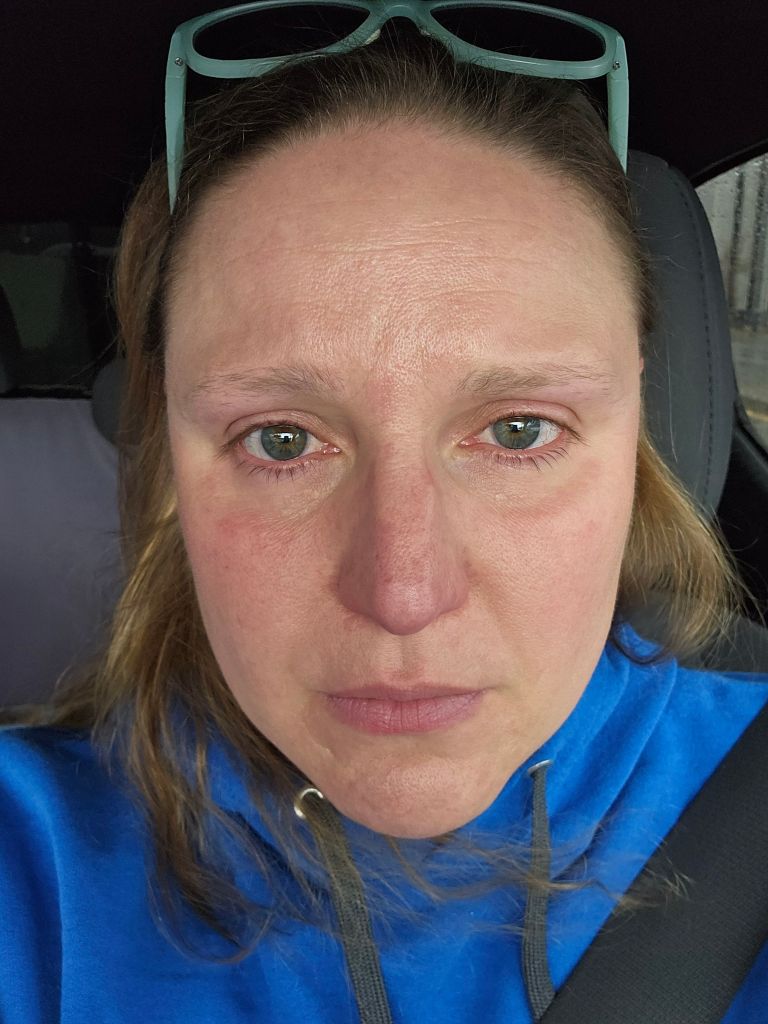
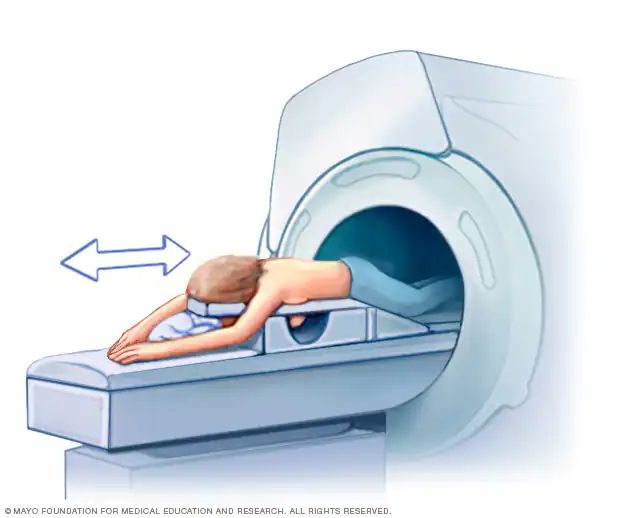
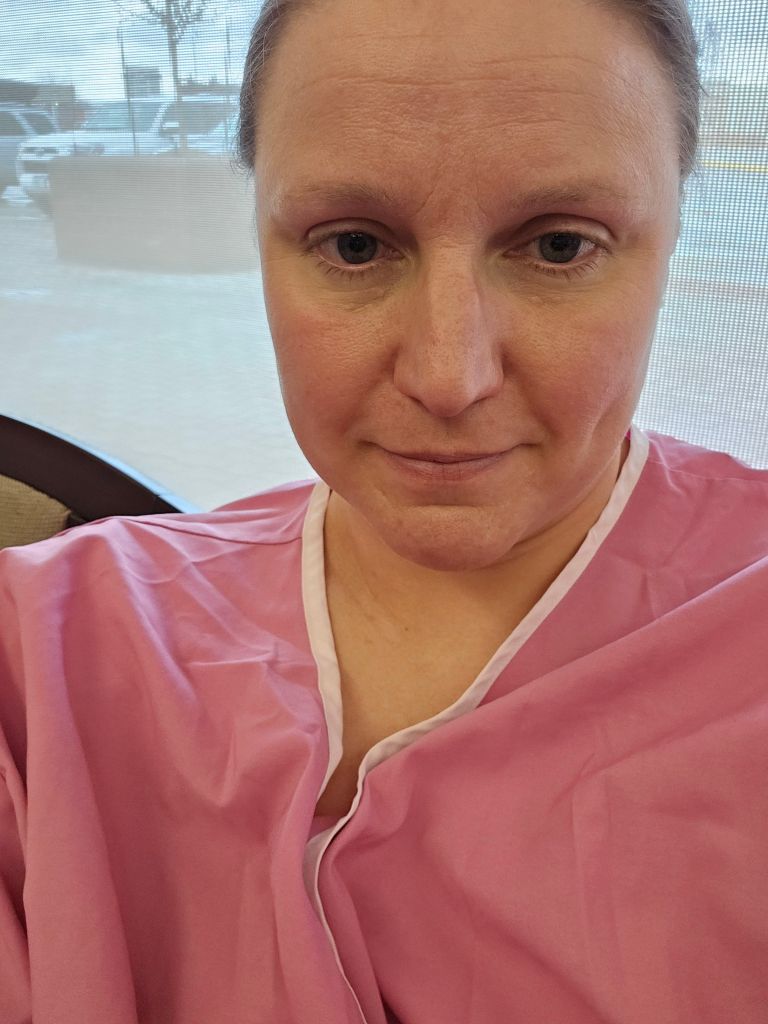
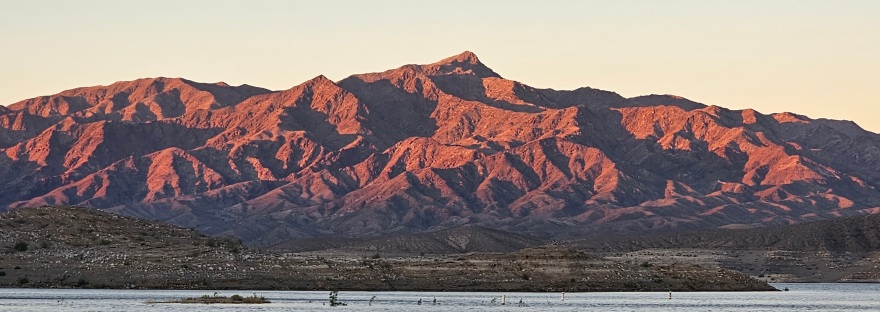




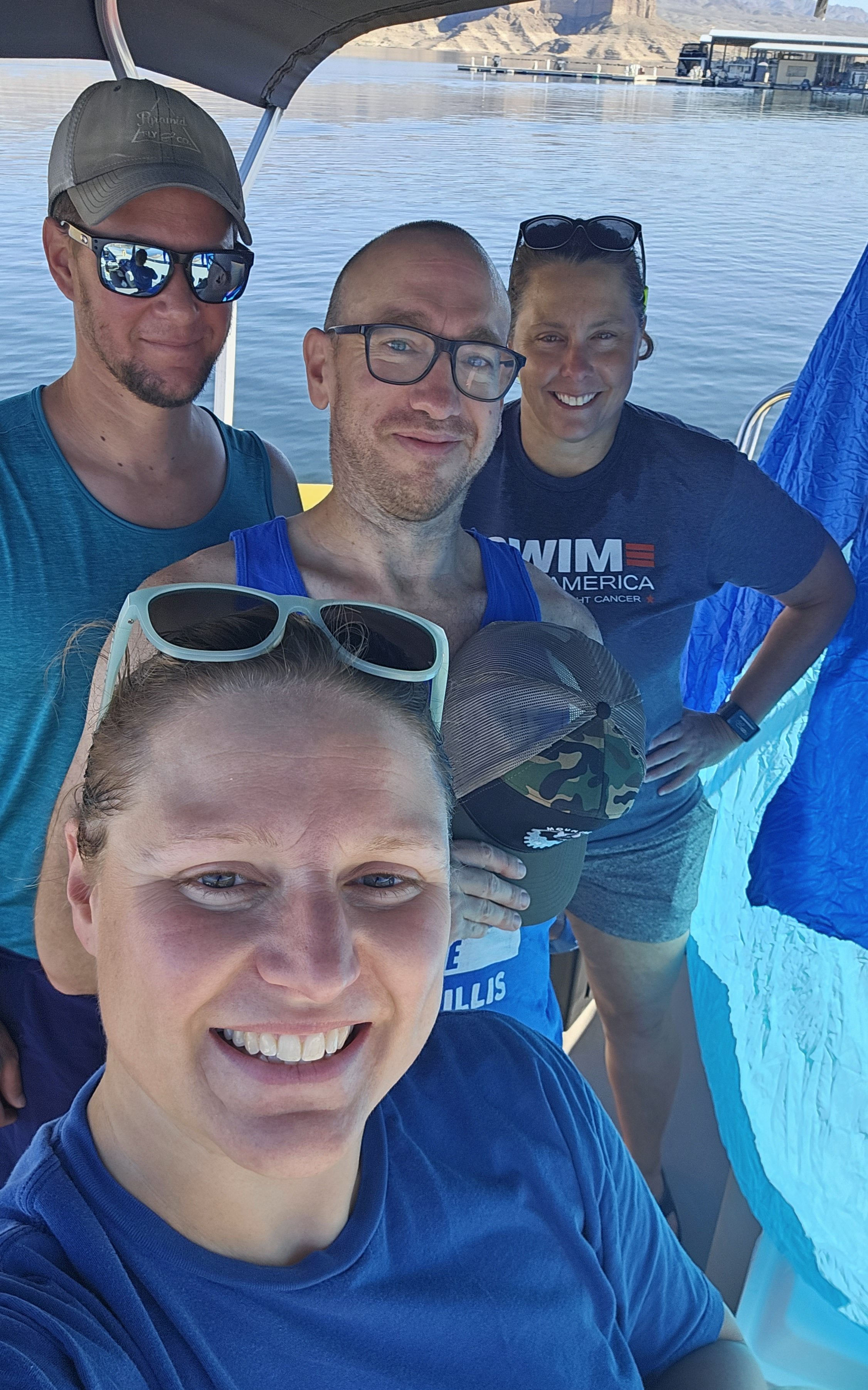


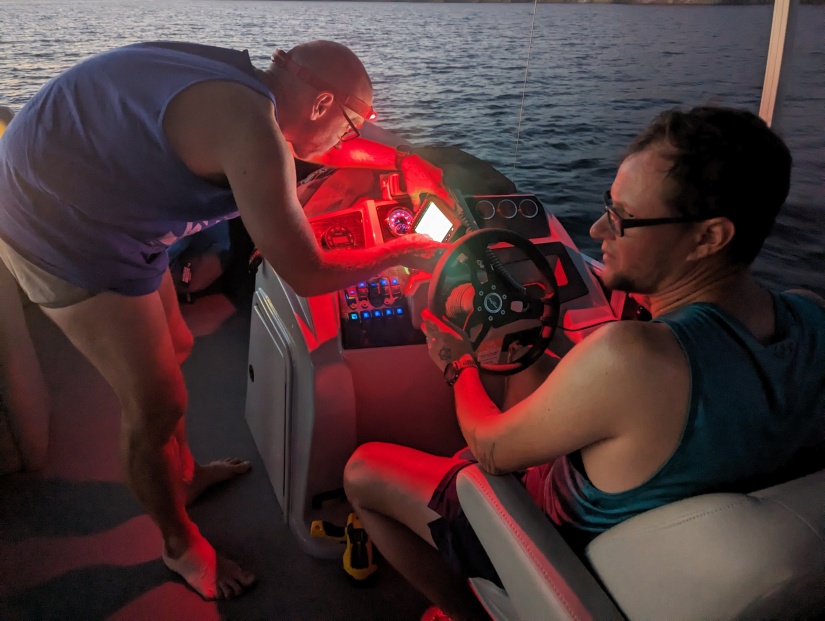


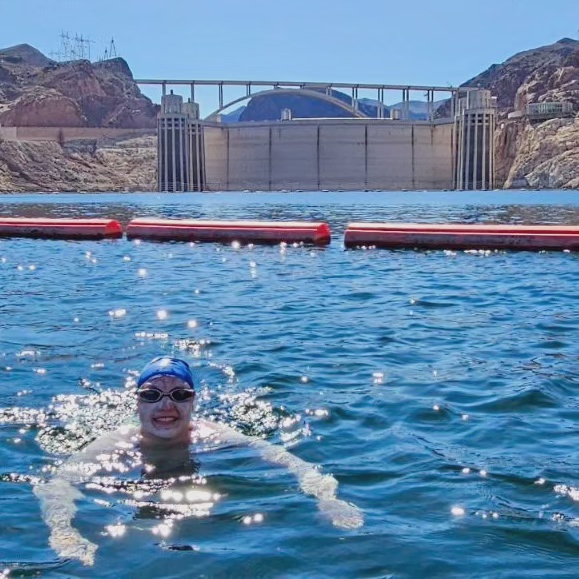


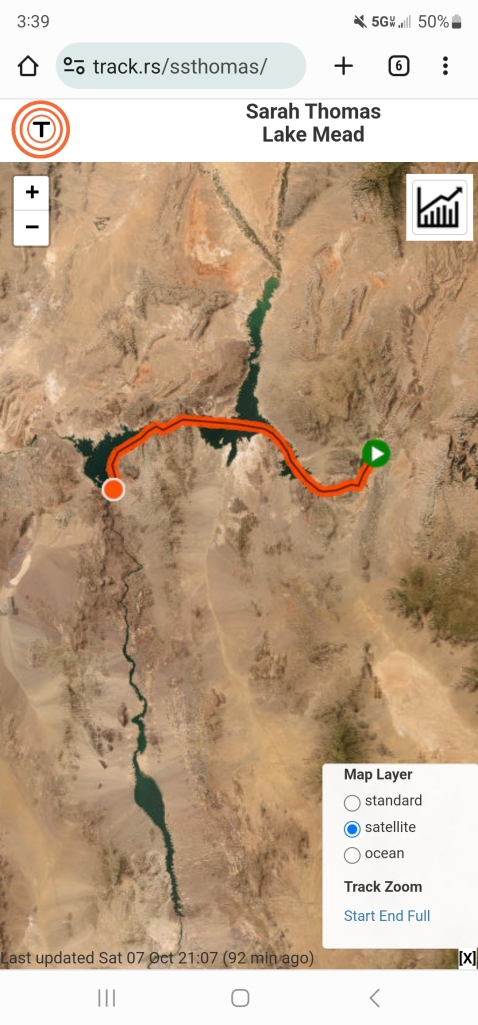

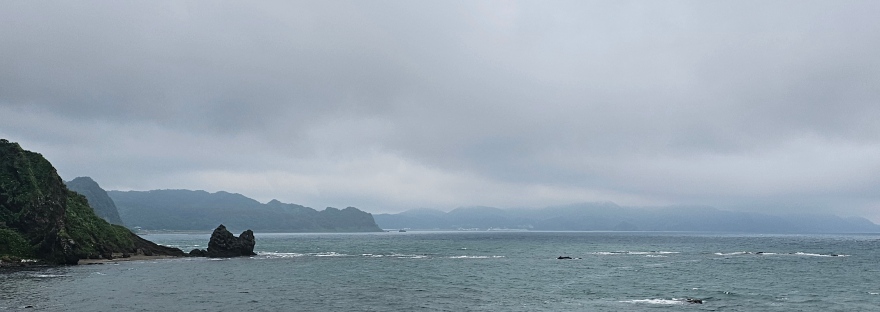
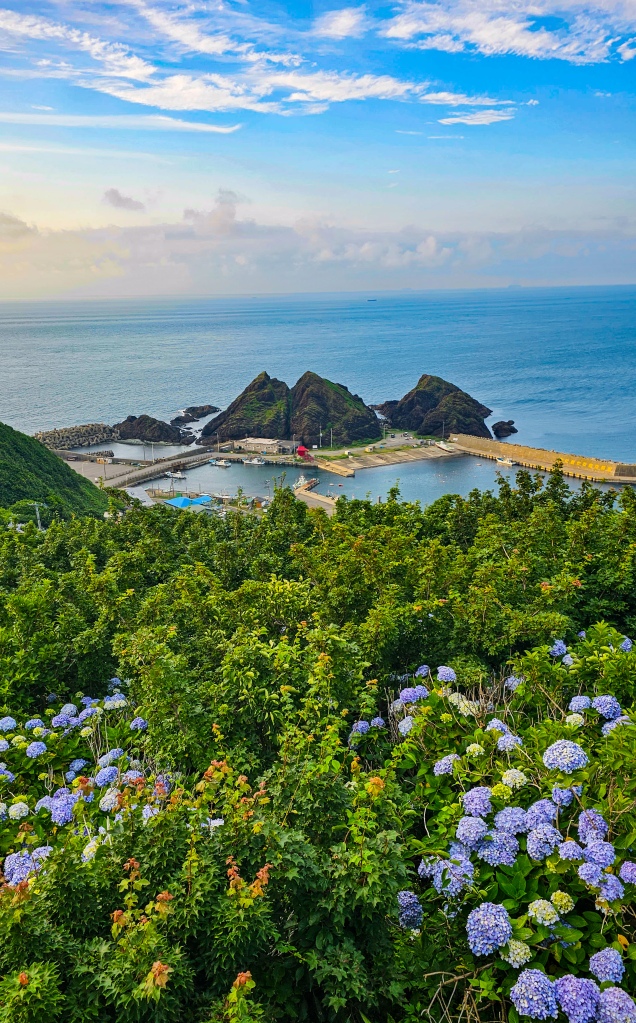

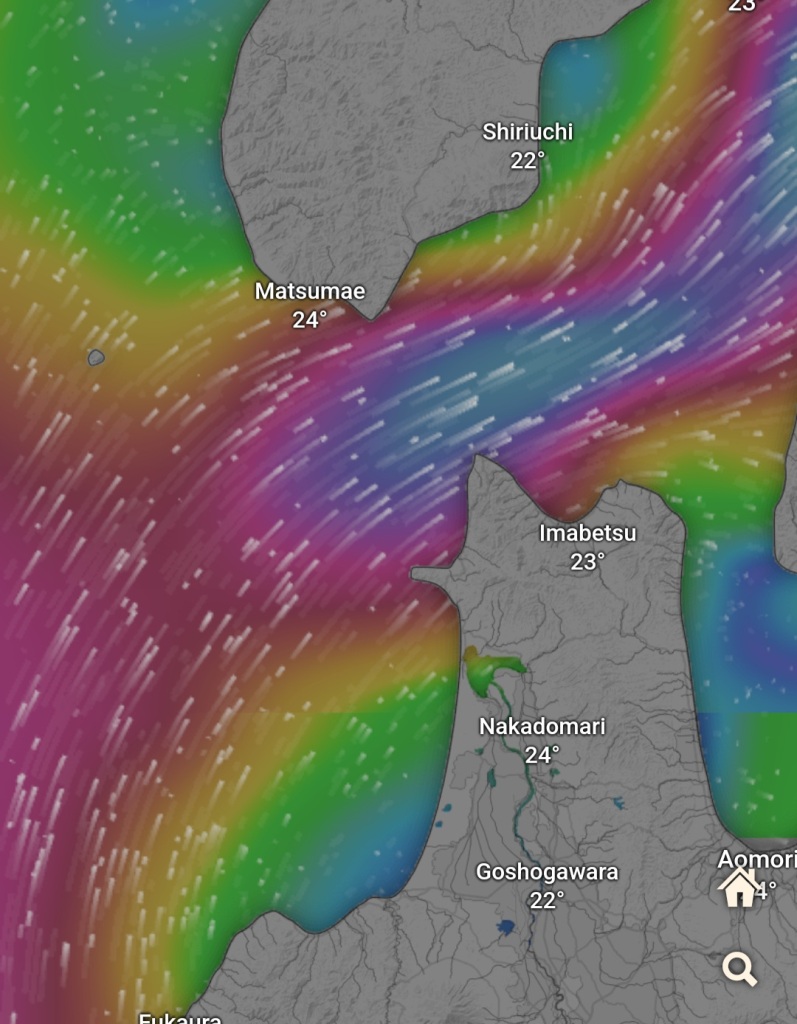
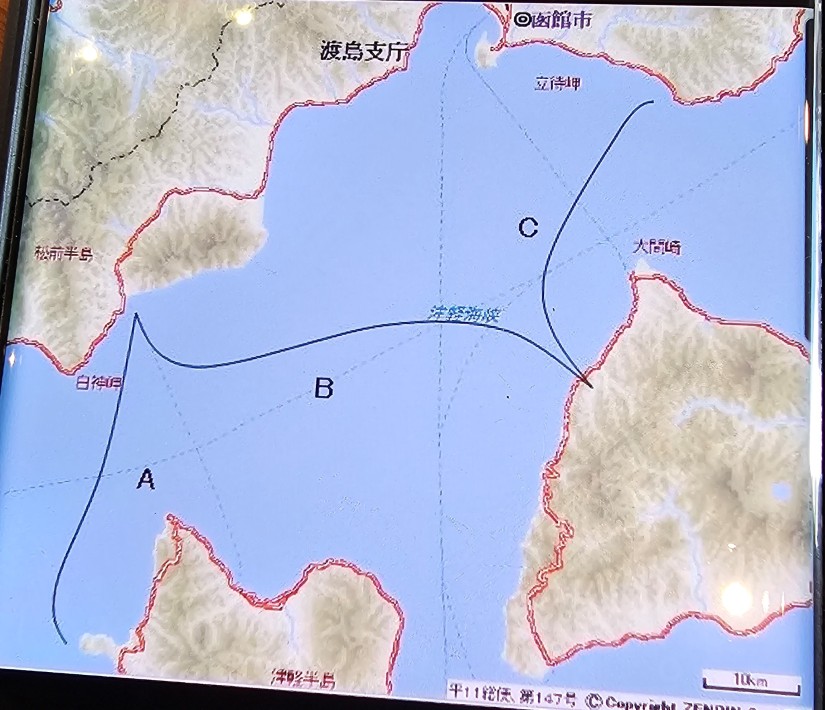
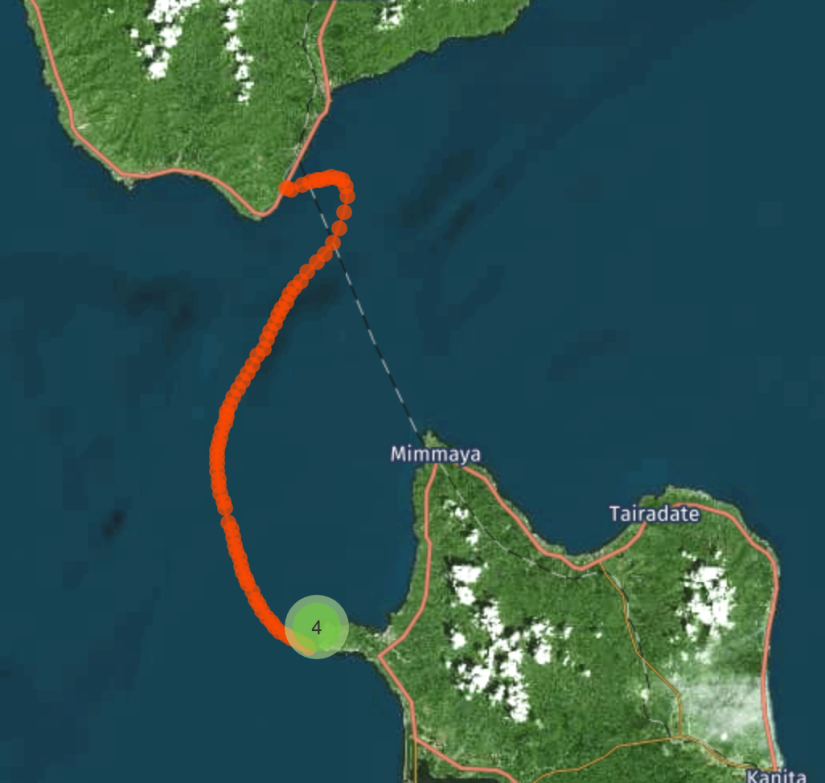
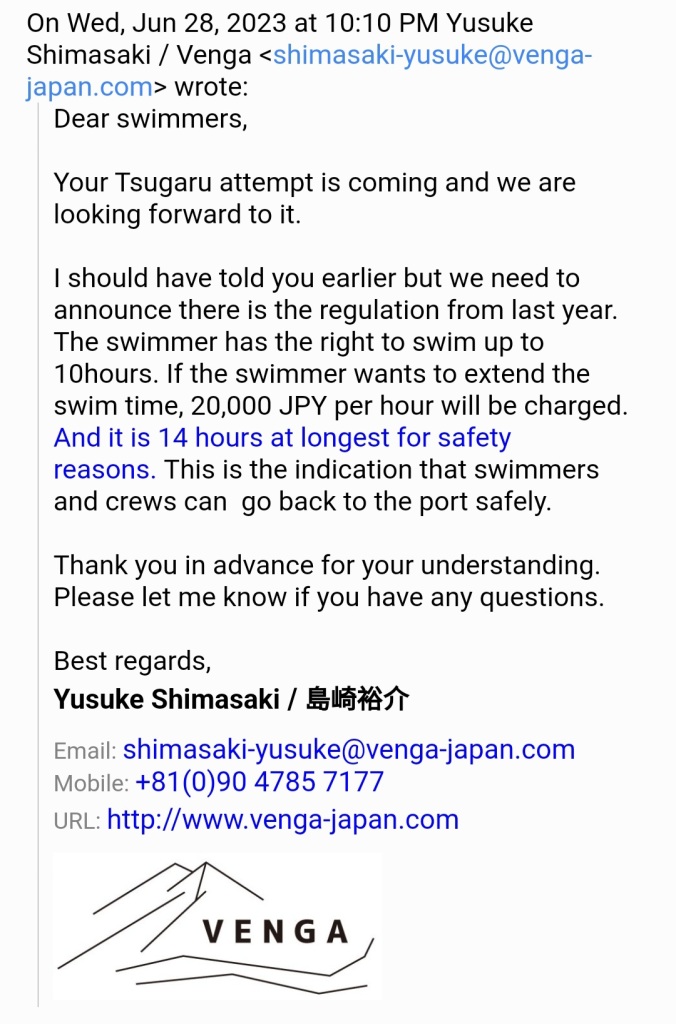

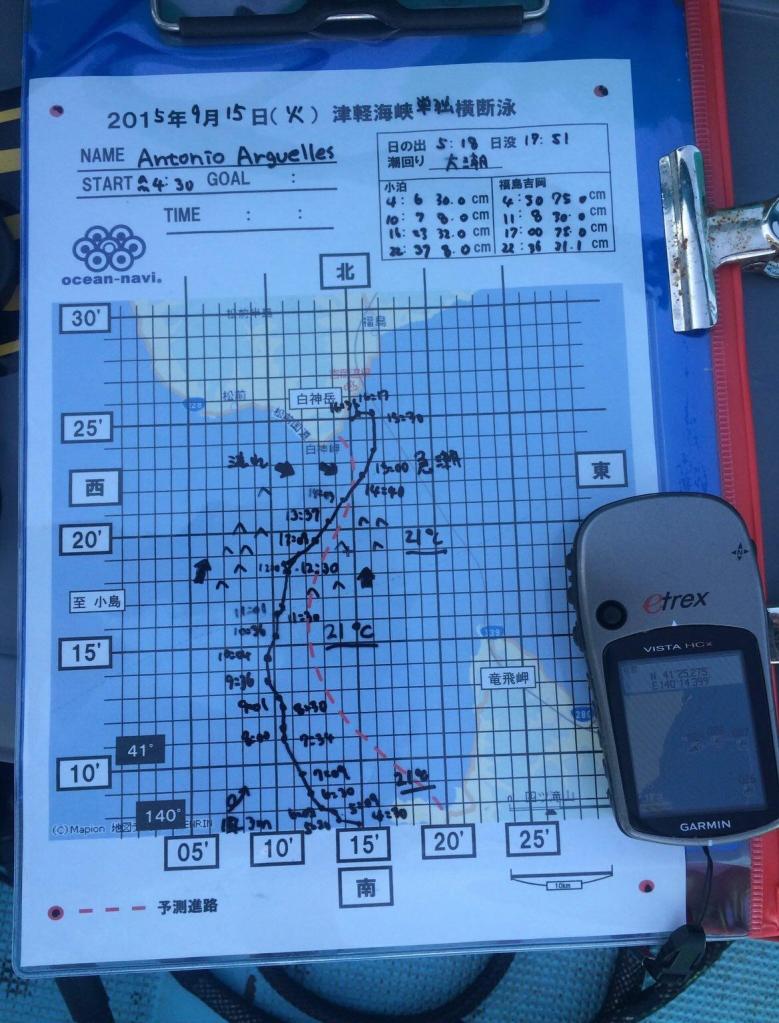
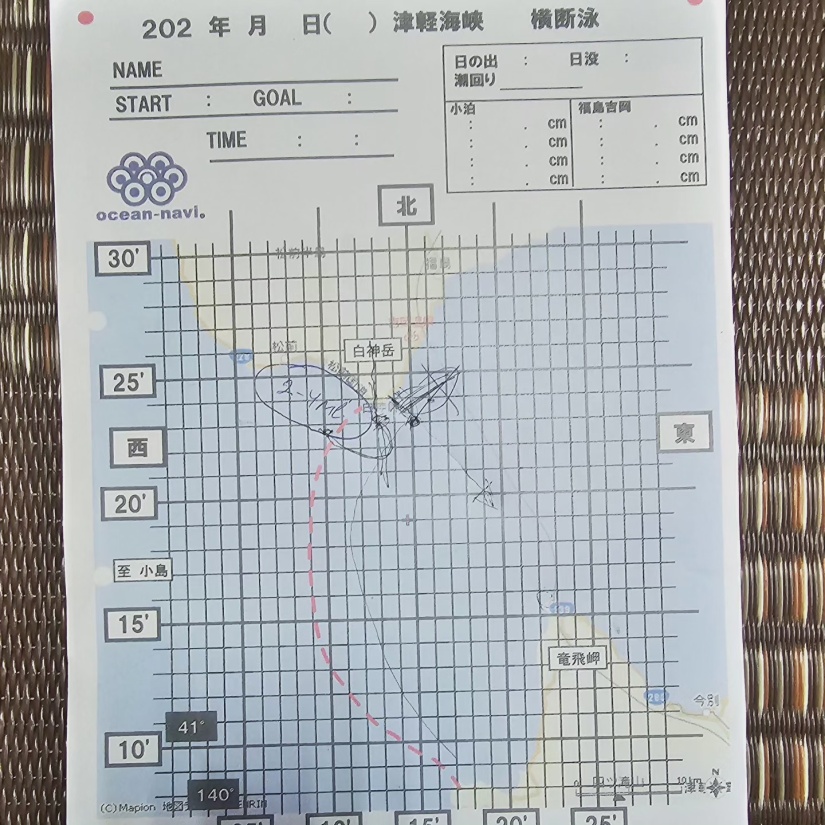
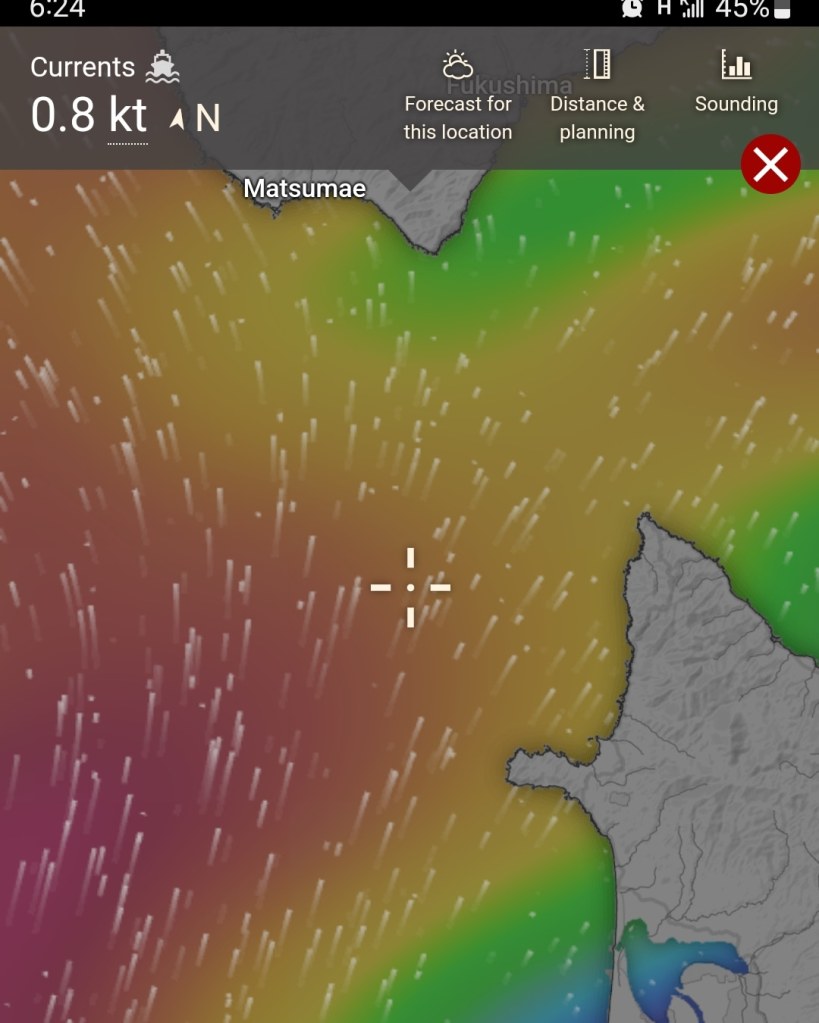
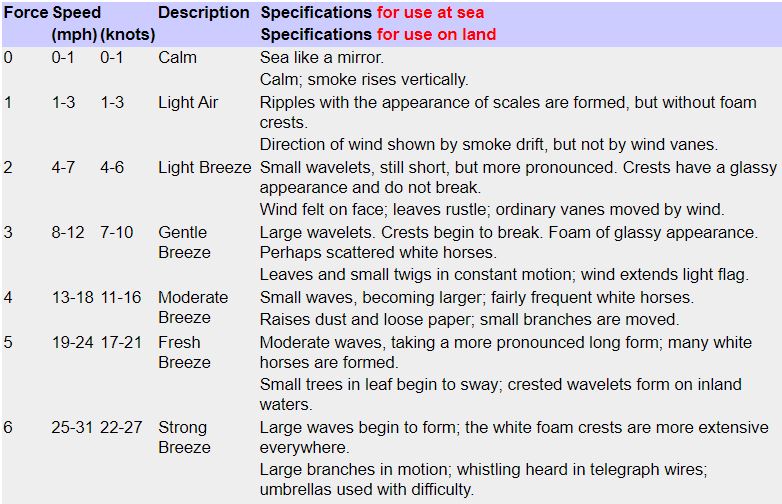
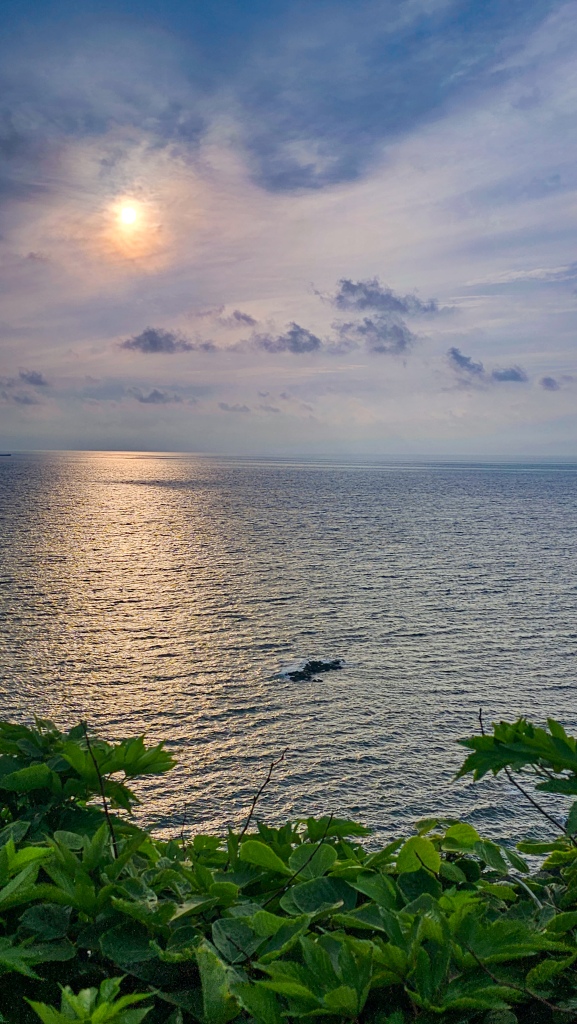


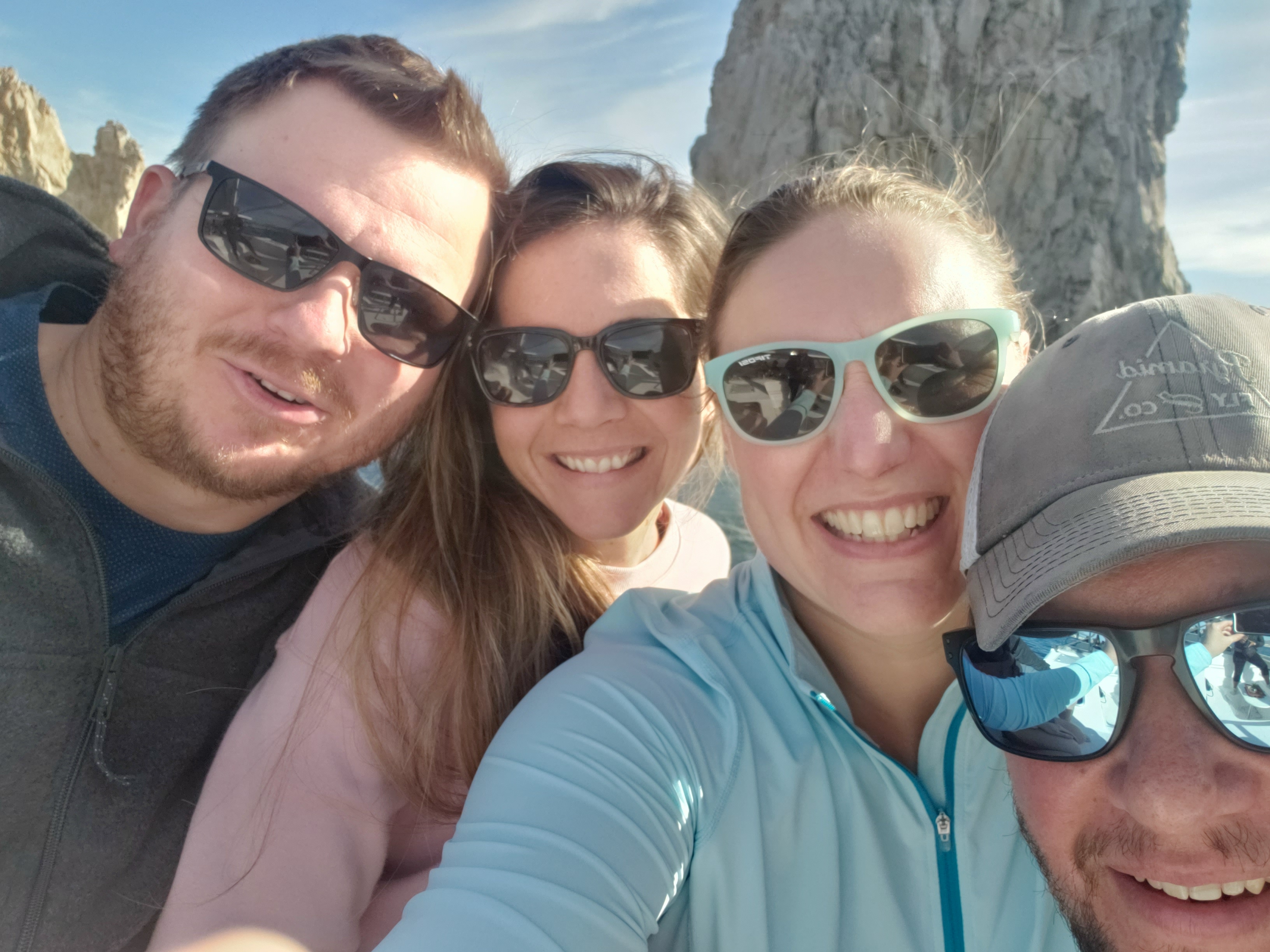

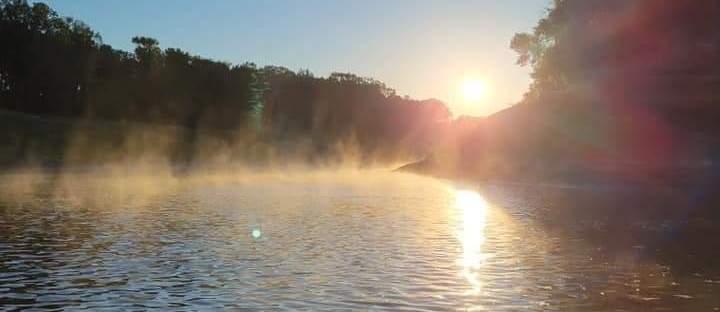

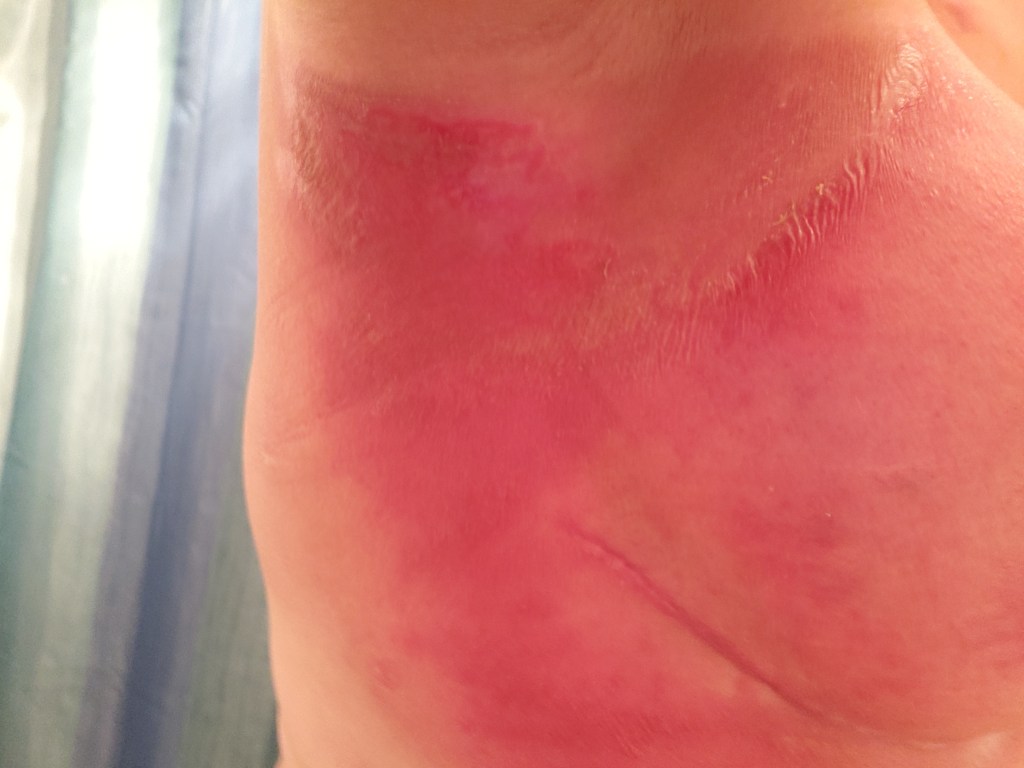
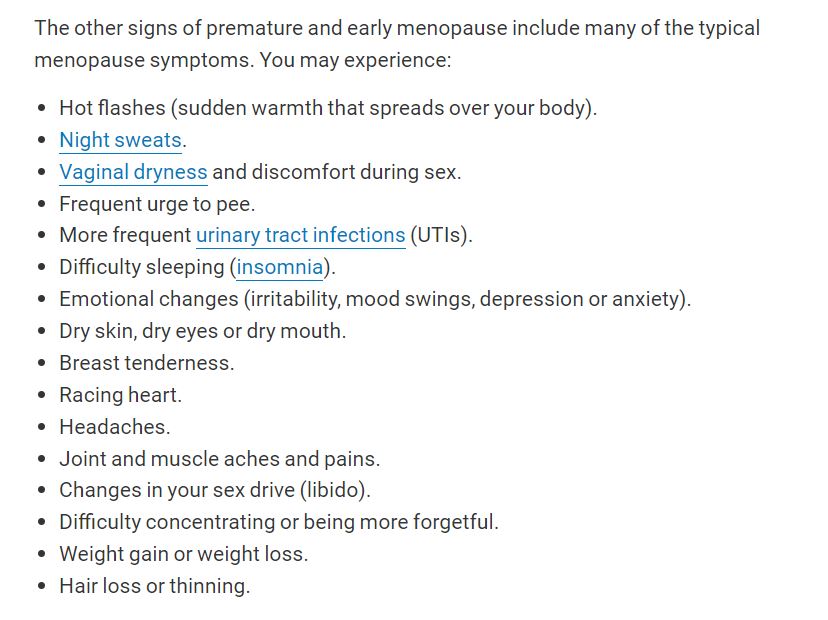
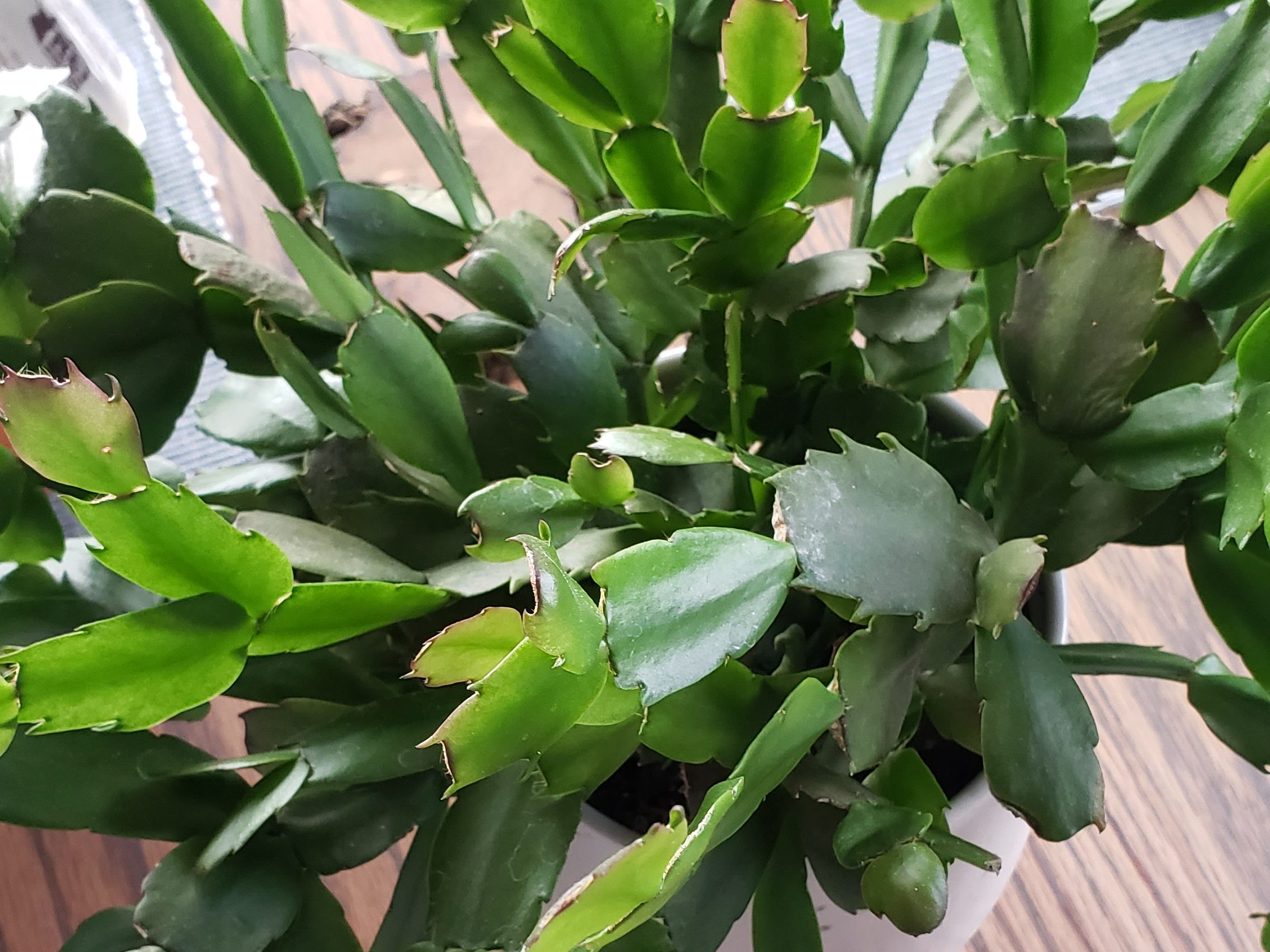


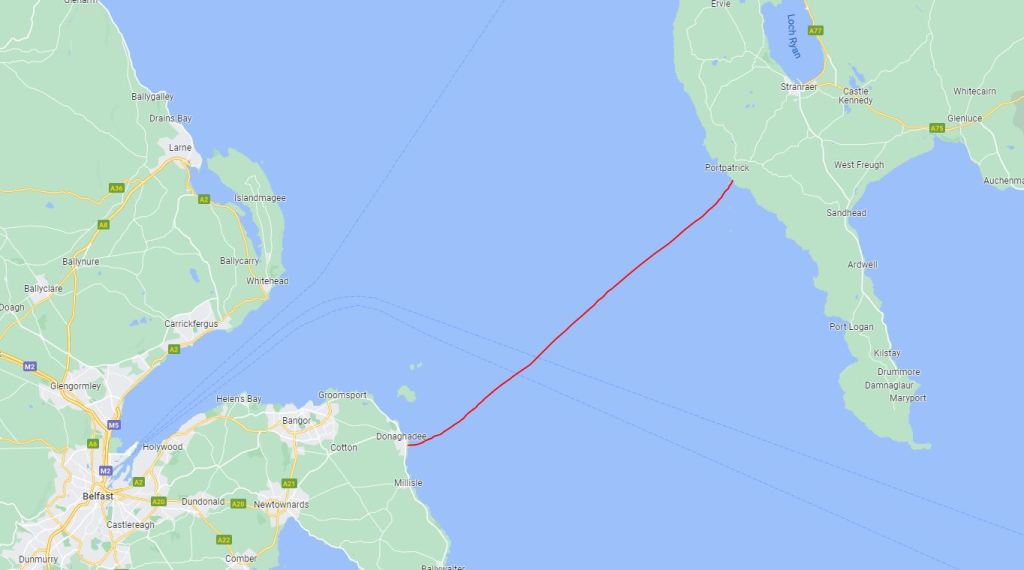

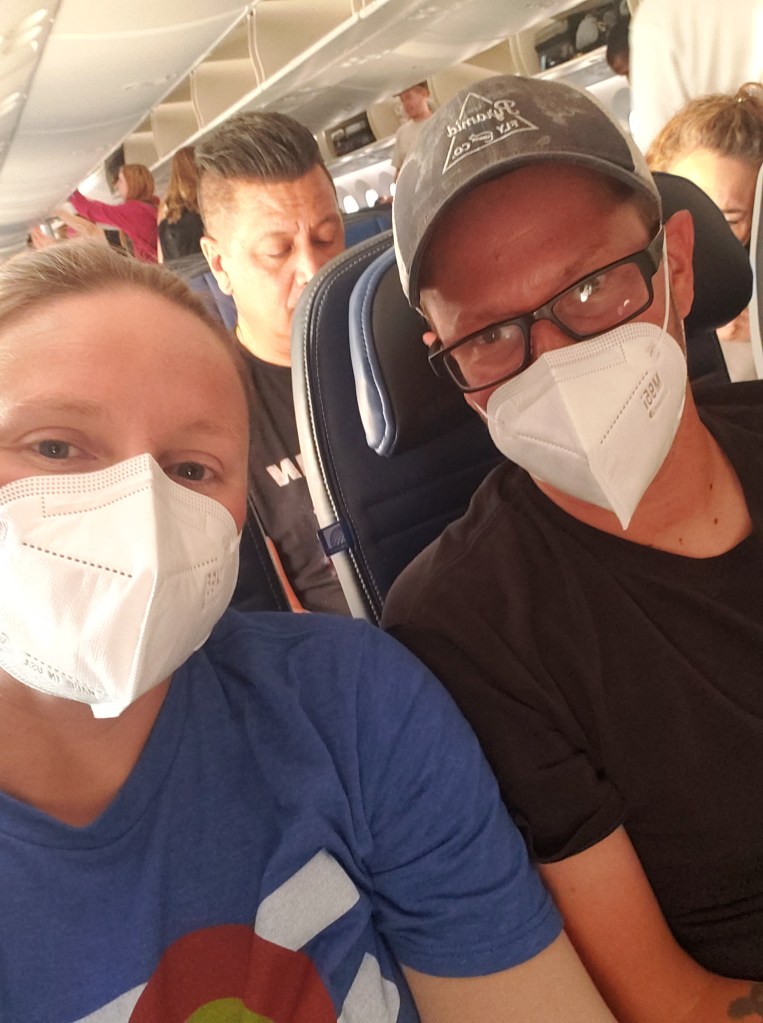
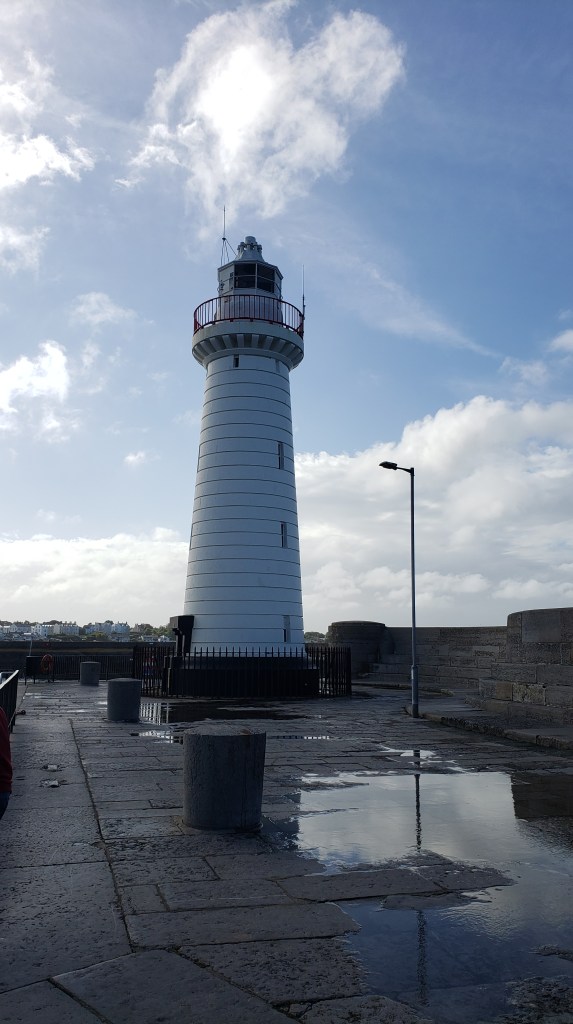
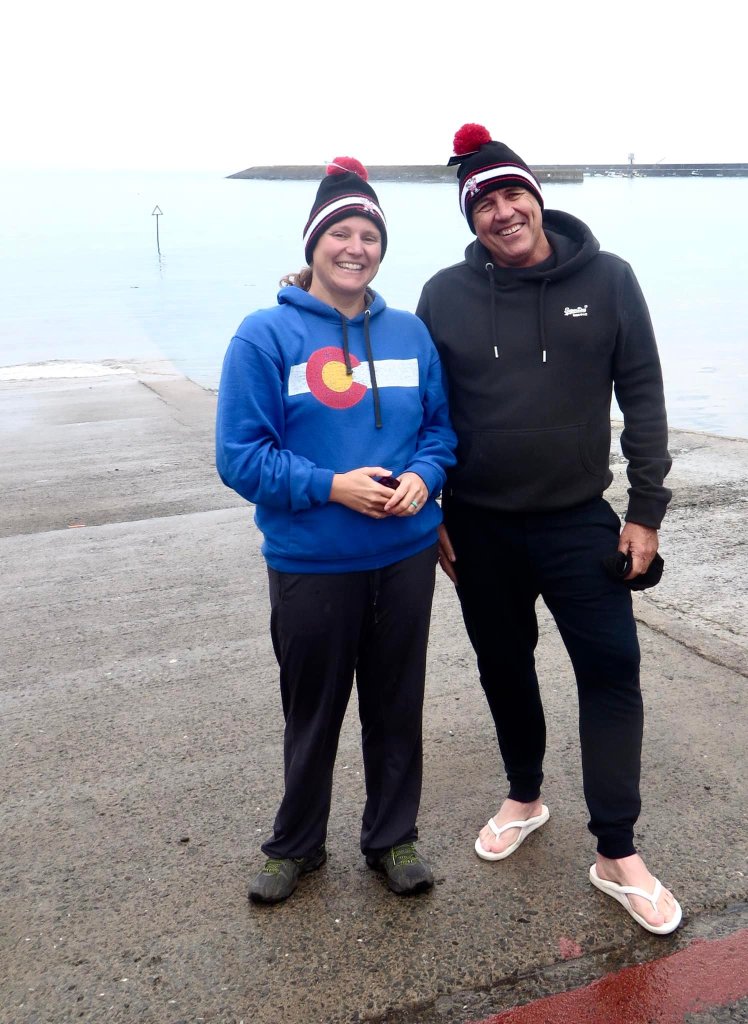
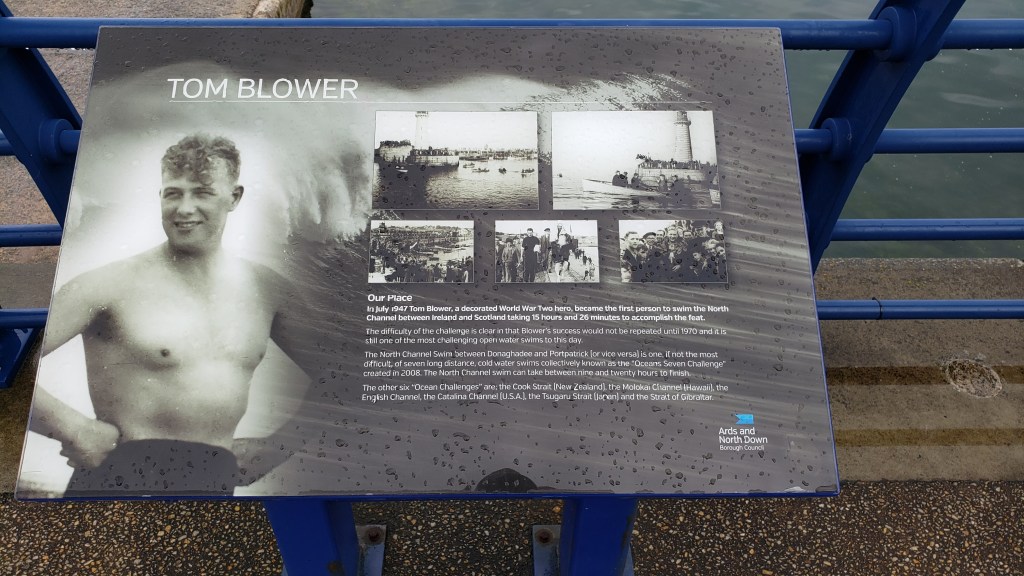

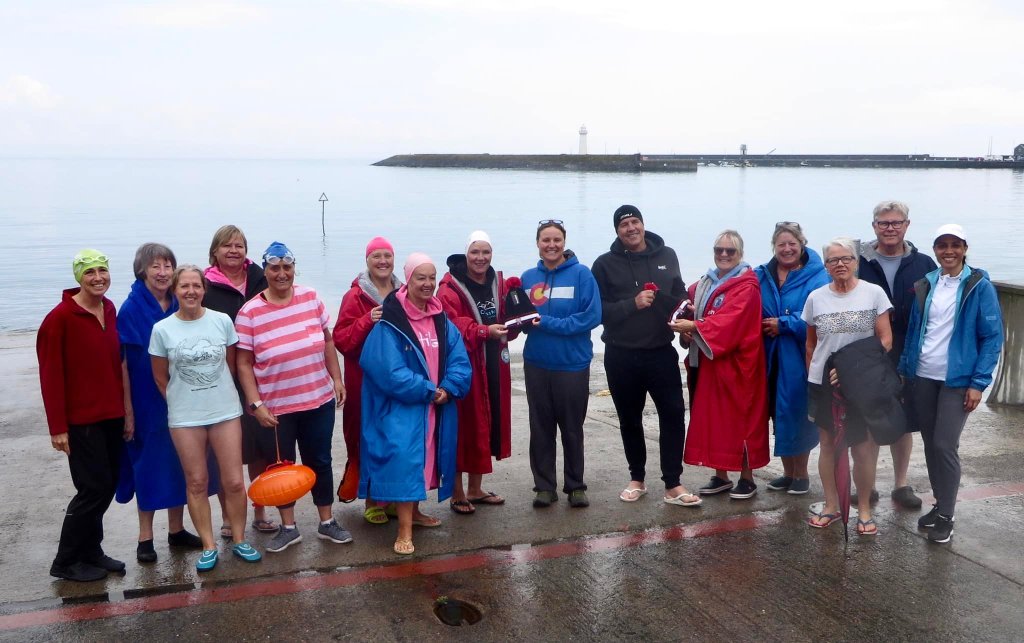
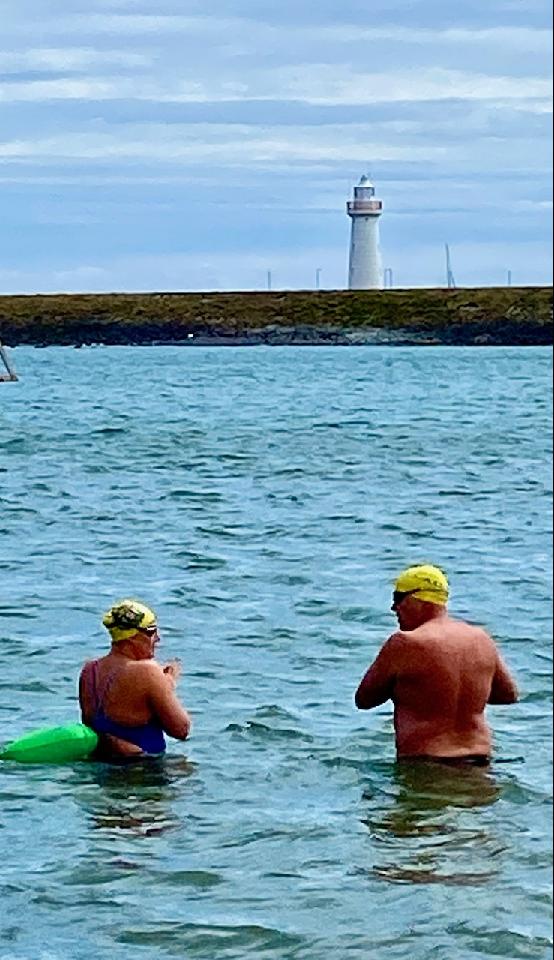

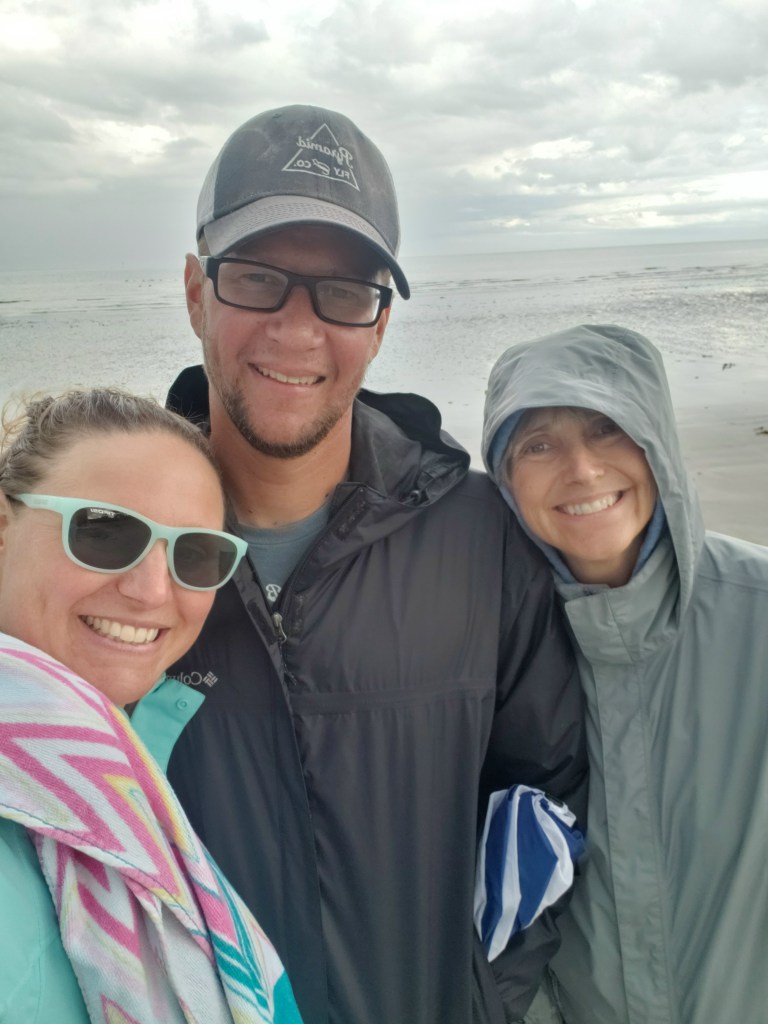


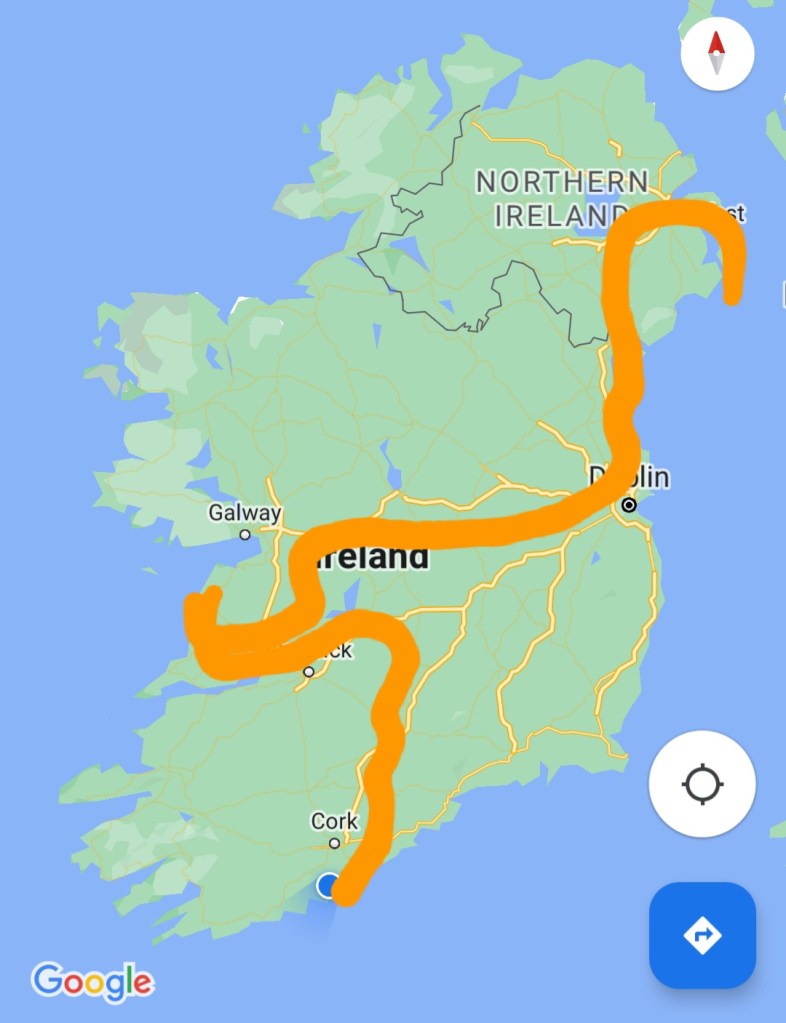
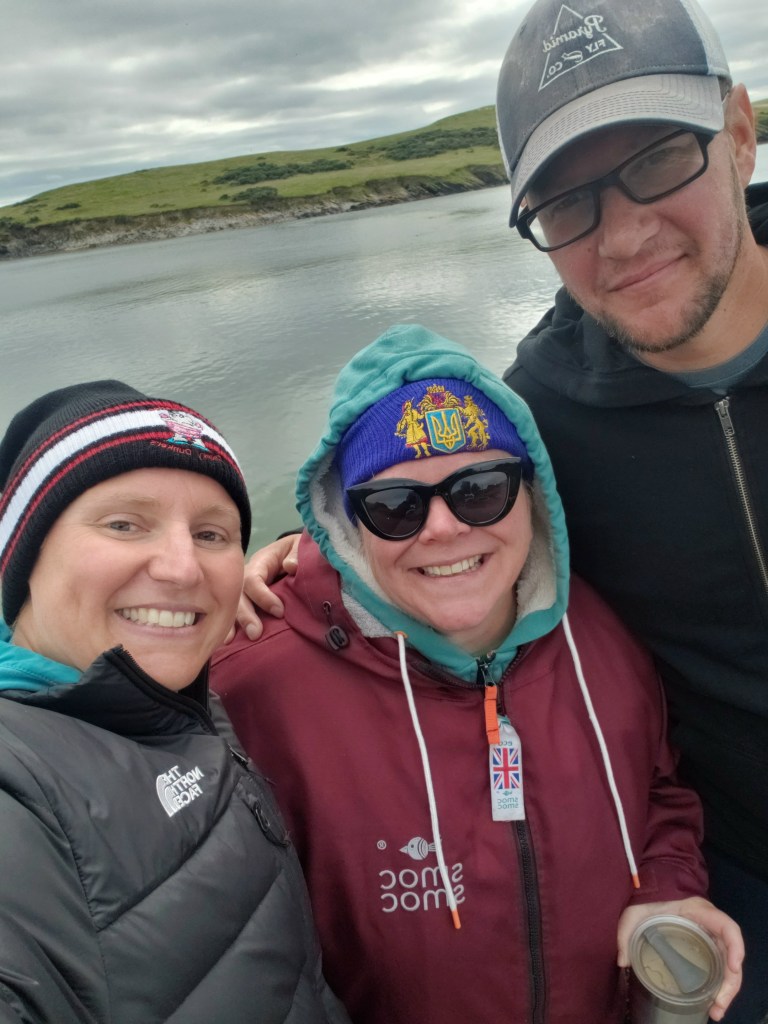
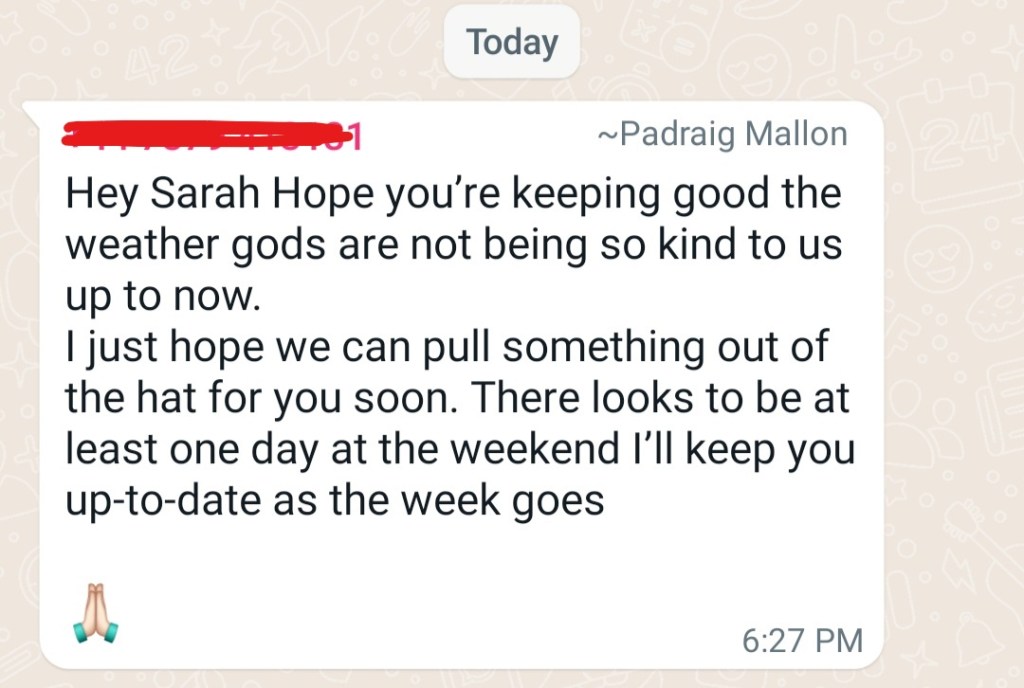
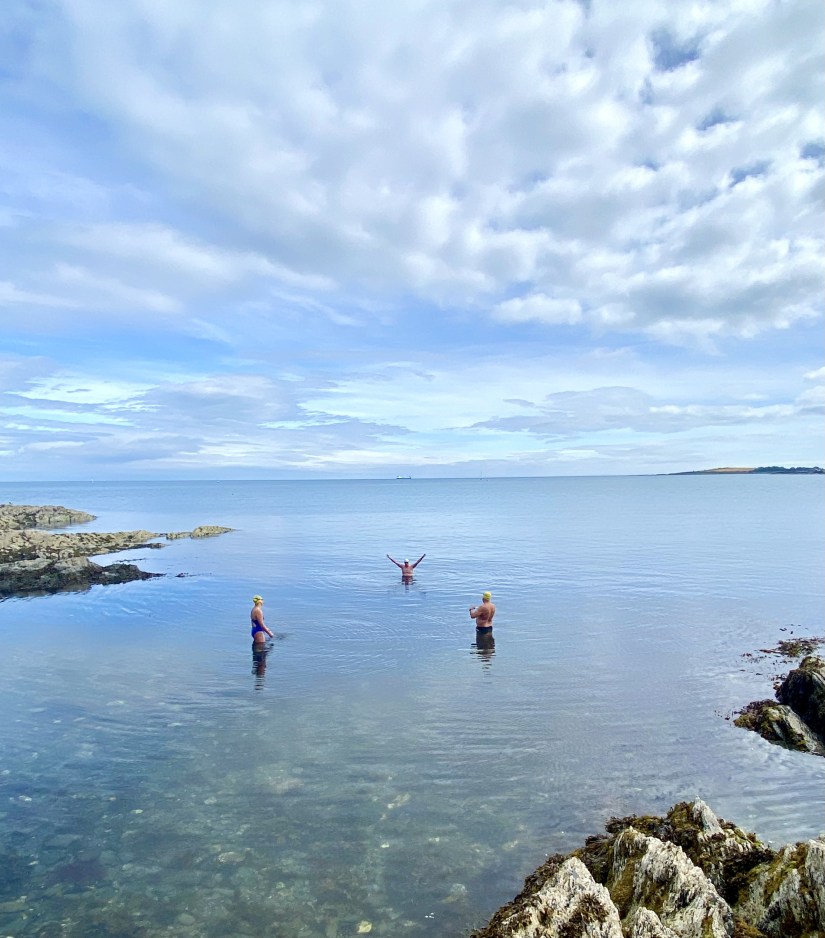
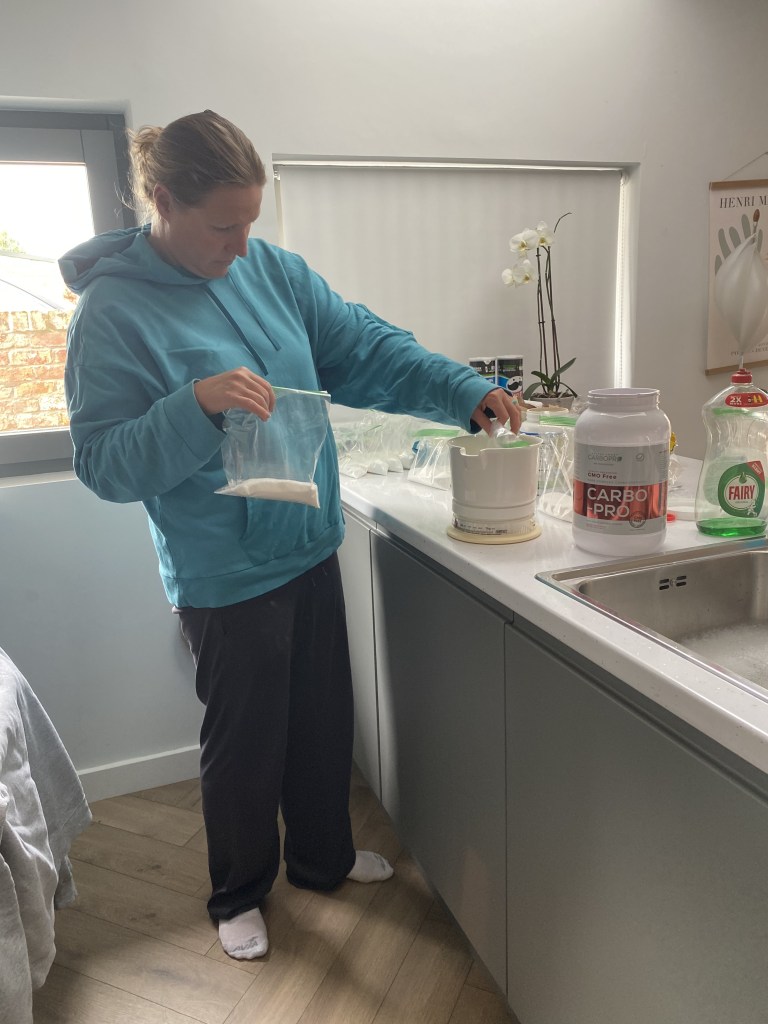
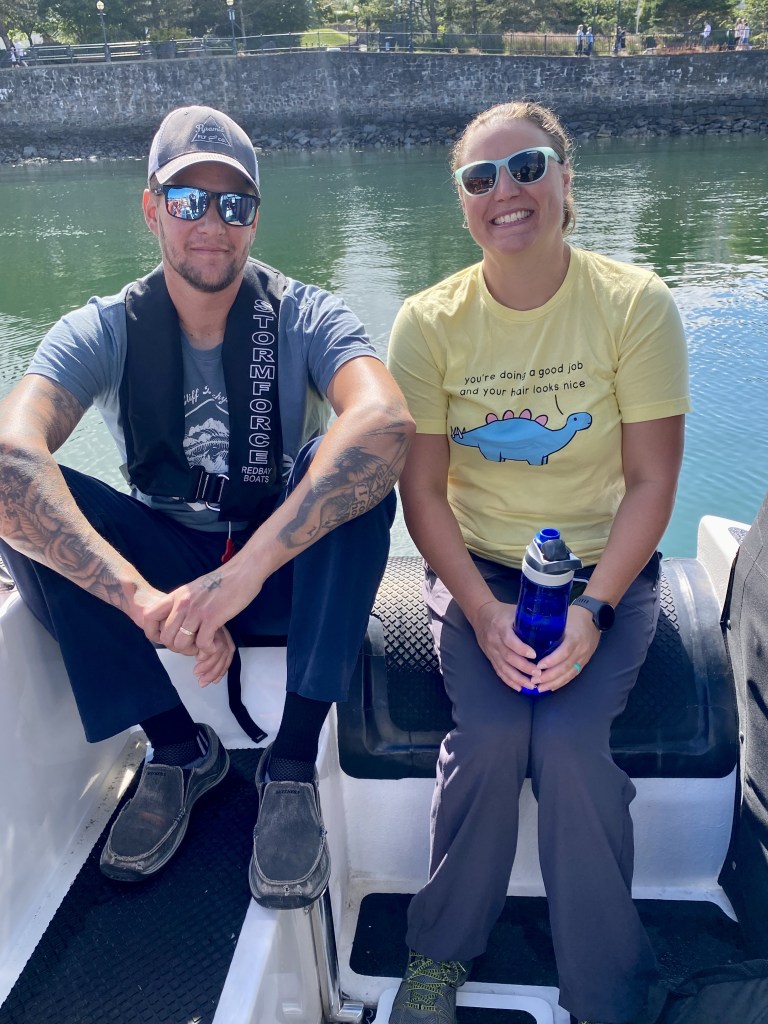


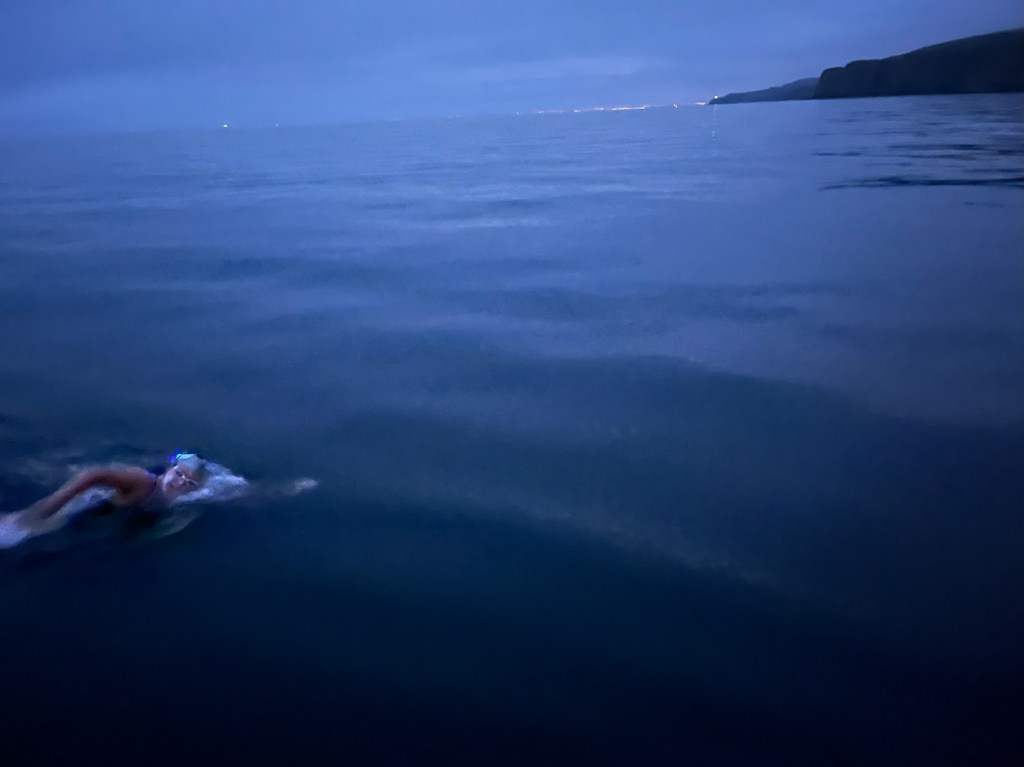


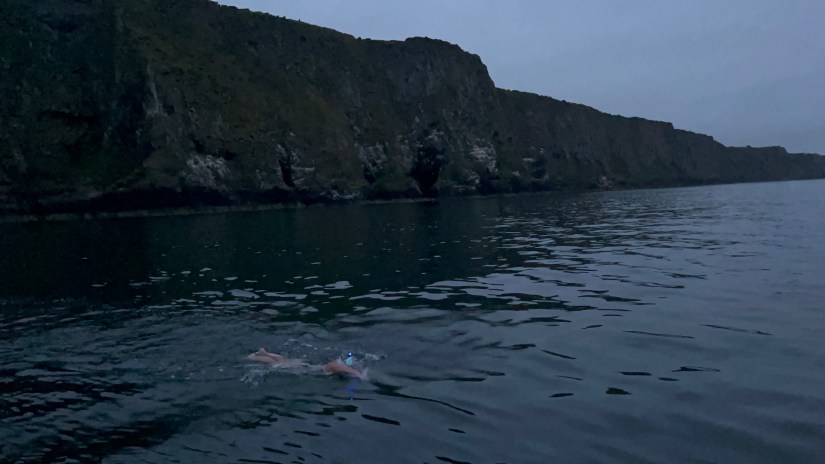

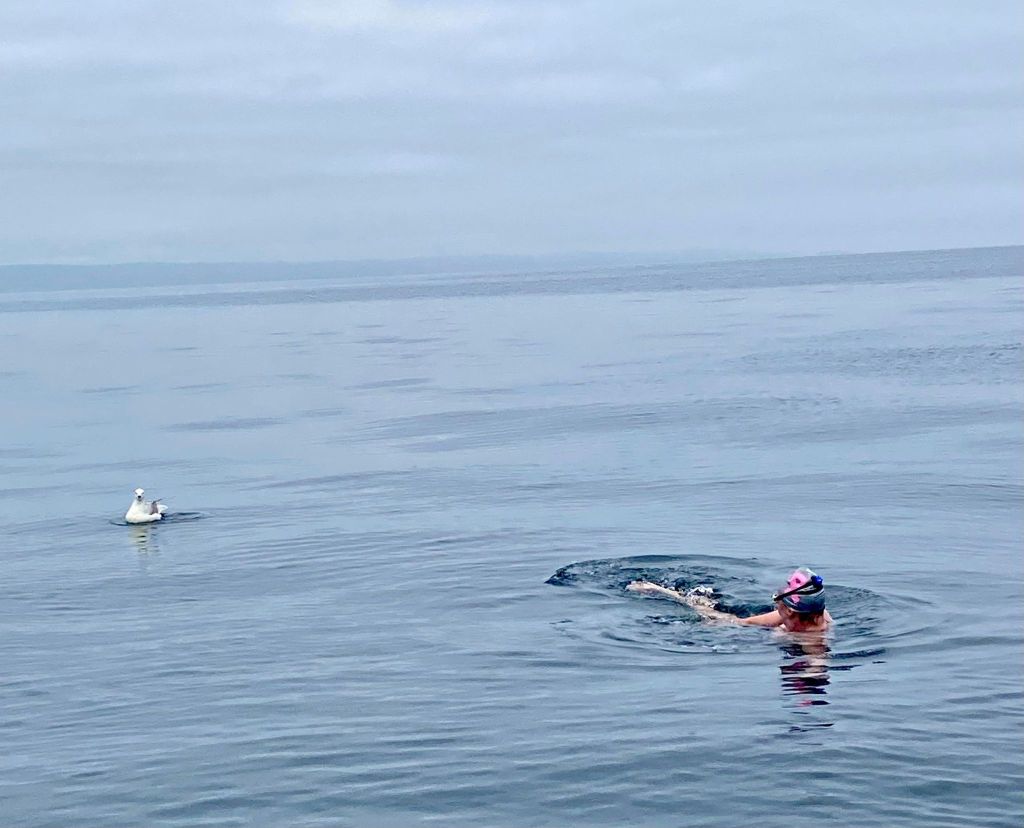
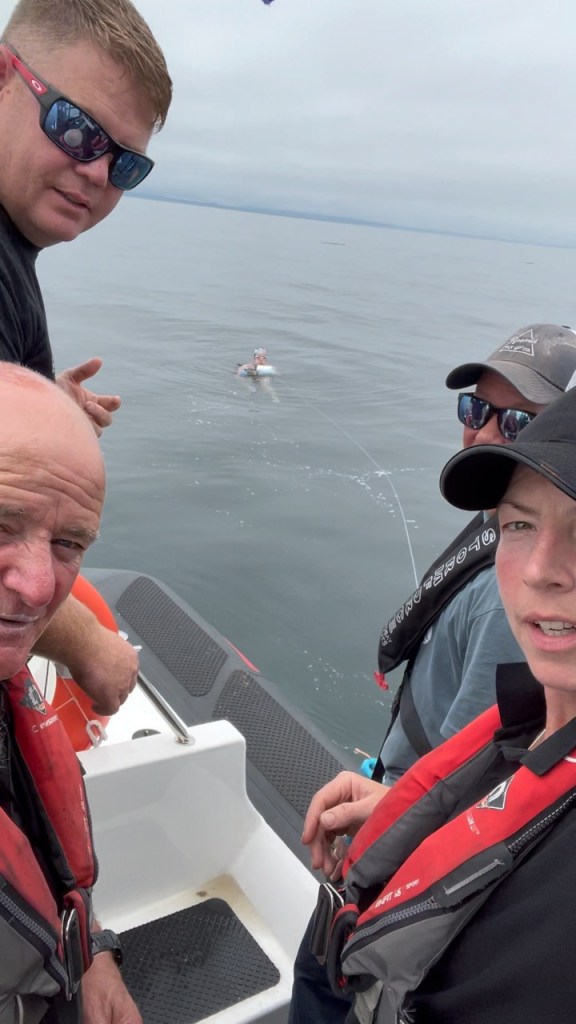
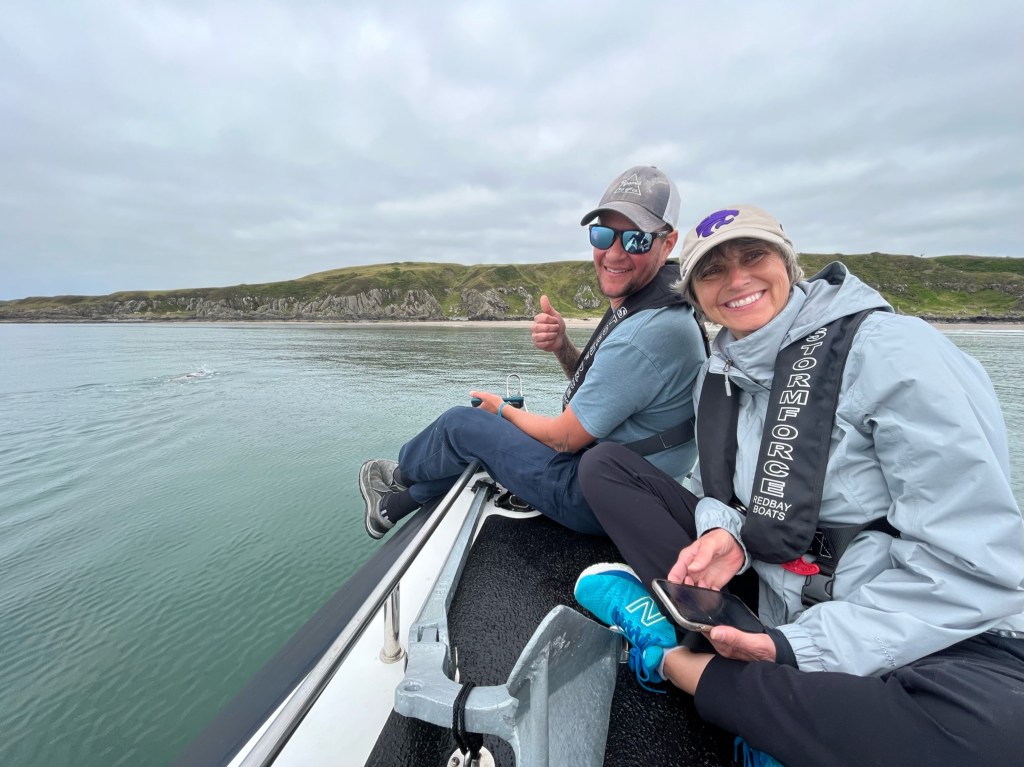


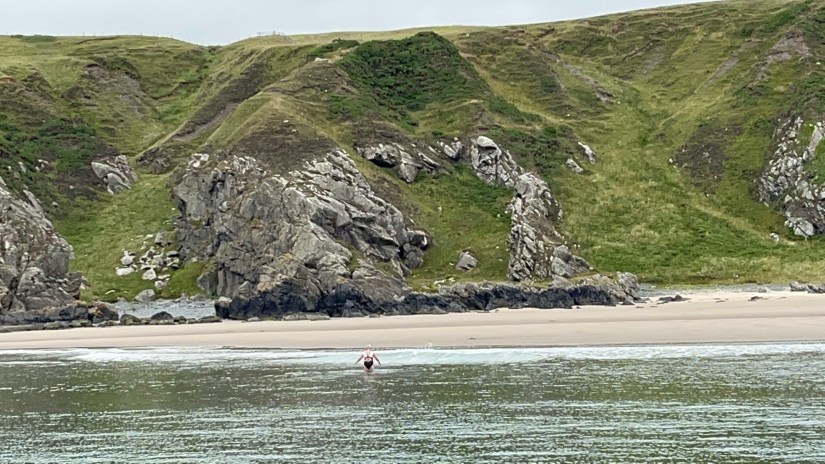
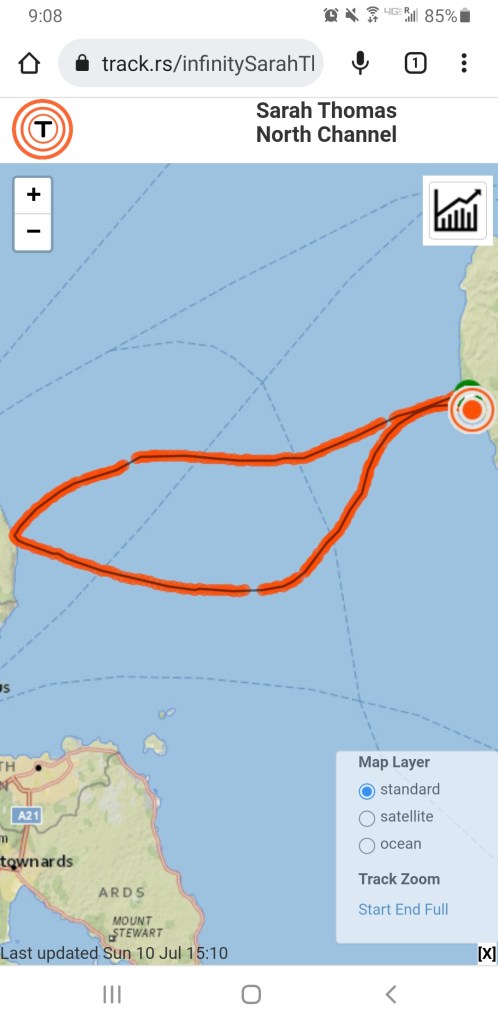

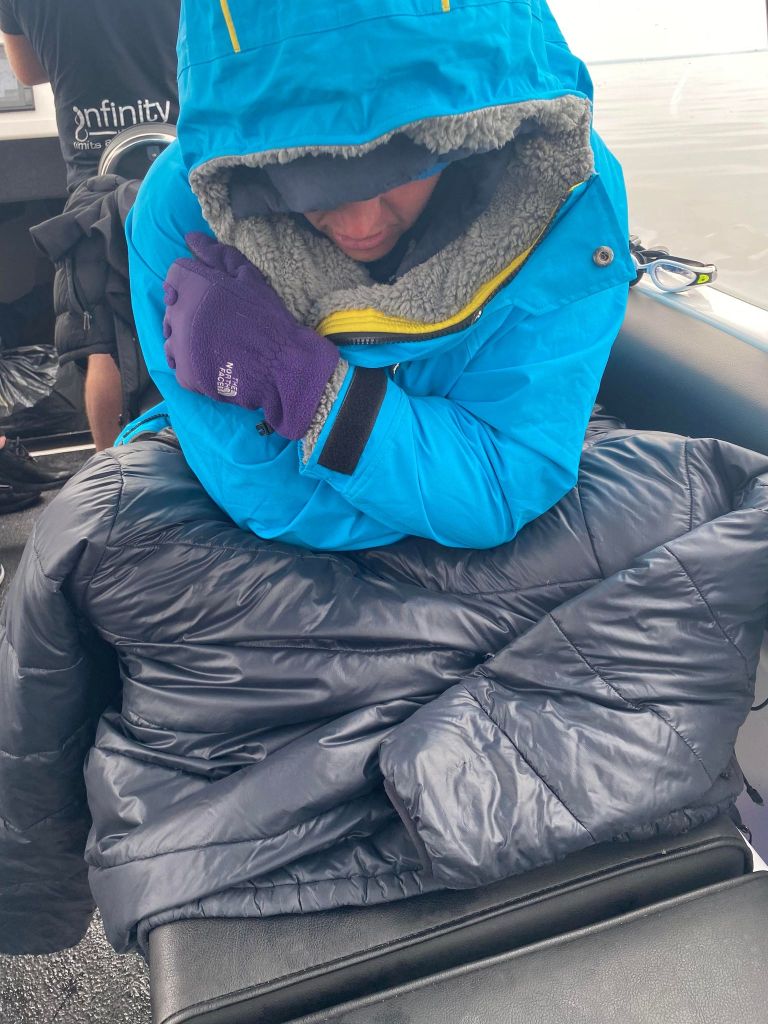
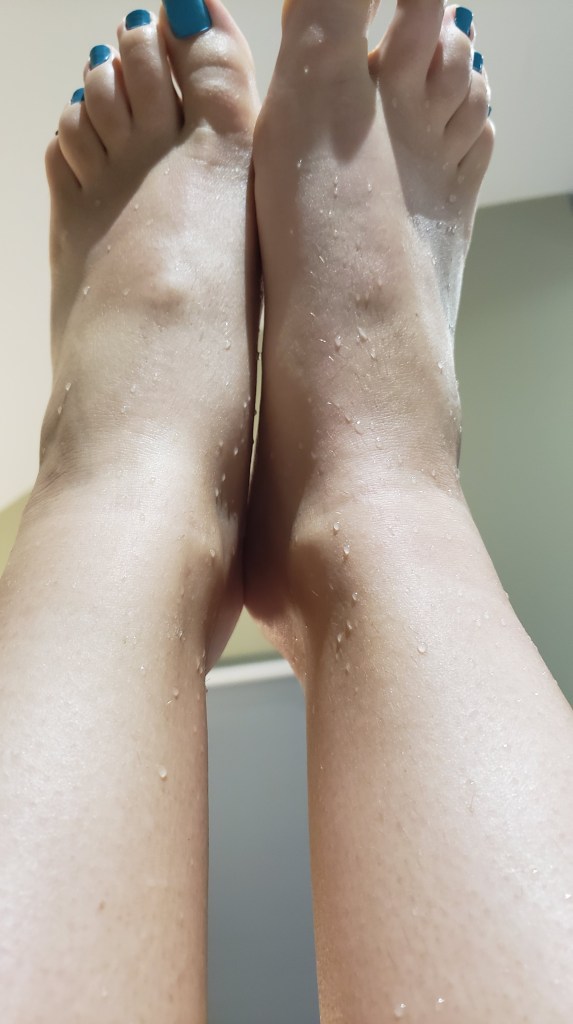

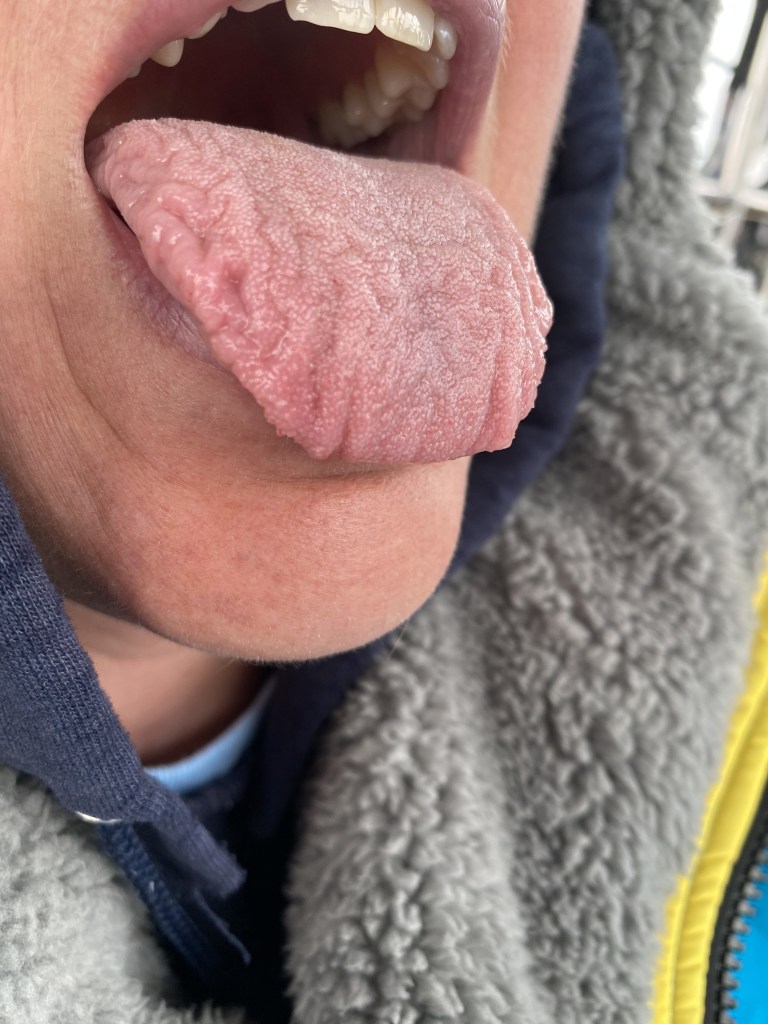


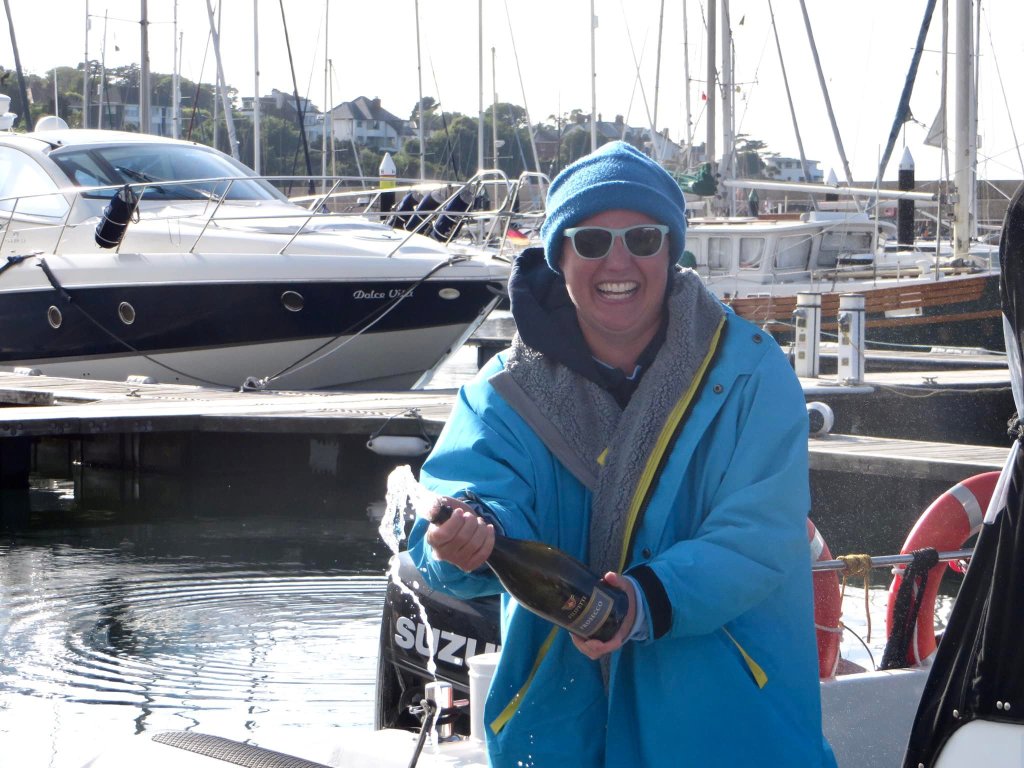

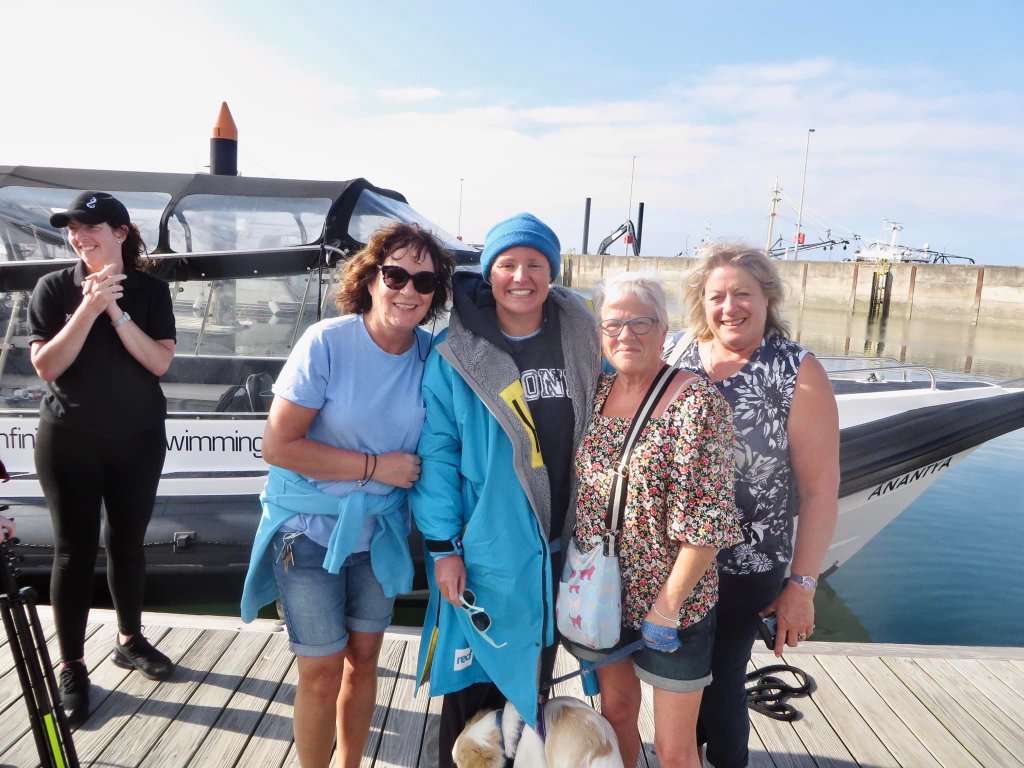
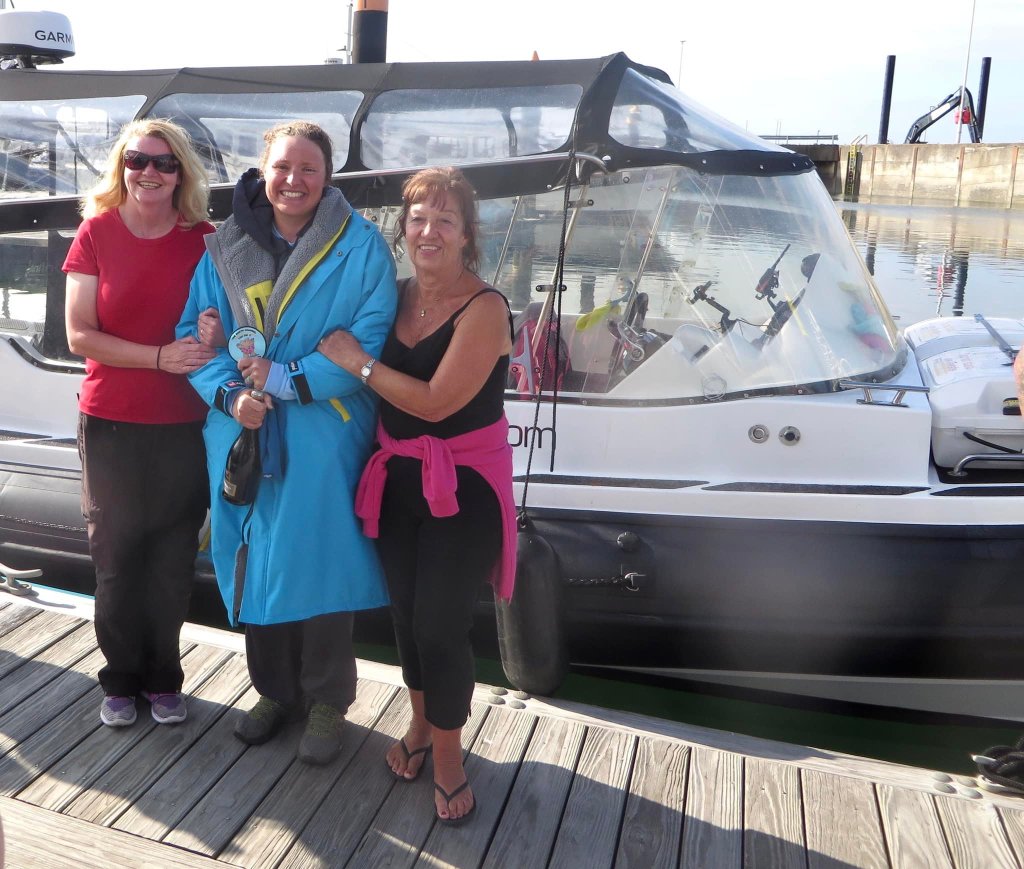
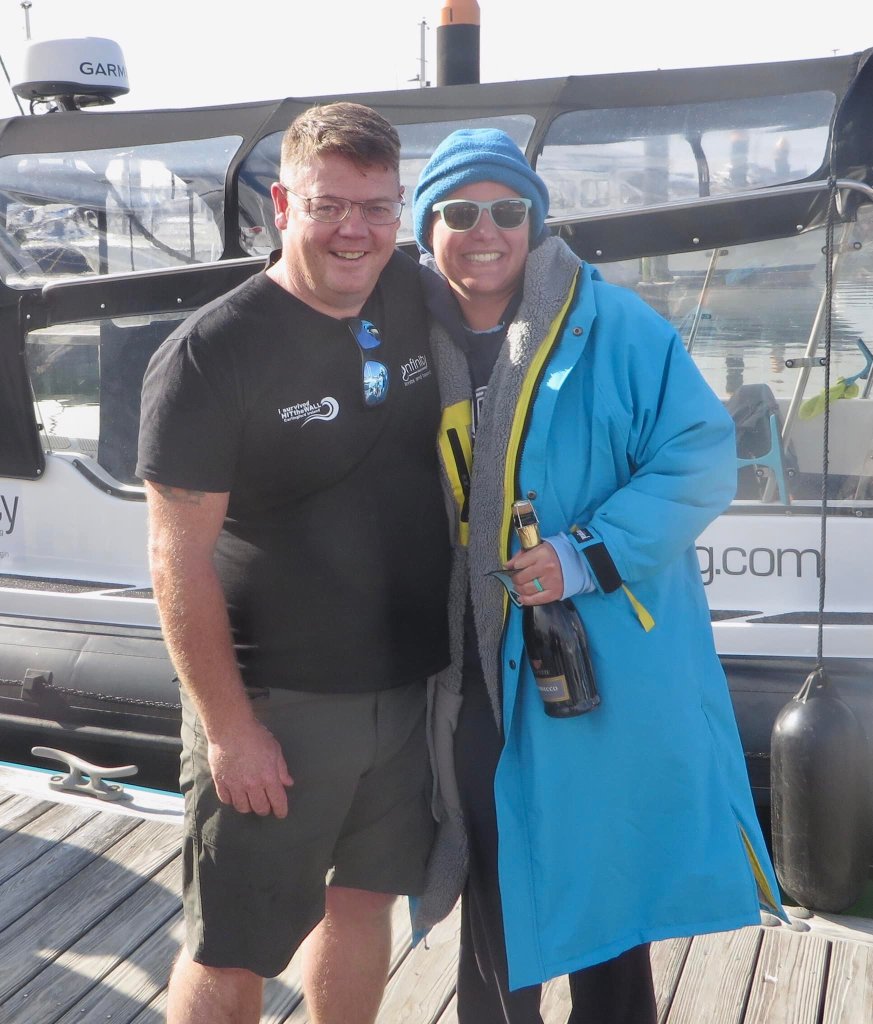

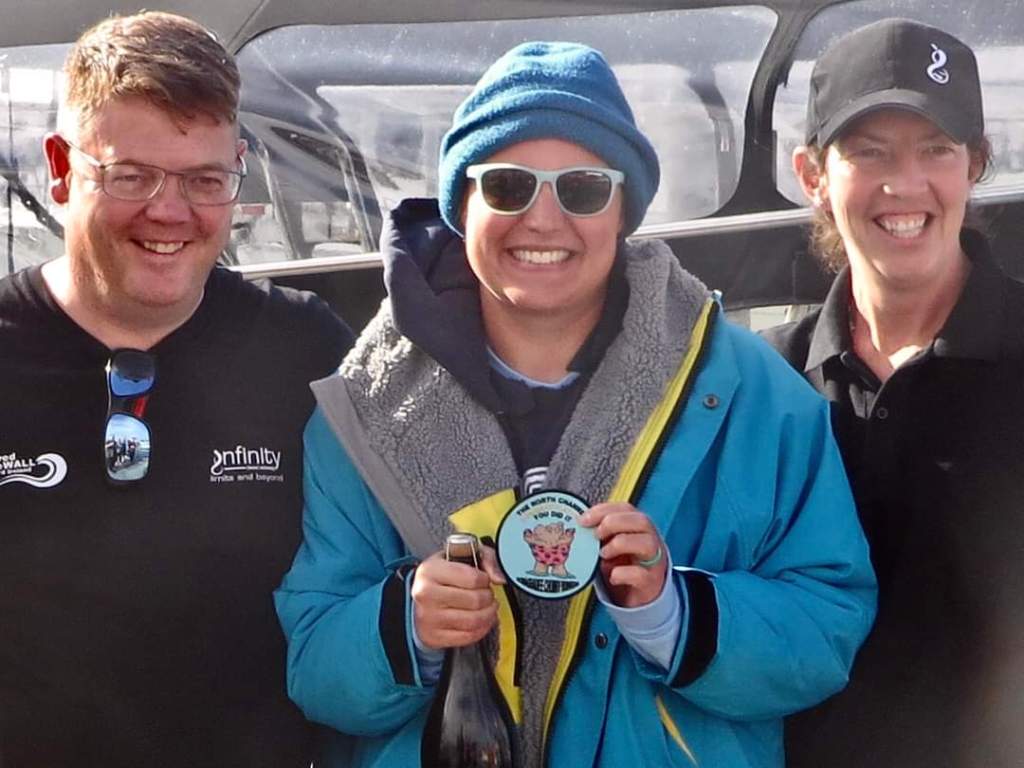
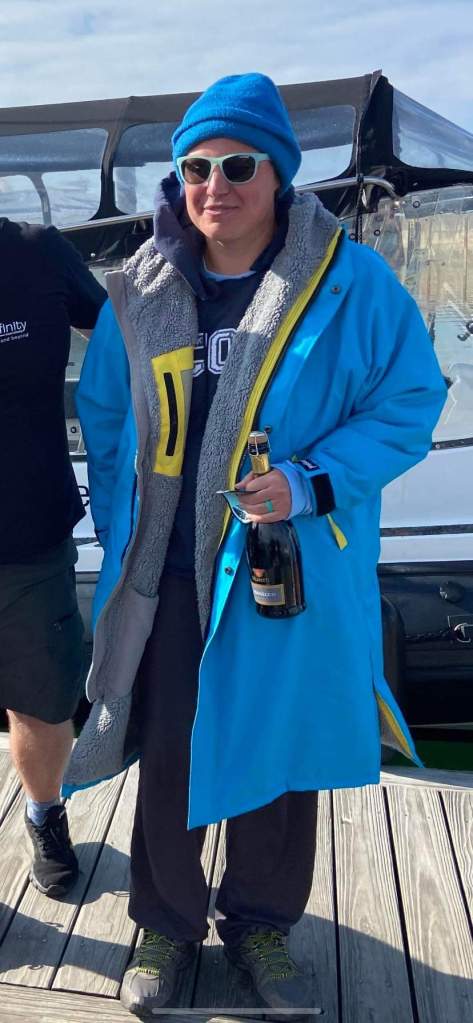


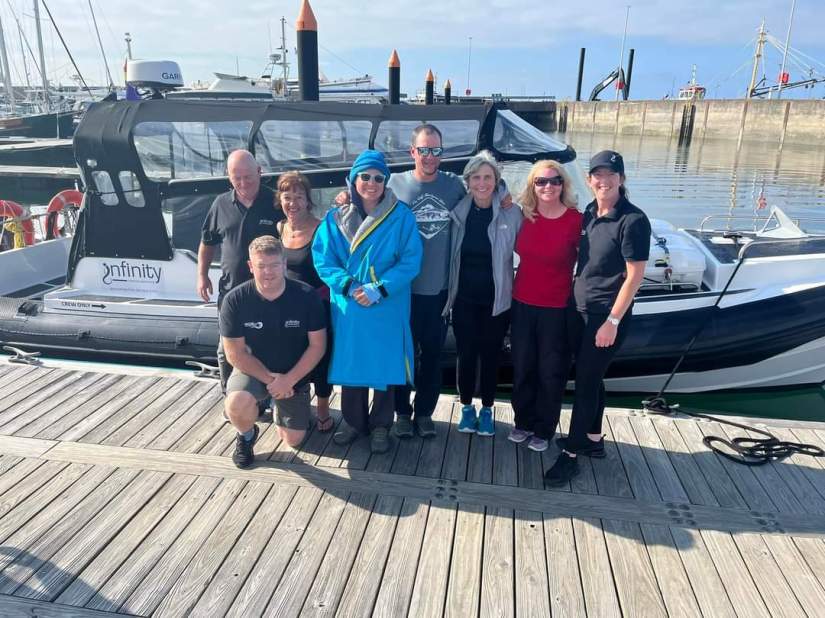

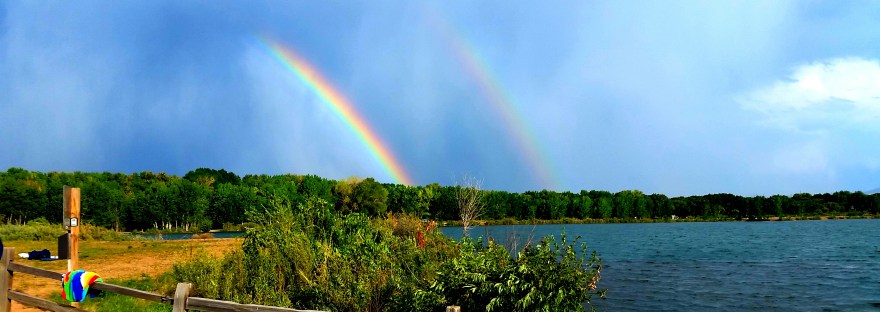
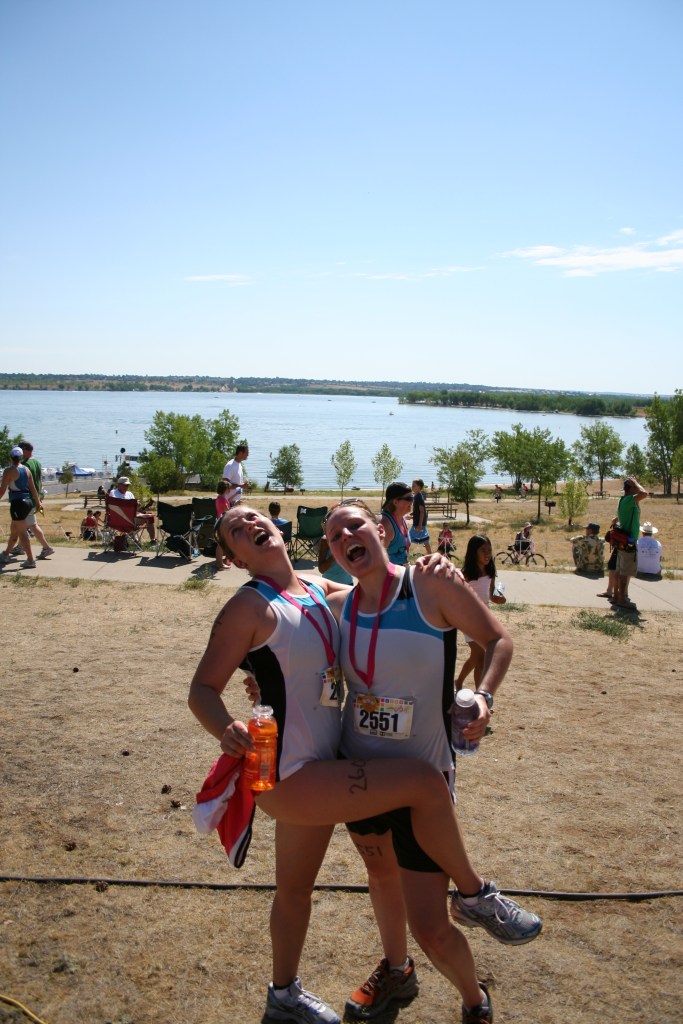


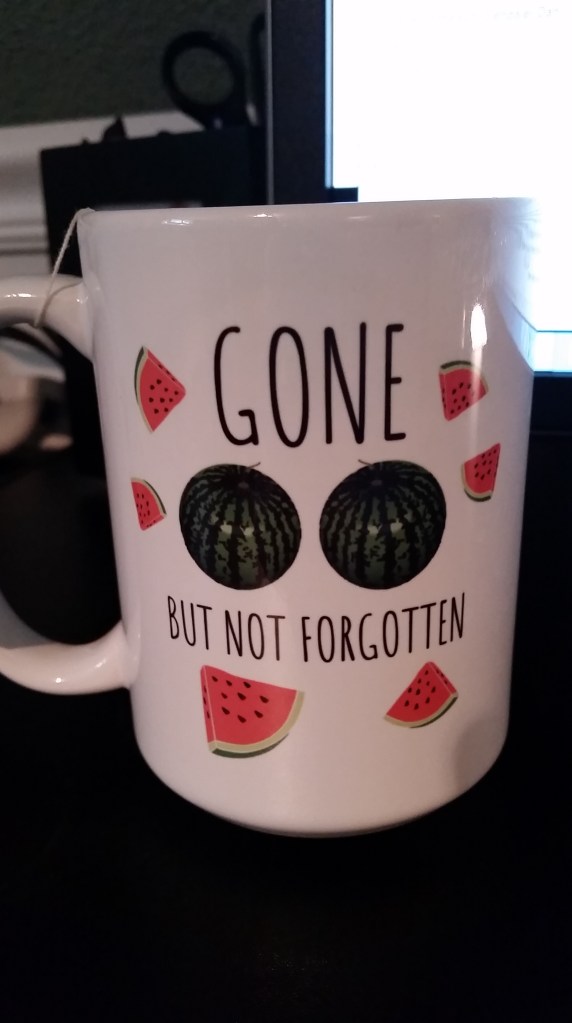
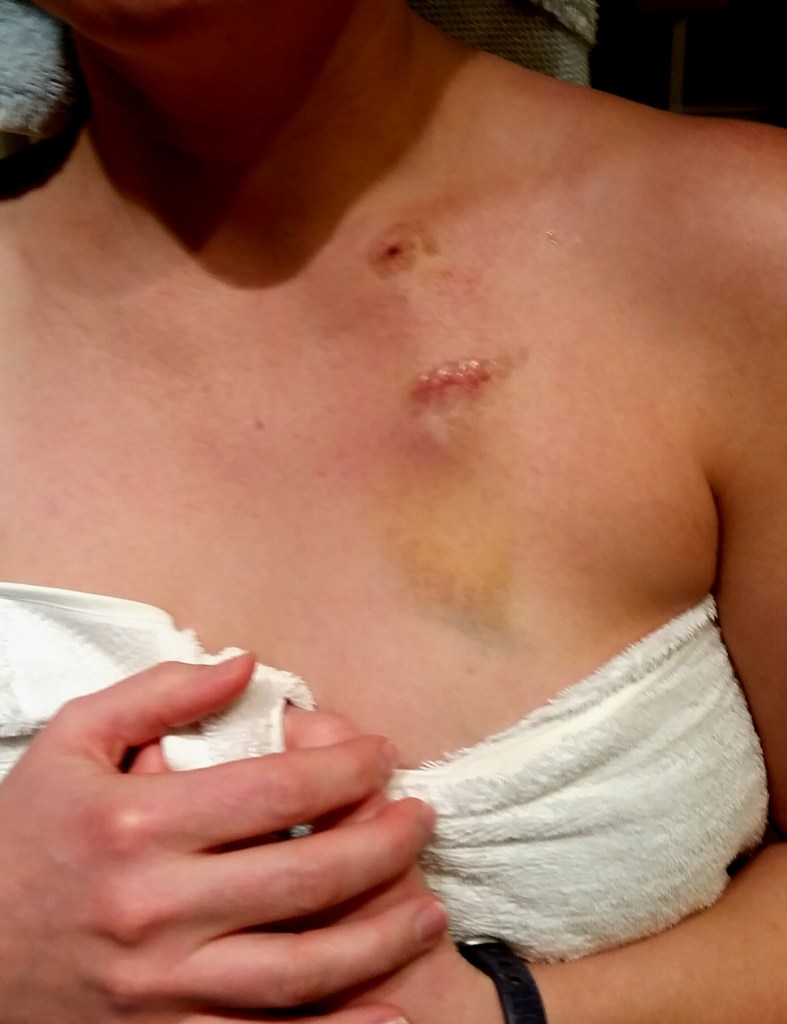
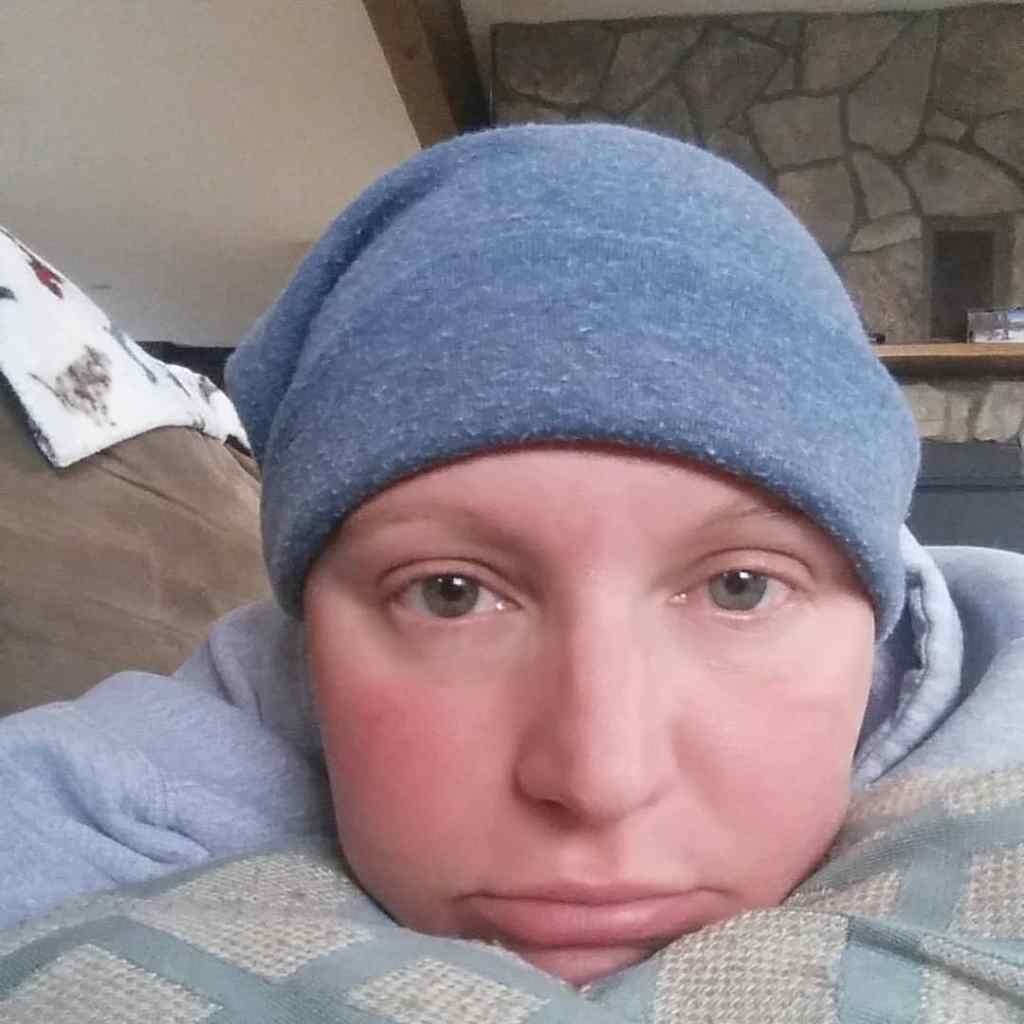

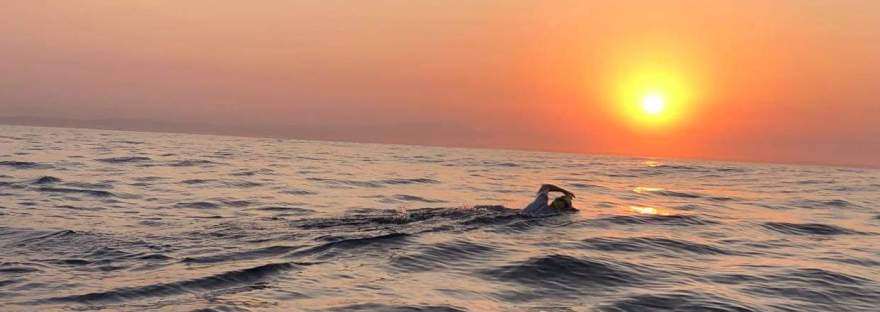
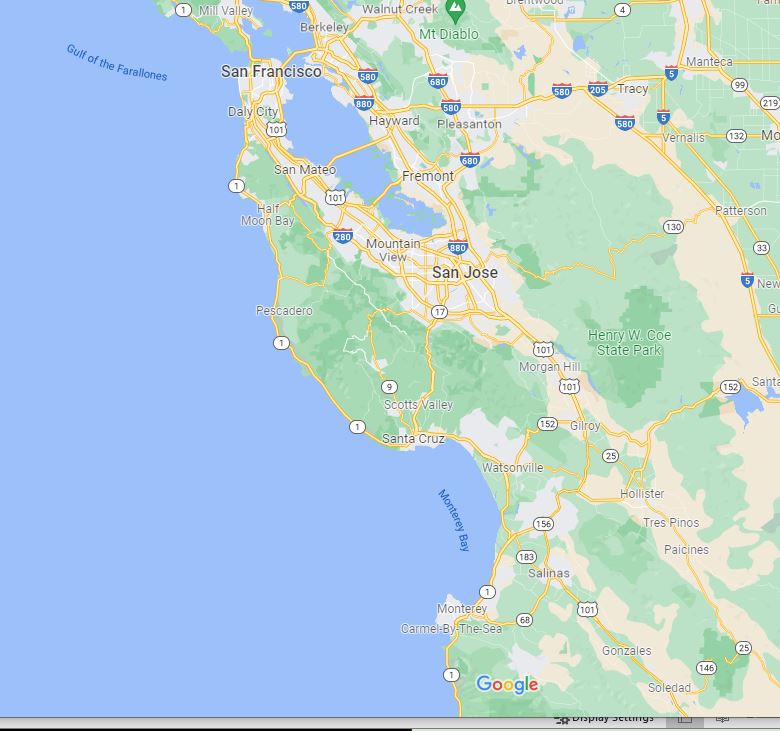
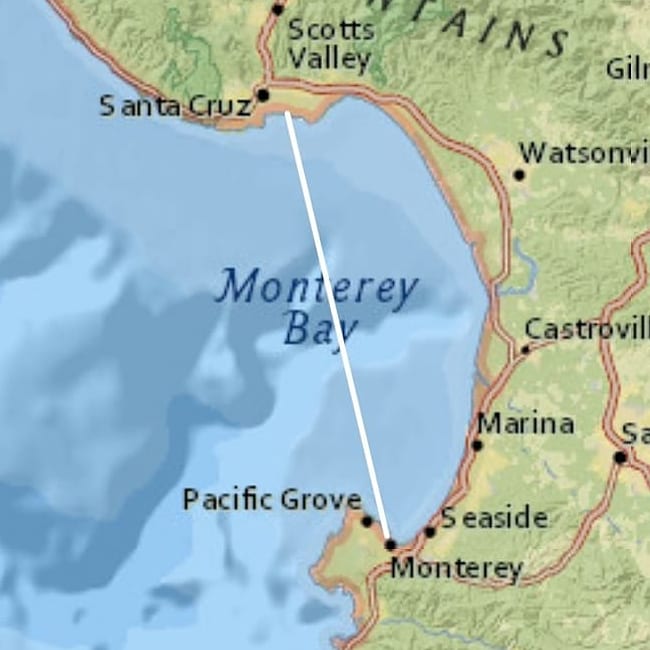
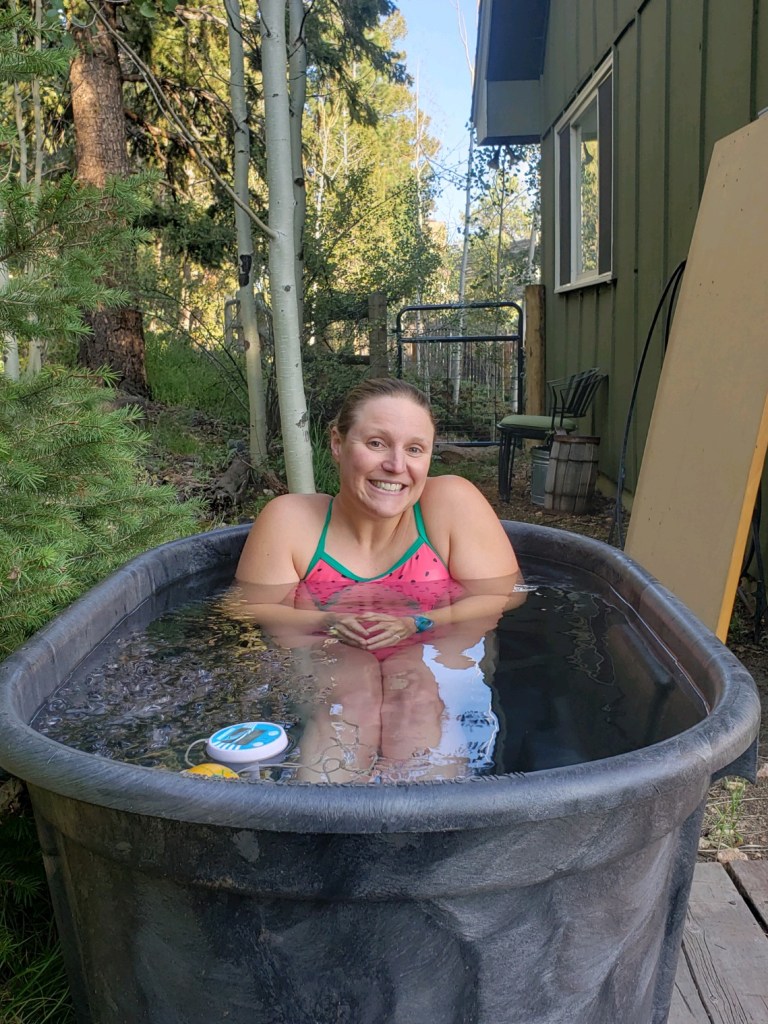


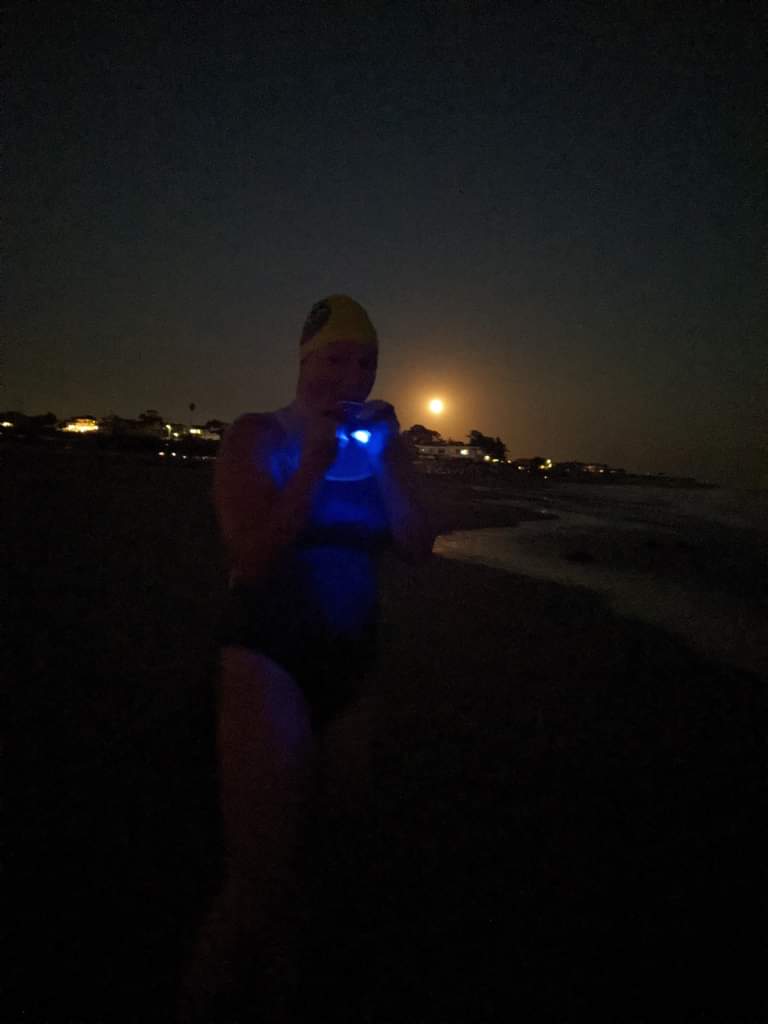
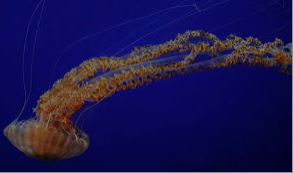

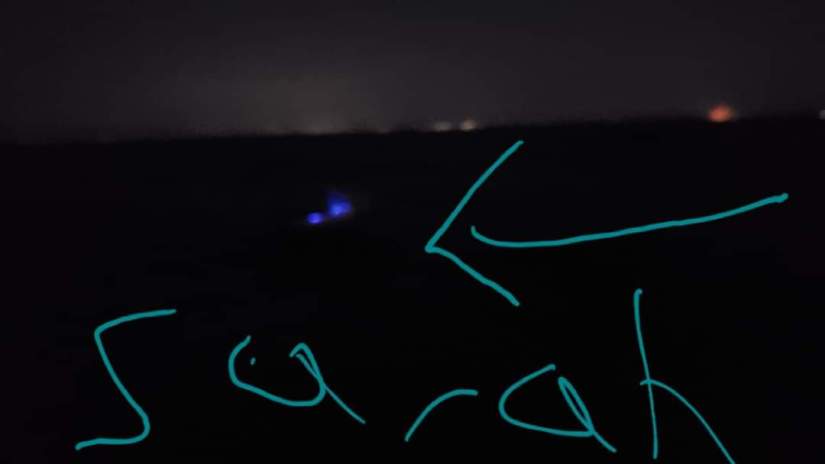
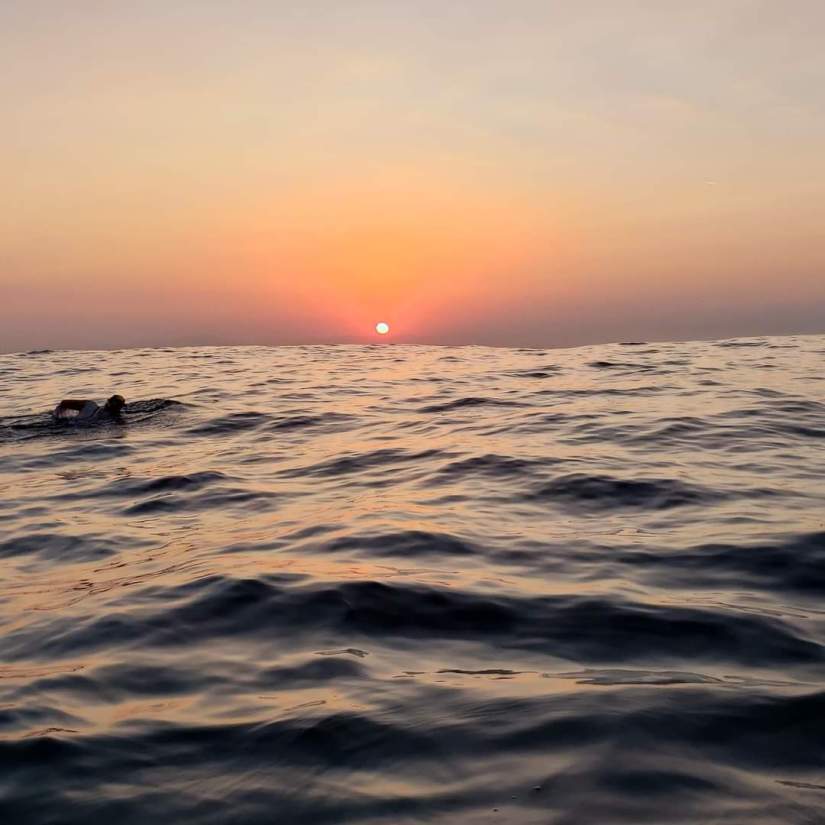

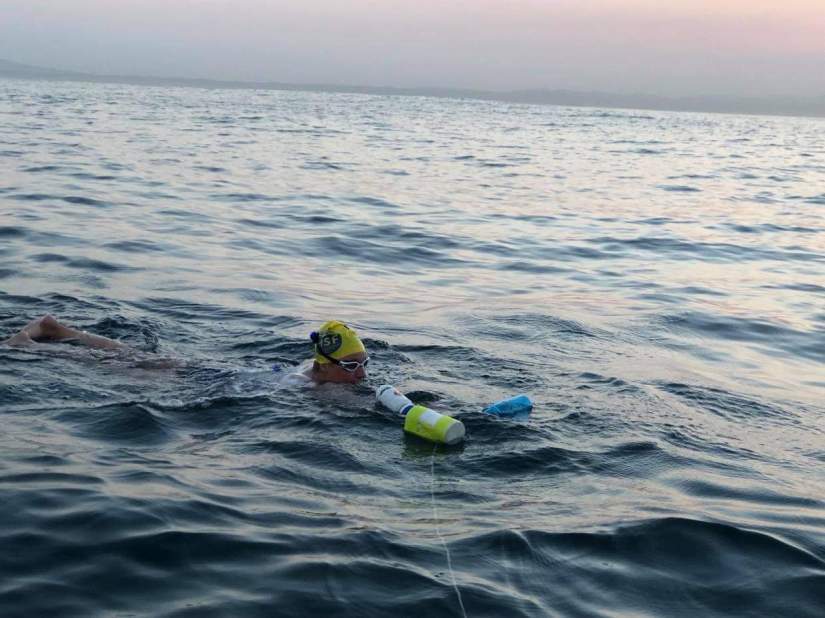

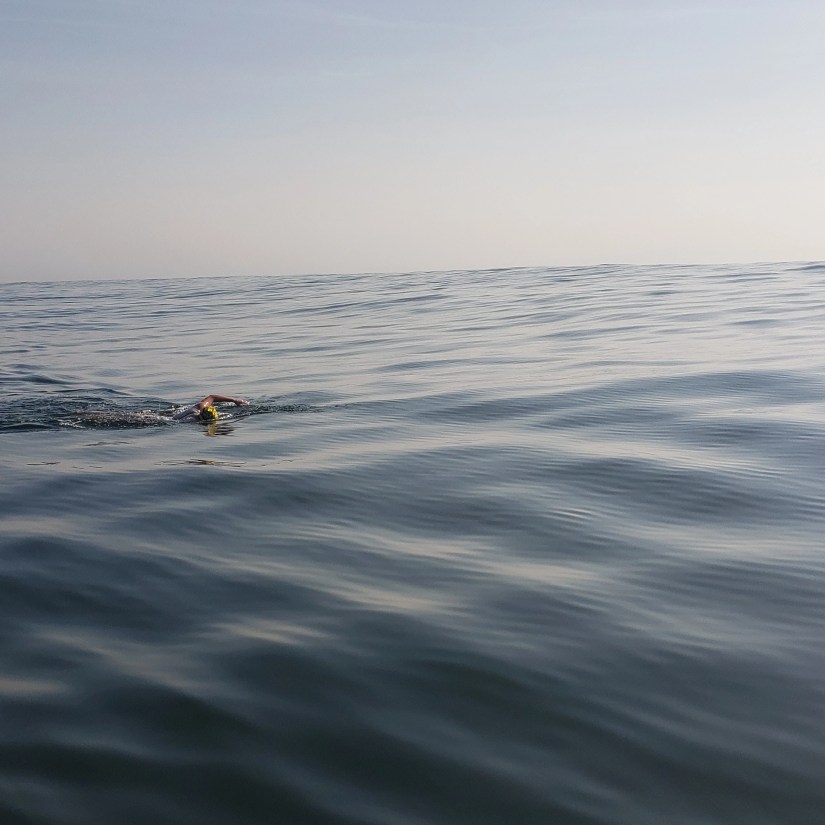

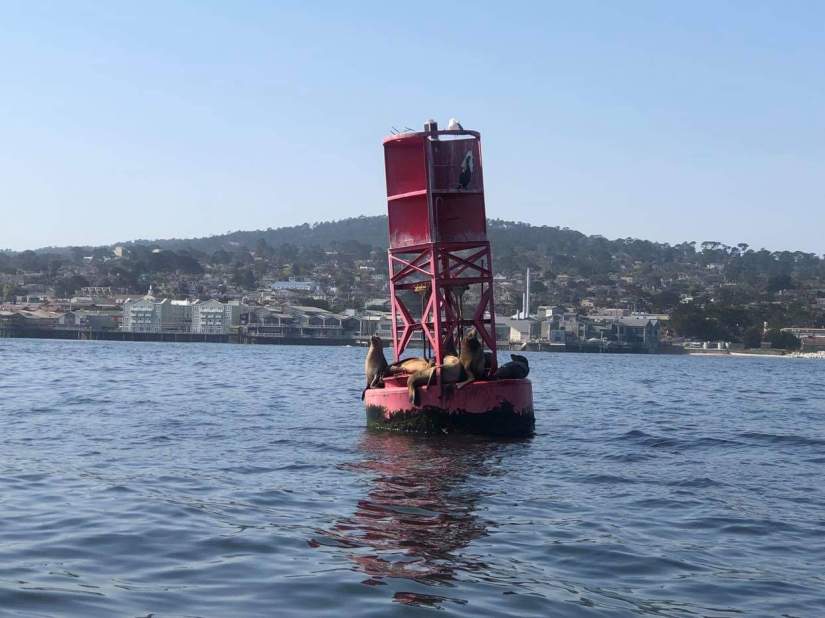

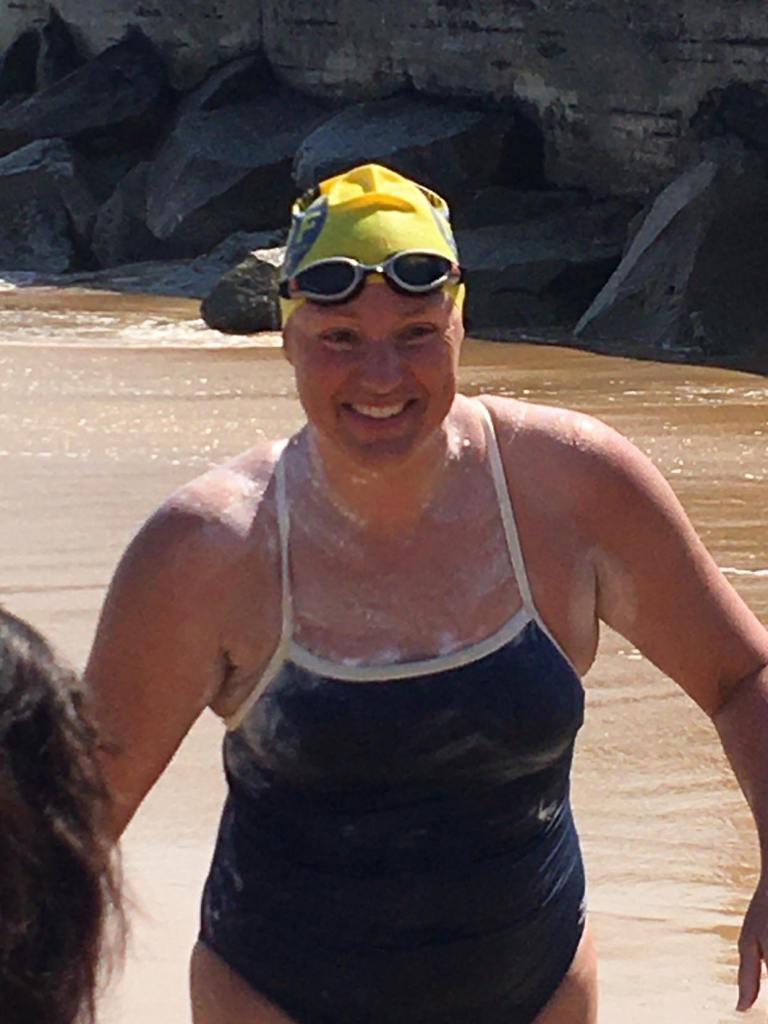


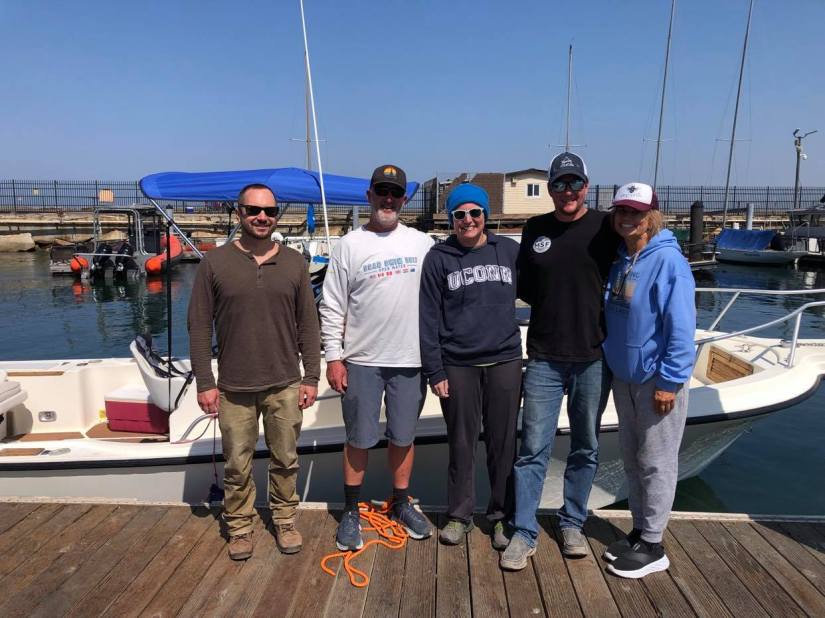

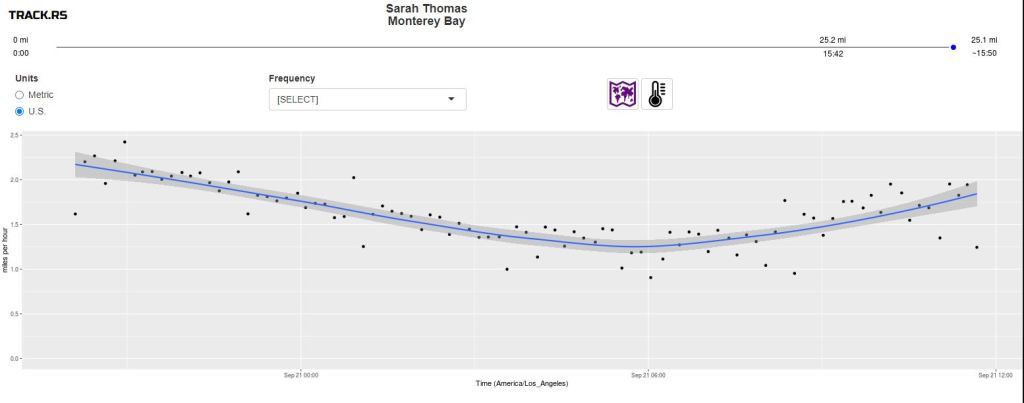
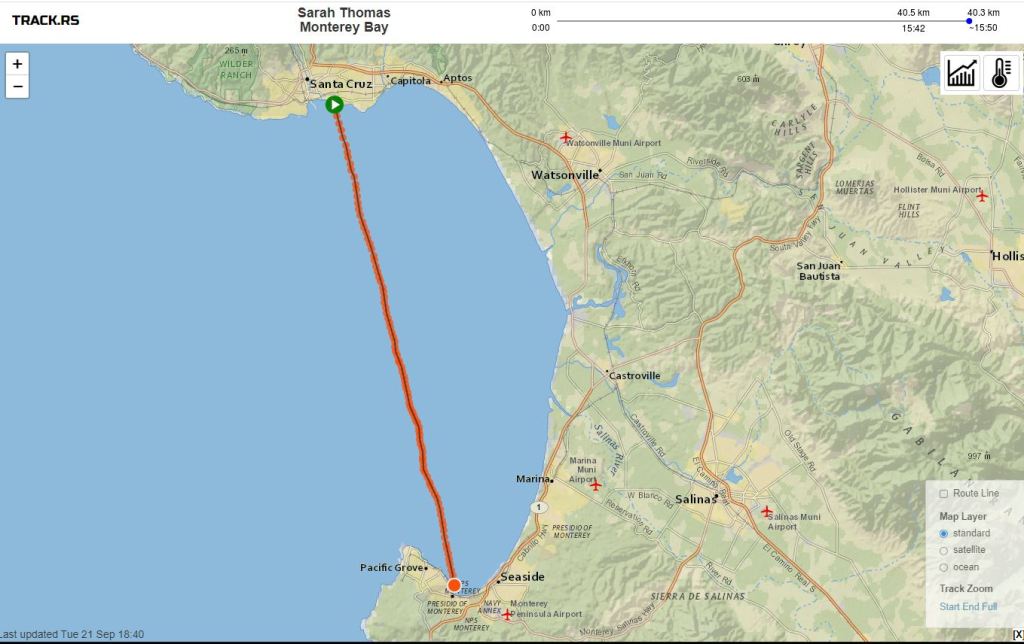
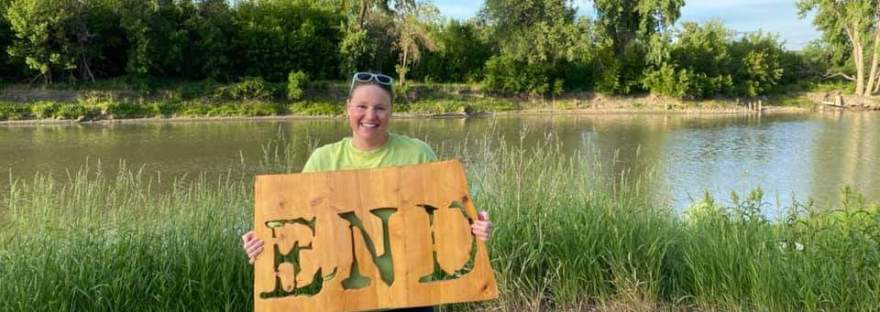
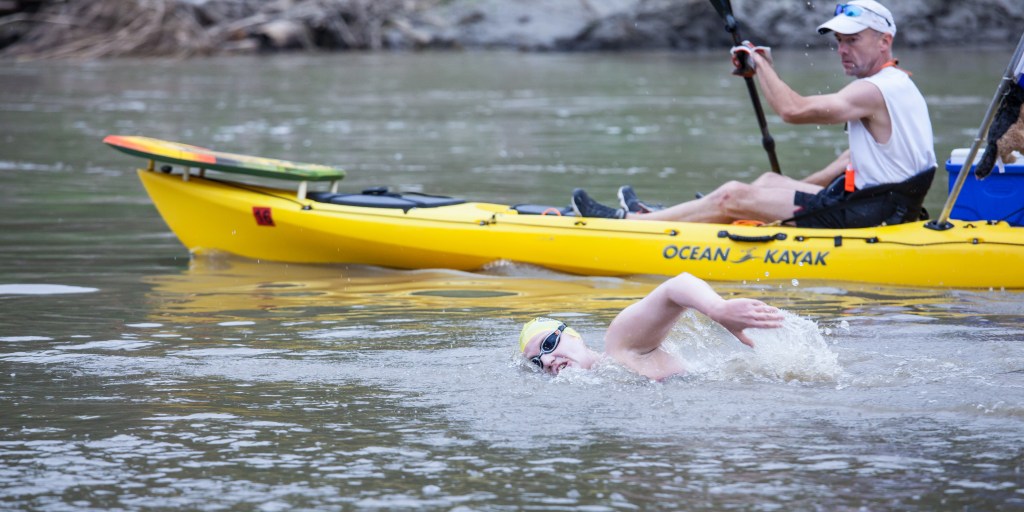
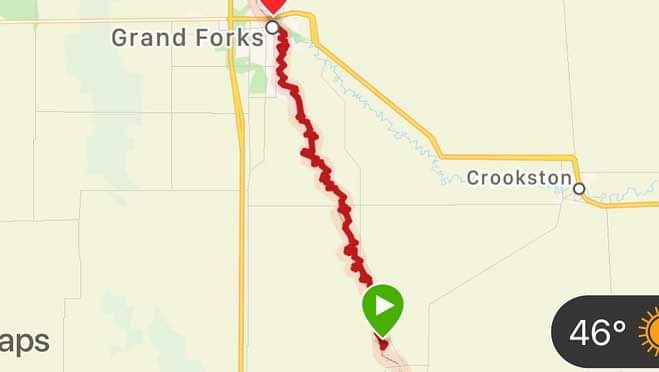
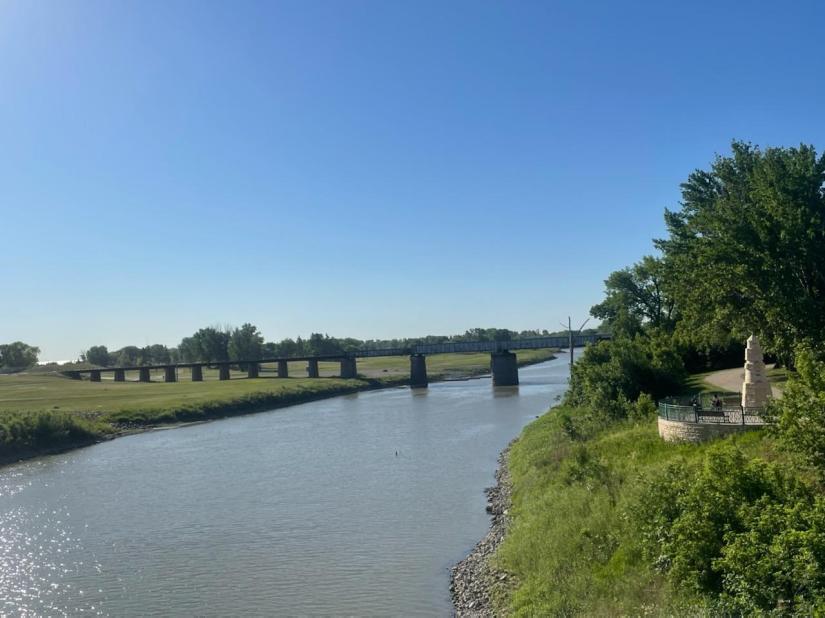
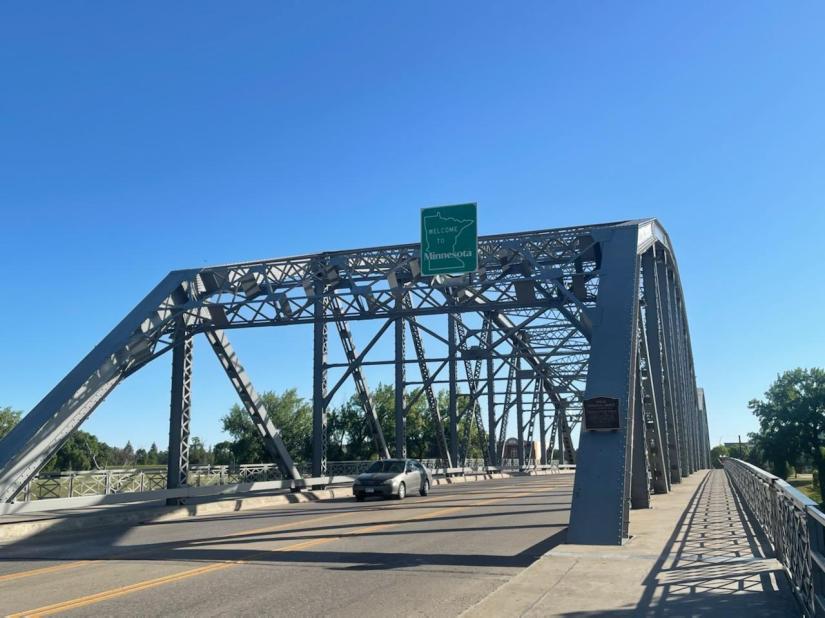
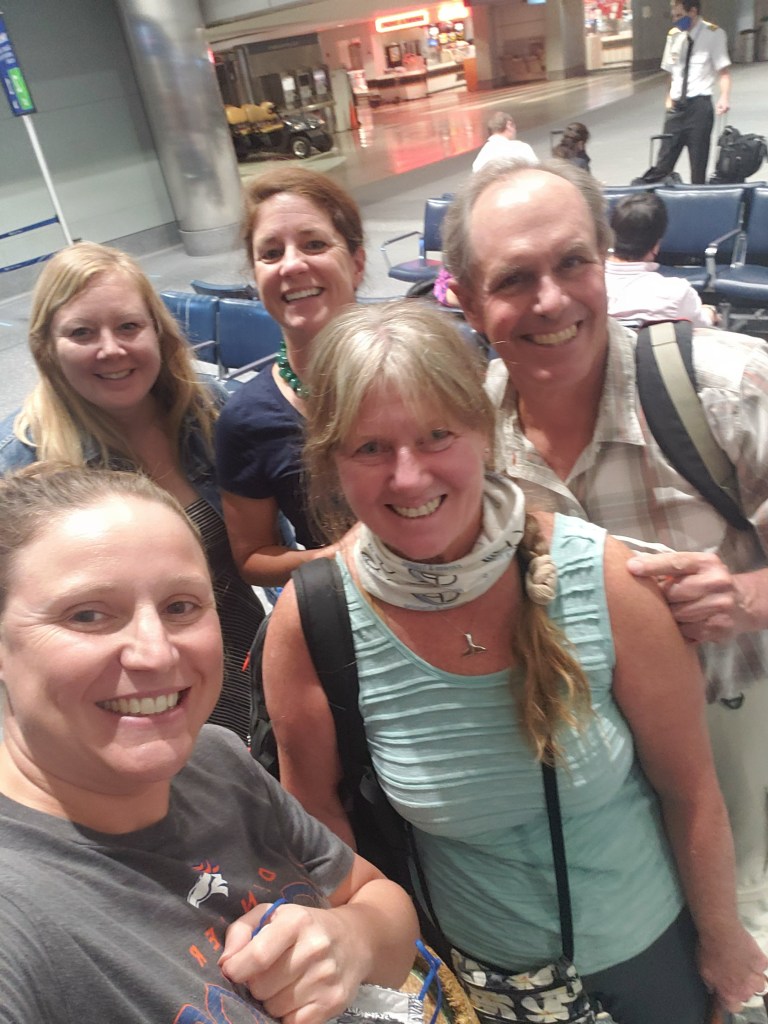
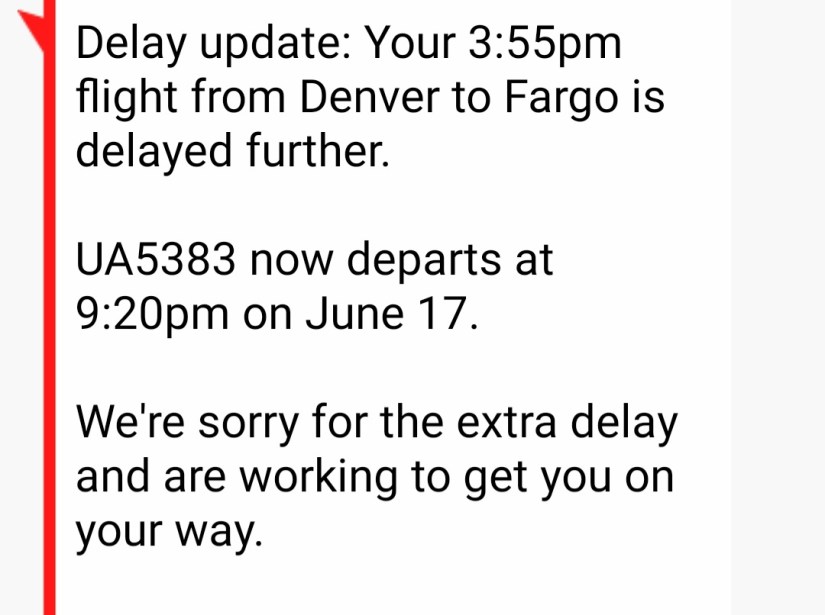


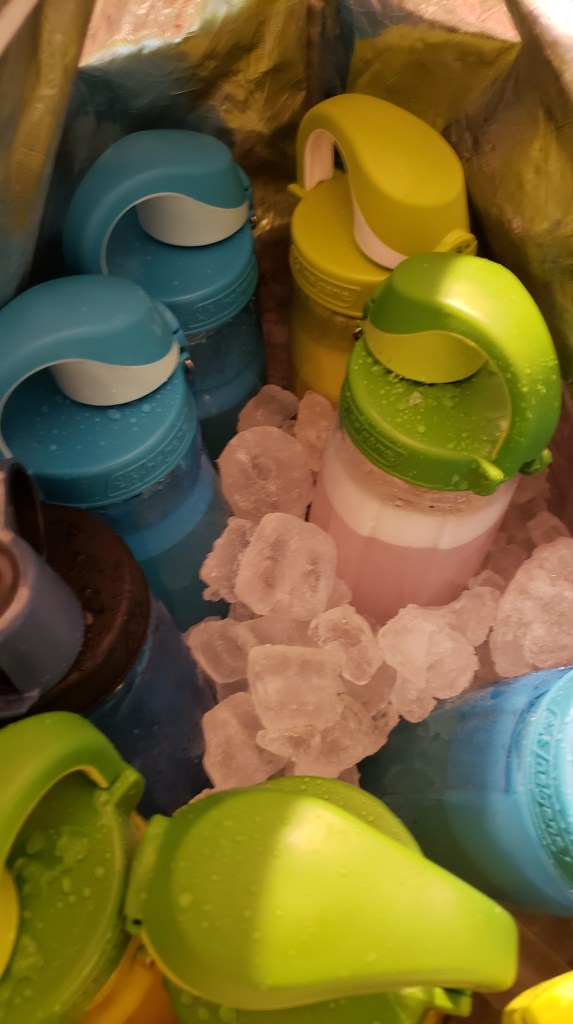
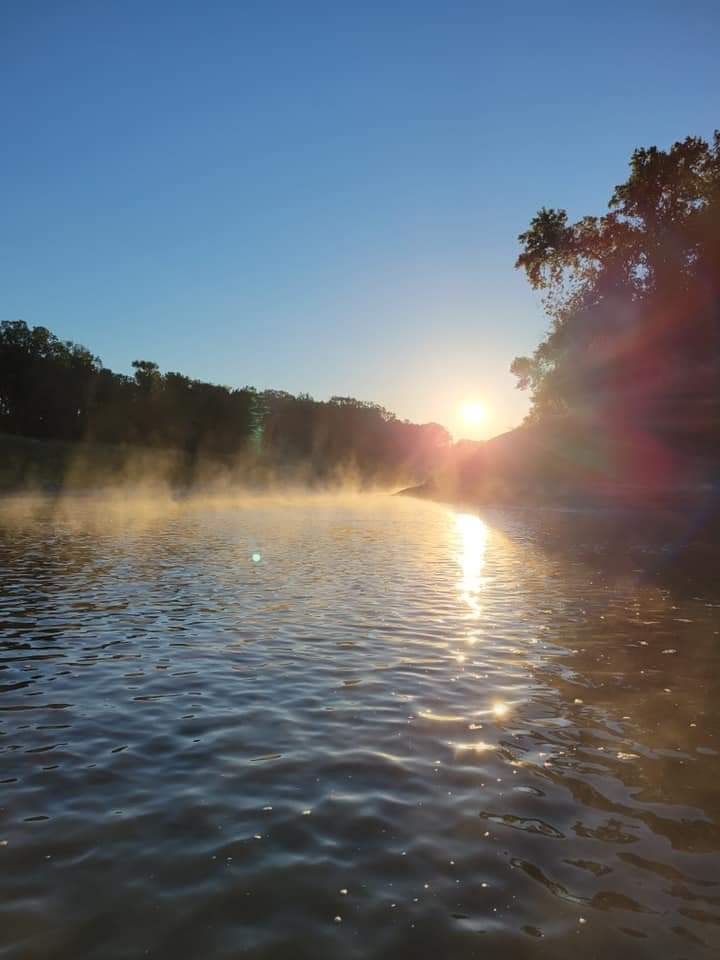
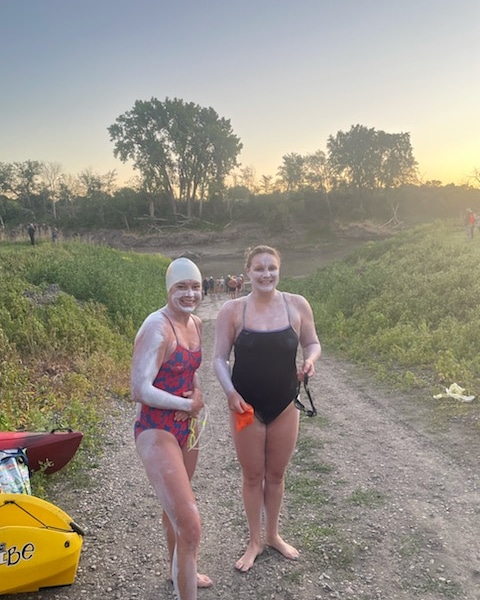
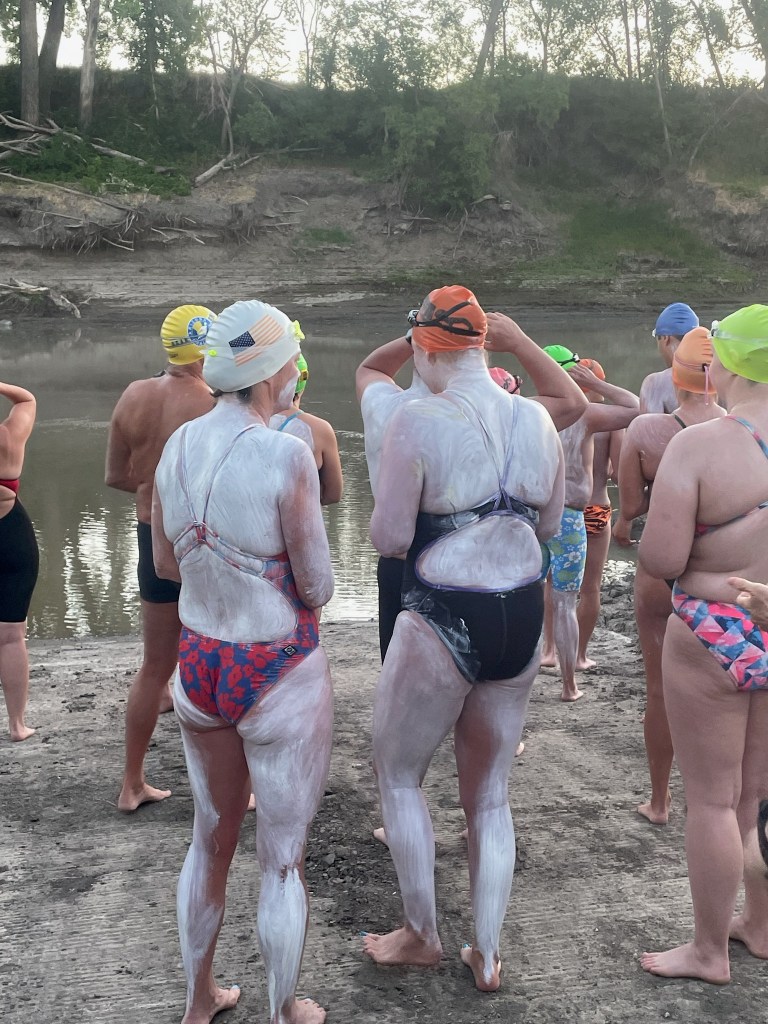
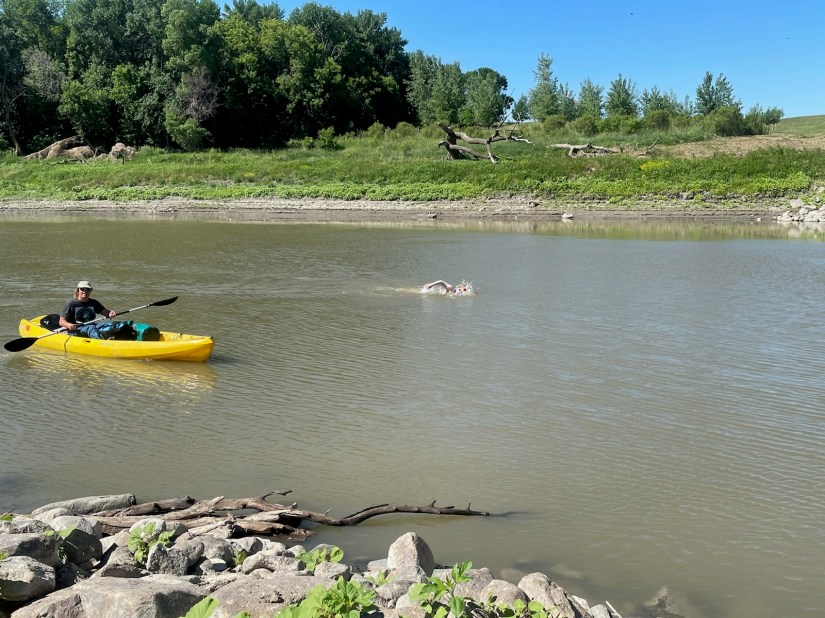
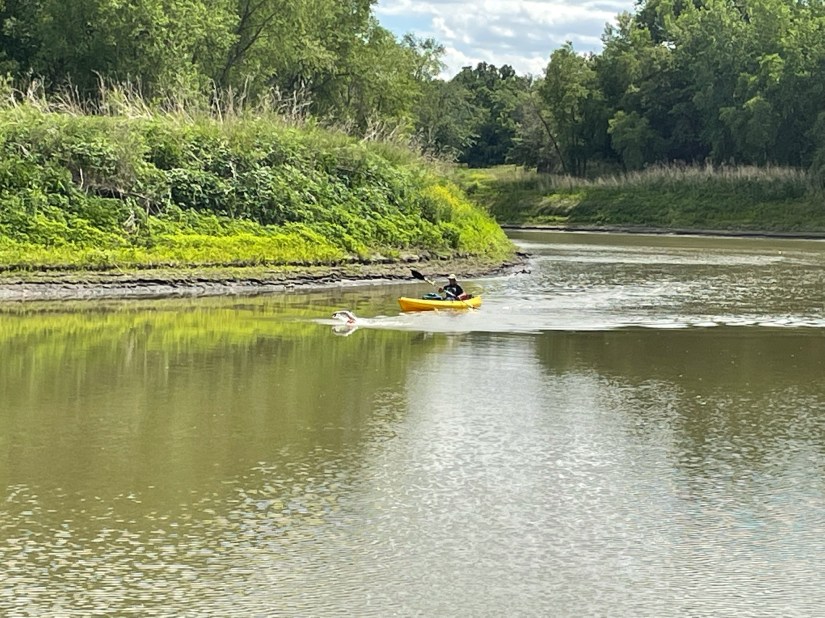
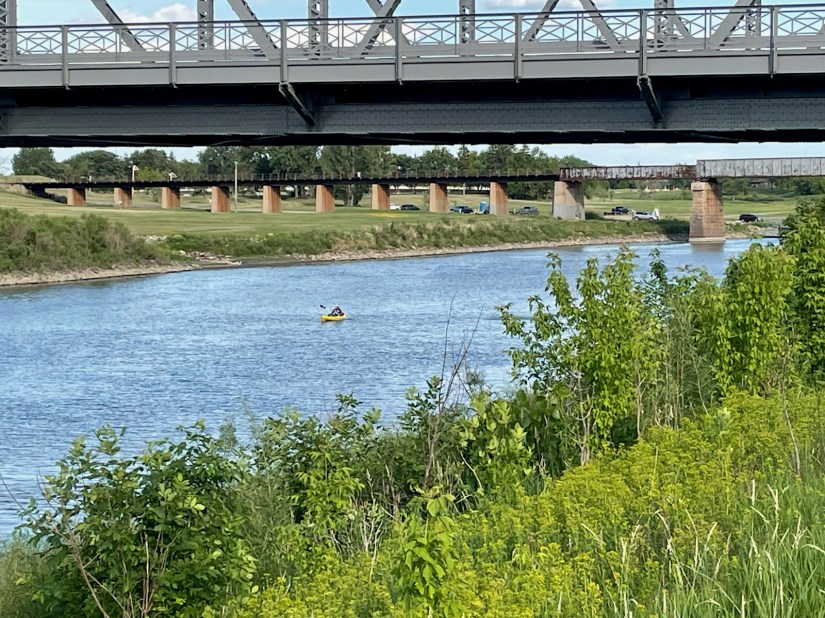
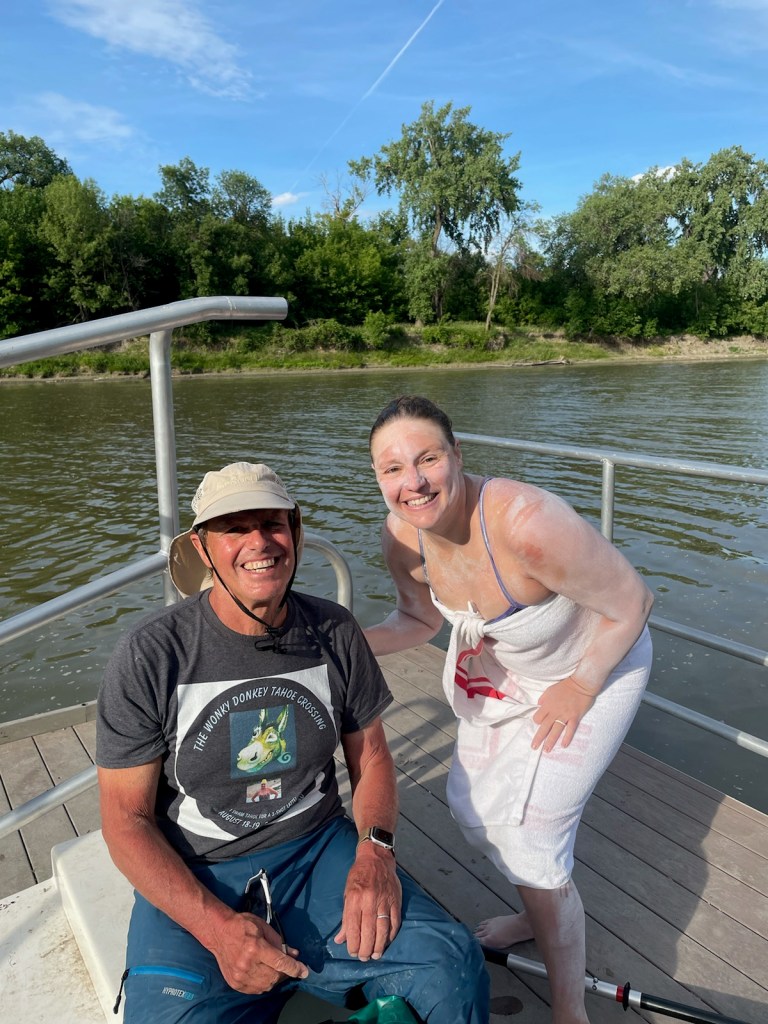
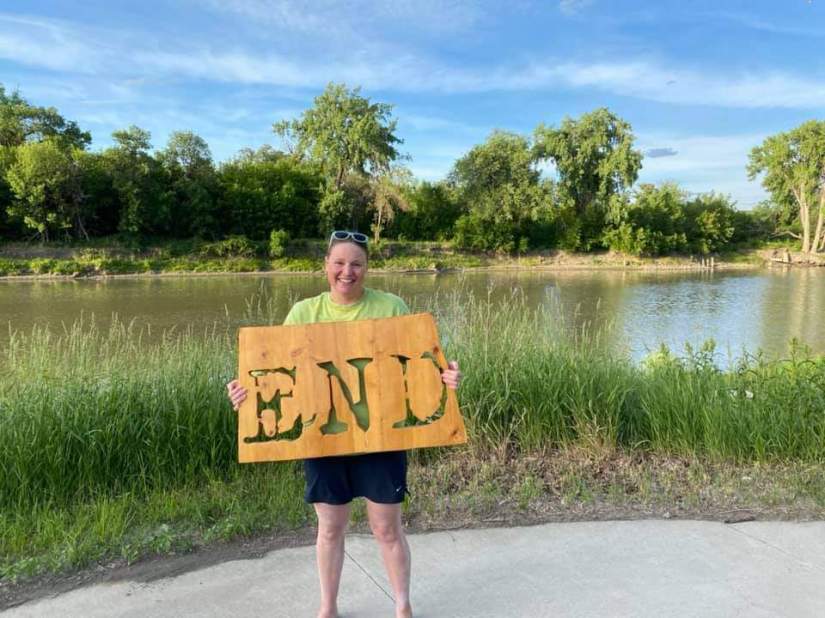
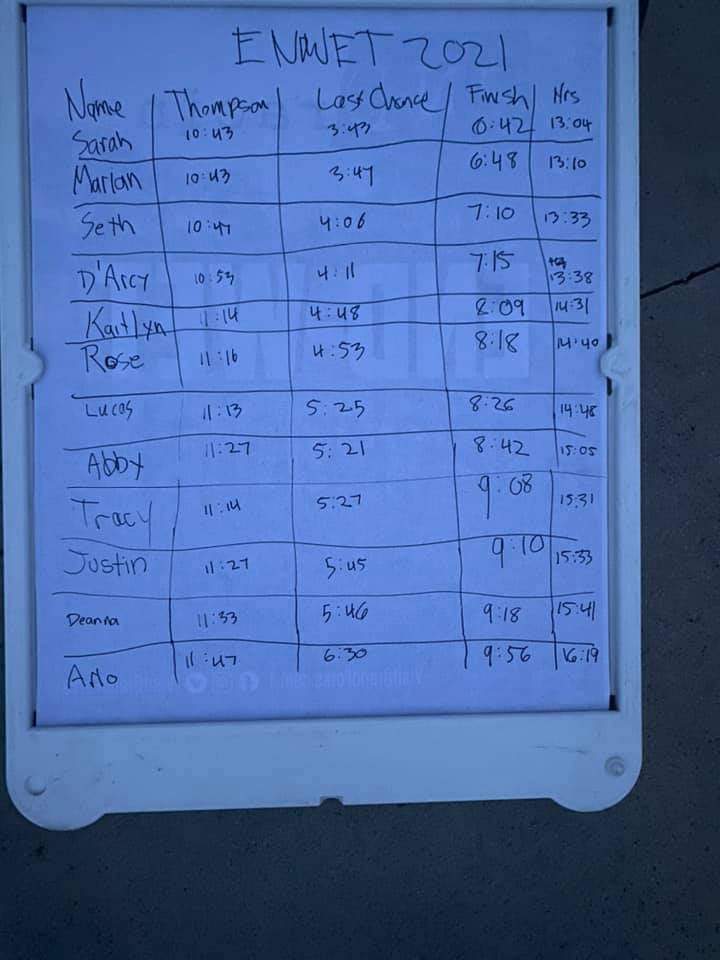
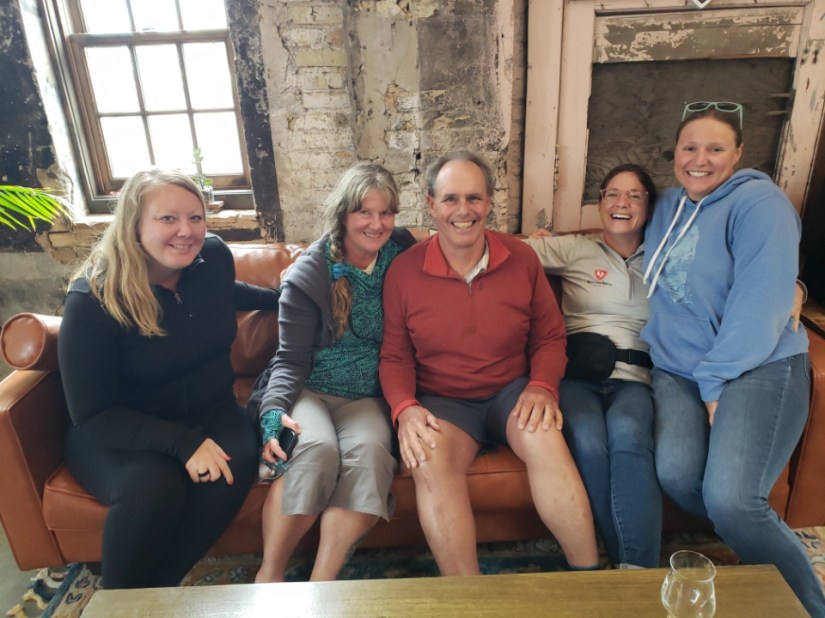
 Sarah Thomas